Hardware is the smallest purchase in a kitchen and the one you touch most. A 5-inch pull on a 12-inch drawer looks lost no matter how expensive it is, and a knob drilled in the wrong corner fights your hand fifty times a day. The ten kitchen cabinet hardware ideas below pair each style with the number that makes it work: the sizing rule, the placement, the finish logic. Measure first, buy once, and every door in the room will feel like it was fitted by someone who does this for a living.
The Hardware Numbers at a Glance
| Rule | Number |
|---|---|
| Pull length on drawers | Roughly 1/3 of the drawer front width |
| Wide drawers (30 in / 76 cm and up) | Two pulls, or one pull of 12 in (305 mm) or more |
| Pull center-to-center sizes | 3¾ in (96 mm), 5 in (128 mm), 6 5/16 in (160 mm), 8 13/16 in (224 mm), 12 5/8 in (320 mm) |
| Knob diameter | 1 to 1½ in (25–38 mm); 1¼ in (32 mm) is the standard |
| Knob placement on doors | 2½–3 in (64–76 mm) from the corner, on the stile opposite the hinge |
| Pull placement on doors | Top hole 2–3 in (50–76 mm) down from the top corner |
| Appliance pulls | 12–18 in (305–457 mm) and up, screwed through, not surface-mounted |
| Metals in one kitchen | One finish everywhere, or a deliberate maximum of two |
1. Size Pulls to a Third of the Drawer
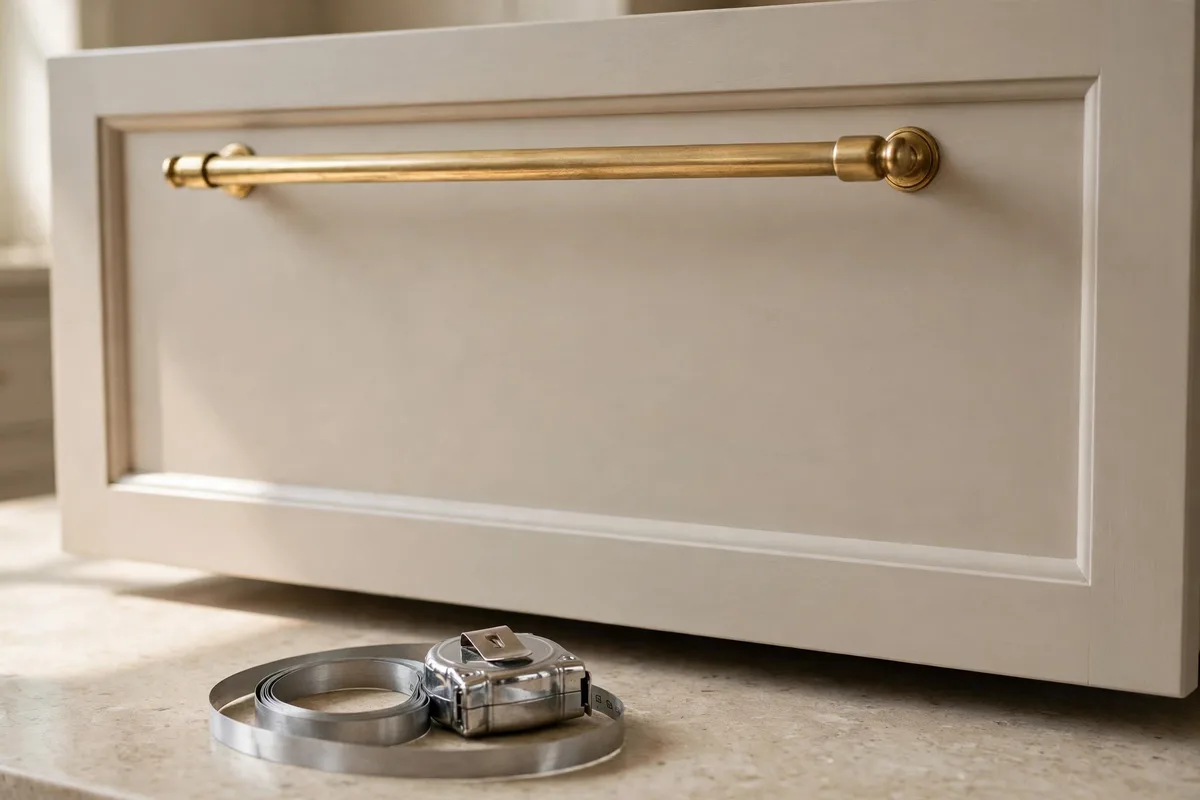
The classic proportion is one third: the pull’s overall length should be roughly a third of the drawer front’s width. A 15-inch drawer takes a 5-inch pull, a 24-inch drawer takes one of about 8 inches, and beyond 30 inches the single pull starts to look — and feel — undersized, so fit two pulls or step up to a single pull of 12 inches (305 mm) or more. DK Hardware’s cabinet hardware sizing guide sets out the same one-third method and the standard center-to-center sizes — 3¾ in (96 mm), 5 in (128 mm), 6 5/16 in (160 mm), 8 13/16 in (224 mm) and 12 5/8 in (320 mm) — so measure your drawer, divide by three and order the nearest stock size.
Center-to-center is the number that matters when you buy: it is the distance between the screw holes, not the pull’s full length, and it is what must match any holes you already have. If you are replacing hardware, measure hole to hole before anything else — a pull with the wrong centers means filling, drilling and touching up, which turns a Saturday refresh into a woodworking project.
2. Put Knobs in the Corner, Not the Middle
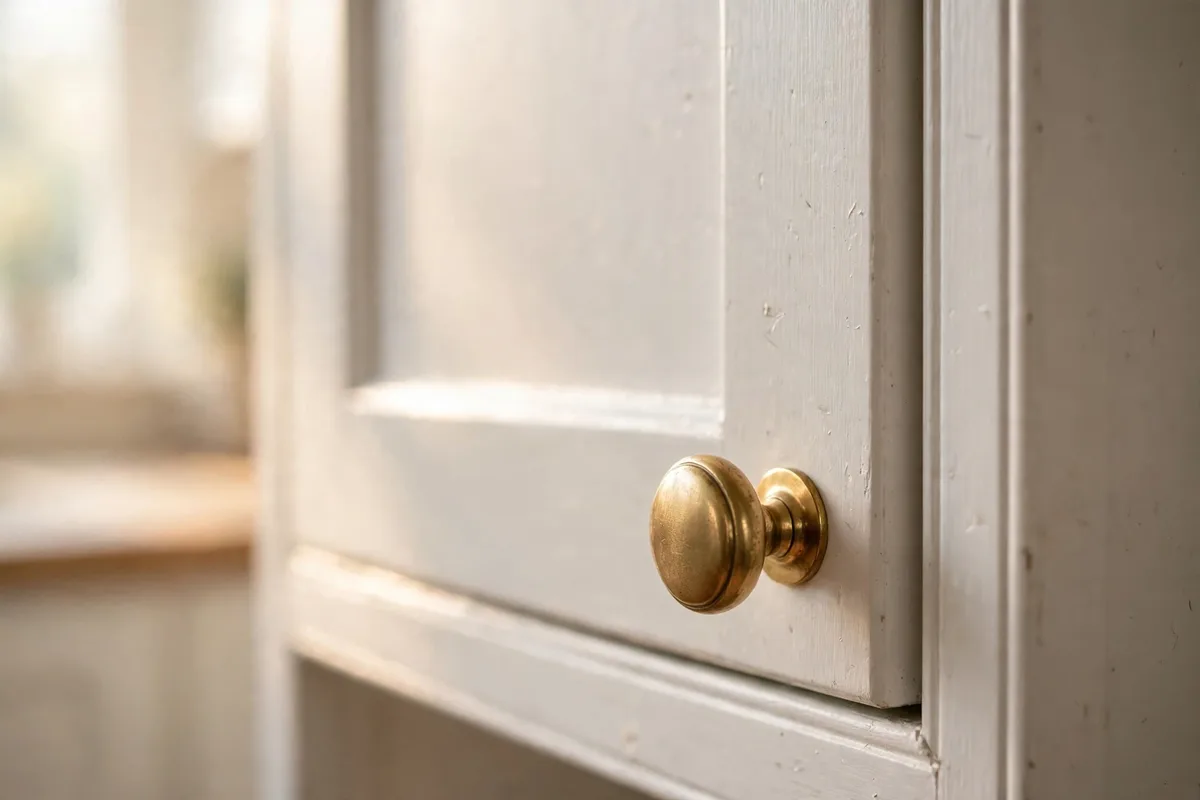
On a door, the knob belongs near the corner of the stile opposite the hinge — the vertical frame piece on the opening side — about 2½ to 3 inches (64–76 mm) from the edge. Centered on the door it looks decorative and works badly: your hand reaches for the opening edge by instinct, and leverage is best farthest from the hinge. For pulls on doors, the top screw hole sits 2 to 3 inches (50–76 mm) down from the top corner of the door. Plank Hardware’s placement guide gives those same measurements section by section, for upper doors, lower doors and drawers, and they are worth taping to the cabinet before the drill comes out.
Two placement habits separate a careful job from a rushed one. Use a hardware jig or a strip of painter’s tape marked once and reused, so all forty knobs land in exactly the same spot. And on upper cabinets, place the knob at the bottom corner of the door — reachable without stretching — even if that means it mirrors rather than matches the lowers; consistency of height from the floor matters less than consistency within each run.
3. Knobs for Doors: Small, Round, Everywhere
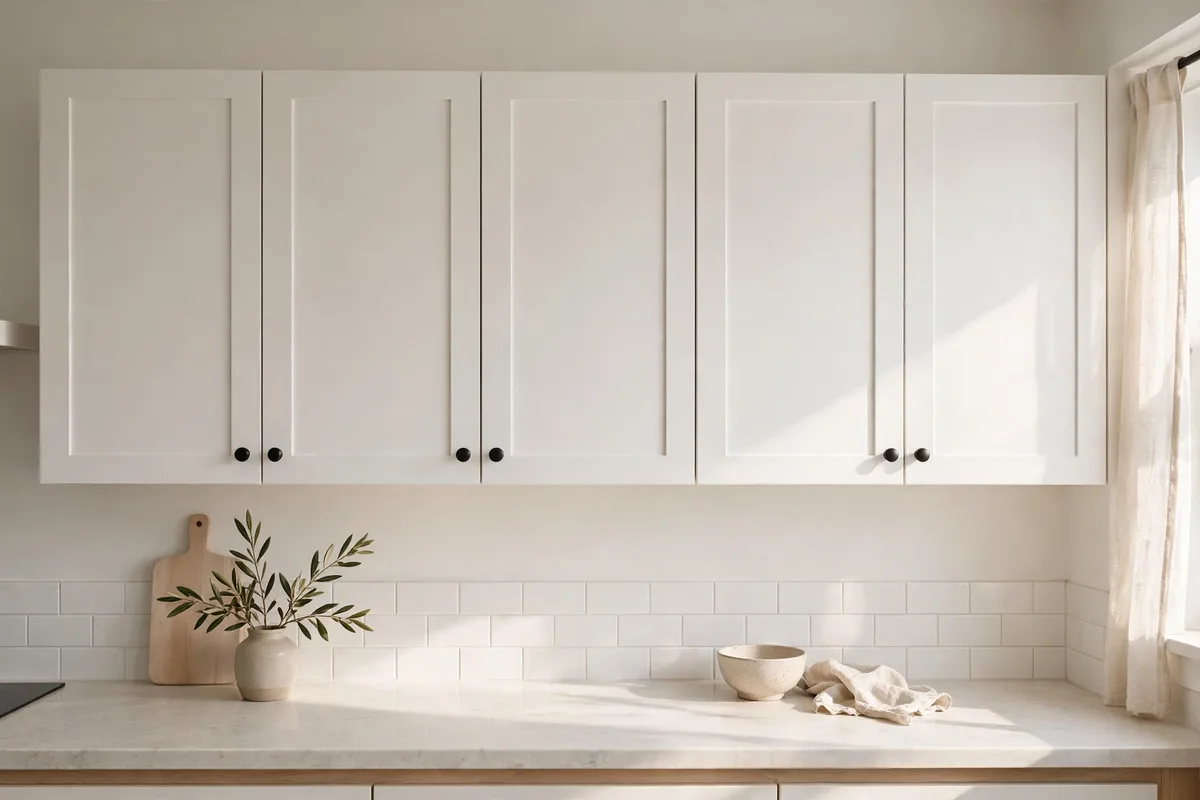
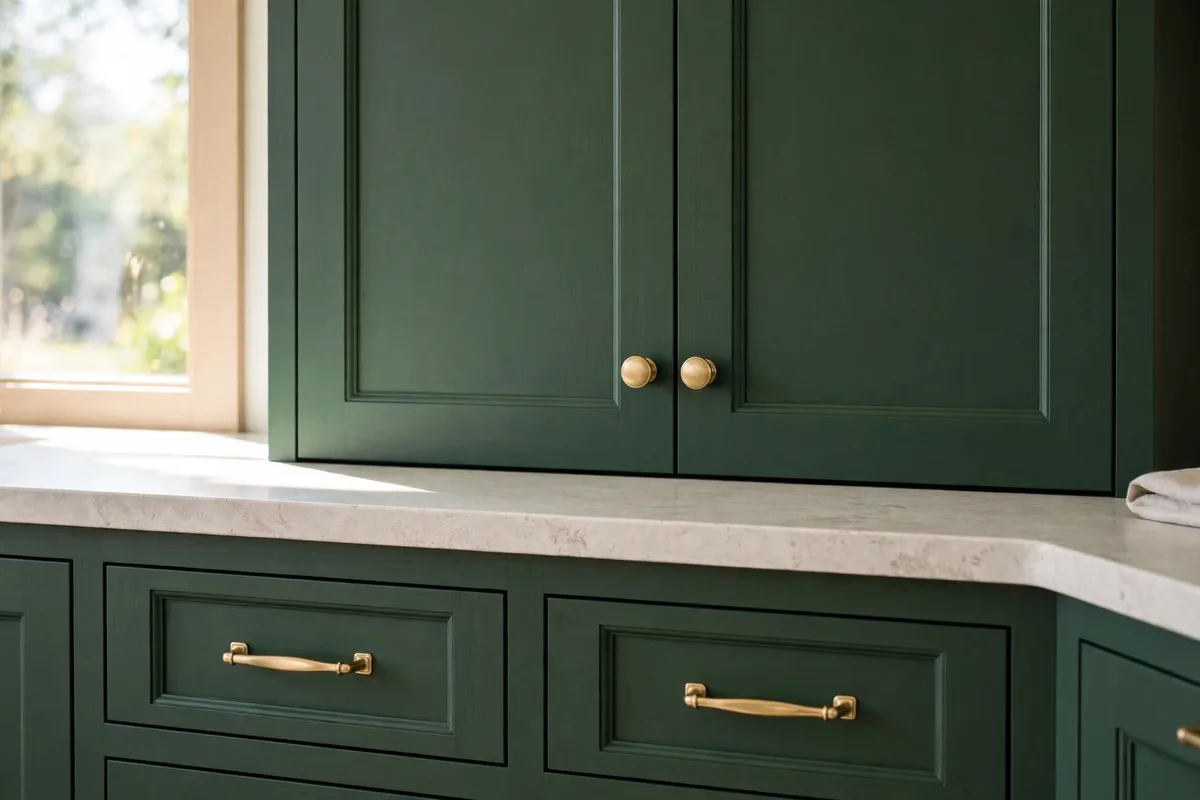
The standard knob is 1¼ inches (32 mm) in diameter, inside a working range of 1 to 1½ inches (25–38 mm). Smaller reads delicate and suits shaker and traditional doors; the top of the range suits slab doors and larger hands. One screw, one hole, the cheapest hardware per door you can buy — and the most forgiving, because a single hole hides a multitude of measuring sins if you ever change your mind.
Knobs earn their place on doors, where the opening force is a fingertip pull sideways. They are weaker on drawers, where the load comes straight out and a knob gives you a pinch grip instead of a handle. The mixed scheme most kitchens settle on — knobs on every door, pulls on every drawer — is not indecision; it is matching the grip to the job, and it is covered again in idea 7.
4. Bar Pulls Where the Weight Is
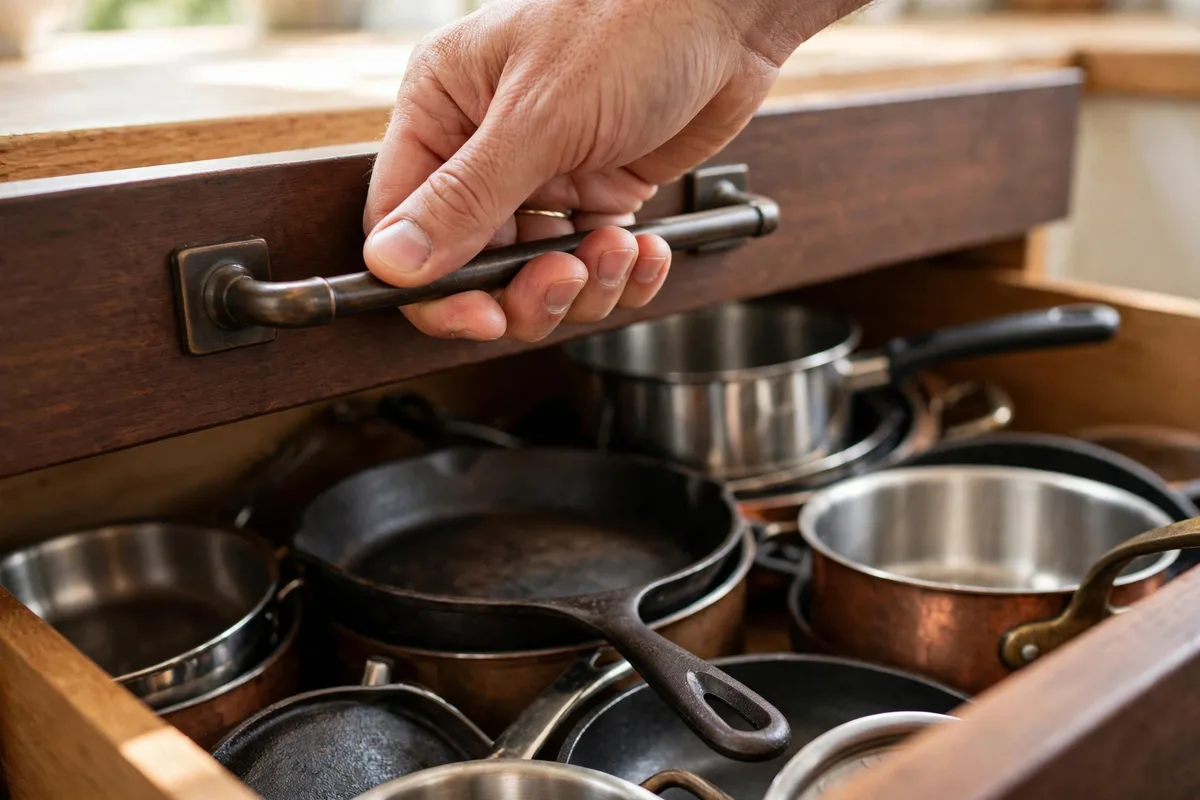
Deep drawers full of pans, wide drawers full of cutlery trays, dishwasher and fridge doors disguised as cabinetry: these need a pull you can get four fingers behind. Bar pulls give the strongest grip and the cleanest lines, and on paneled appliances step up to appliance pulls of 12 to 18 inches (305–457 mm) and beyond, fixed with through-bolts rather than surface screws because a loaded fridge door will work a light pull loose in a year.
Watch the projection and the ends. A bar pull that sticks out too far catches hips and sleeves in a galley kitchen, and sharp square ends snag dish towels. Rounded or softened ends, and a projection around an inch (25 mm), keep a hard-working kitchen comfortable. Whatever you choose for the heaviest drawer, order one and live with it for a week before buying forty.
5. One Finish Across the Whole Kitchen
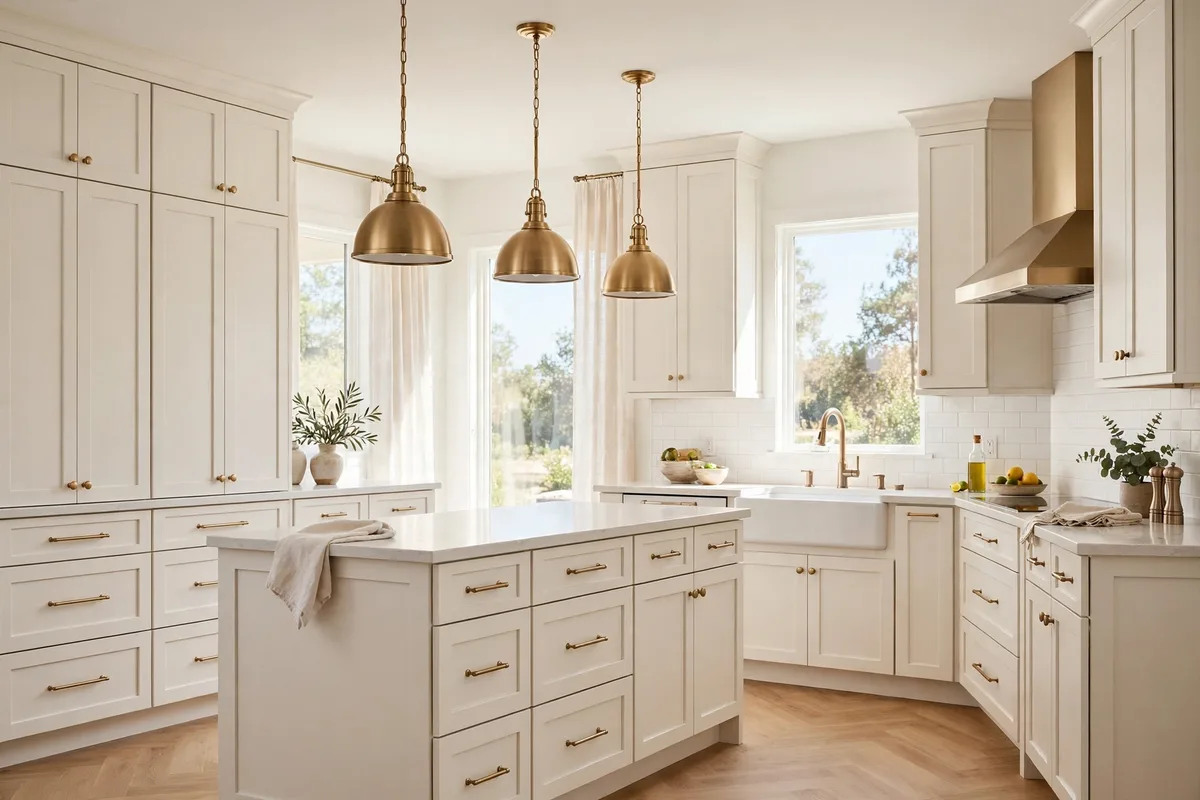
The simplest finish rule is also the strongest: pick one metal and run it through knobs, pulls, hinges if they show, and ideally the faucet. A single finish is what makes a modest kitchen look planned. It matters even more if your cabinets themselves mix colors — the shared metal is what ties the two cabinet colors together, a trick that sits behind most of the kitchens in our guide to two-tone kitchen cabinets.
Two warnings from experience. “Brushed brass” from one brand is not the same color as “brushed brass” from another, so buy the hardware from one range, or hold samples side by side in daylight before committing. And match the sheen as well as the color: a polished knob next to a brushed pull in the same metal still reads as a mistake, because the eye catches the light difference before the color.
6. Or Mix Two Metals — Deliberately, Never Three
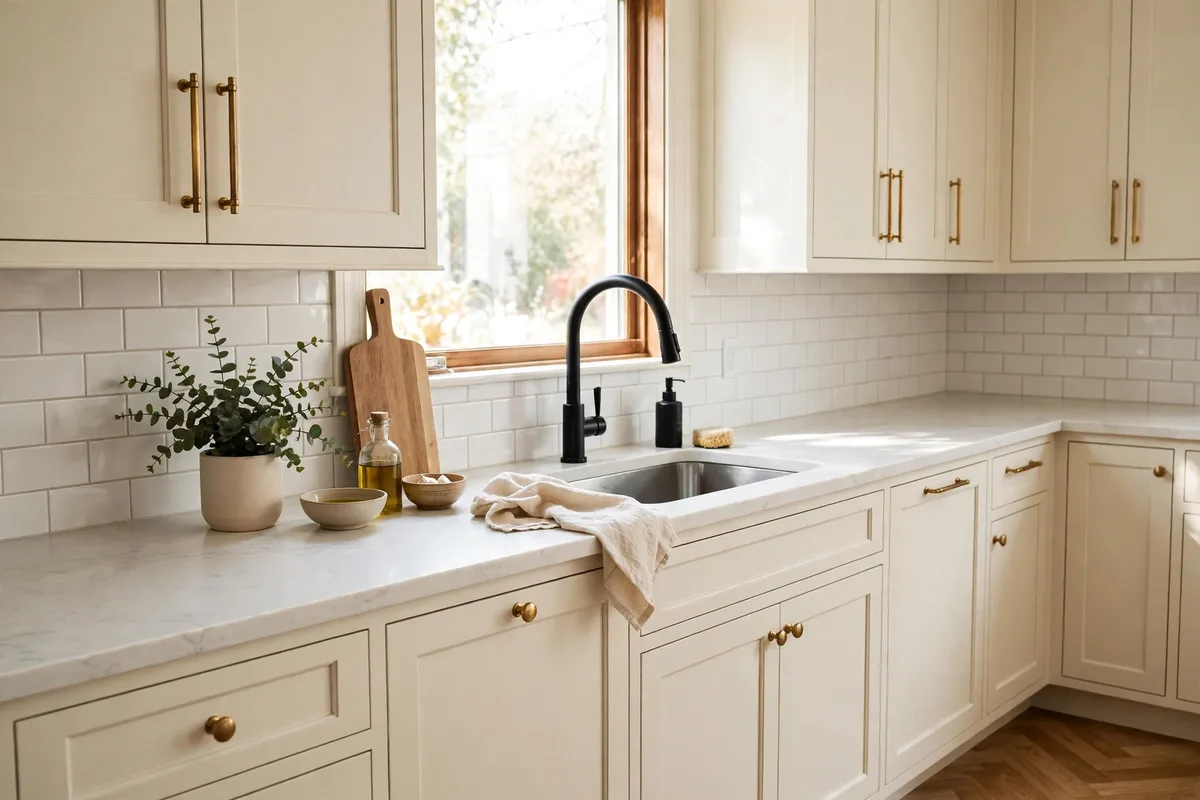
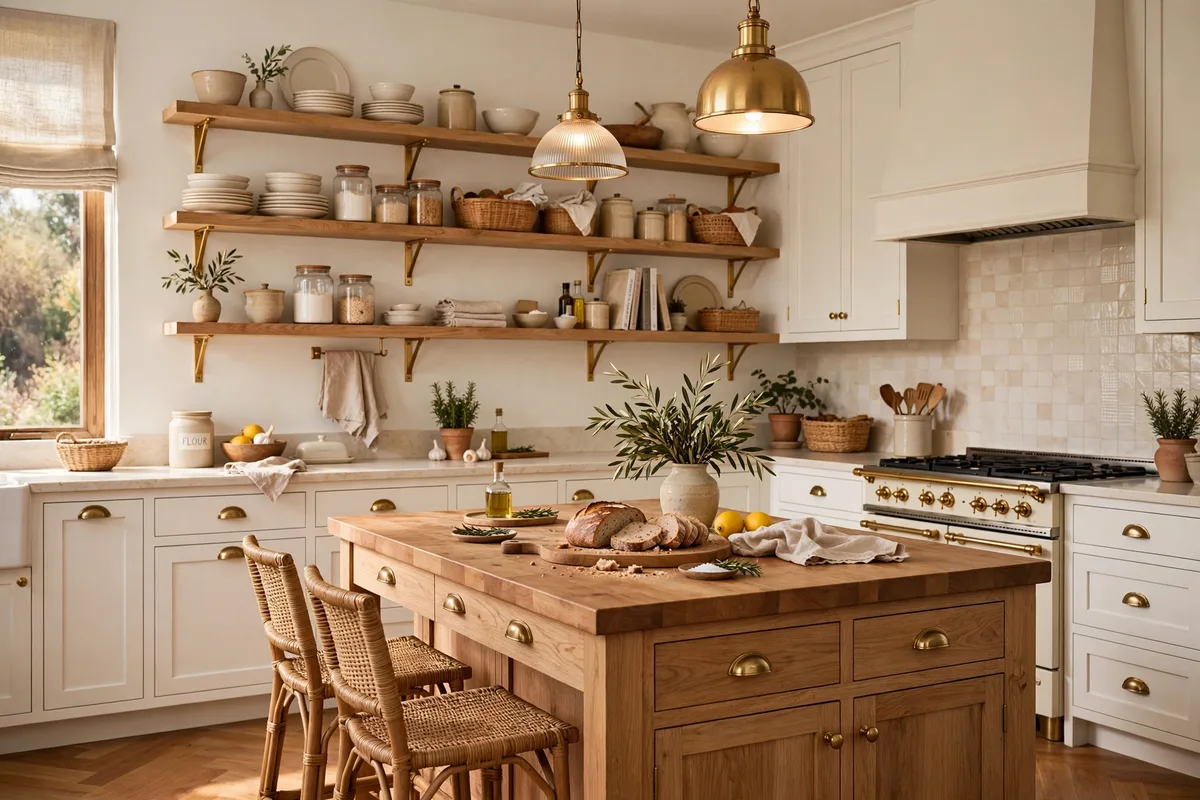
The exception to the one-finish rule is a deliberate two-metal scheme: brass hardware with a matte black faucet, or chrome pulls with brass pendants. Two works because it reads as a decision — one metal leads, the second accents, roughly a 70/30 split. Three metals in one kitchen reads as three separate shopping trips. Give the accent metal at least two appearances — faucet and pendants, say — so it looks placed rather than leftover.
Keep the two metals different enough to be unmistakably intentional: brass against black, chrome against brass. Nickel and chrome side by side just looks like a ordering error, because in poor light they read as the same metal slightly off. This is the same discipline that keeps a white kitchen from going cold — our notes on white kitchen accents make the case that one warm metal is usually the difference.
7. Match the Shape to the Job
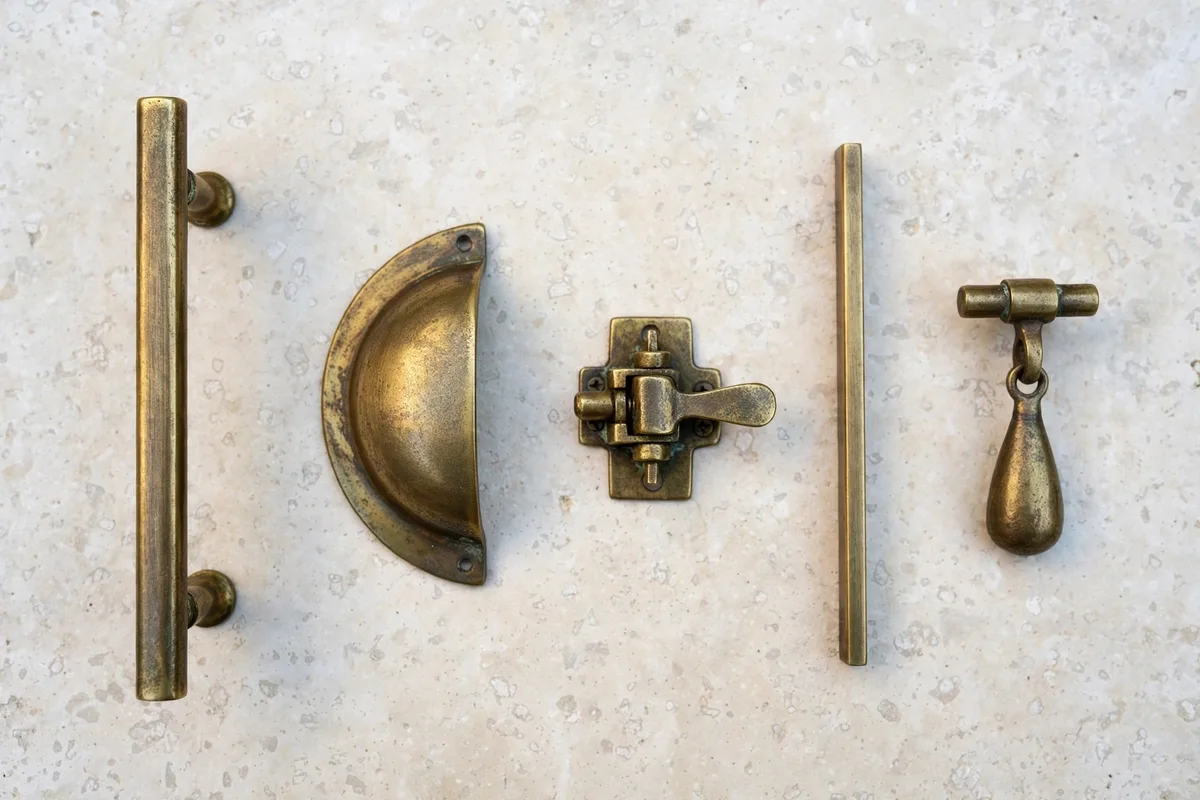
Five shapes cover almost every kitchen. Knobs for doors. Bar pulls for drawers and heavy work. Cup or bin pulls on drawers, which suit shaker and farmhouse fronts and hide fingertips marks underneath. Edge pulls, mounted on the top edge of a drawer or door, for a near-handleless modern look — know that they ask more of your fingertips and show grease on the drawer edge. Latches and drop handles belong to traditional and cottage kitchens, where the visible mechanism is part of the charm.
Nothing in that list is decorative-only: each shape exists because a hand works differently on a door, a drawer and a fridge. If a kitchen uses three shapes, let each shape own one job everywhere it appears — all doors get knobs, all drawers get cups, the fridge gets the long pull — so the pattern is legible at a glance and your hands learn it in a day.
8. Pair the Hardware to the Cabinet Style
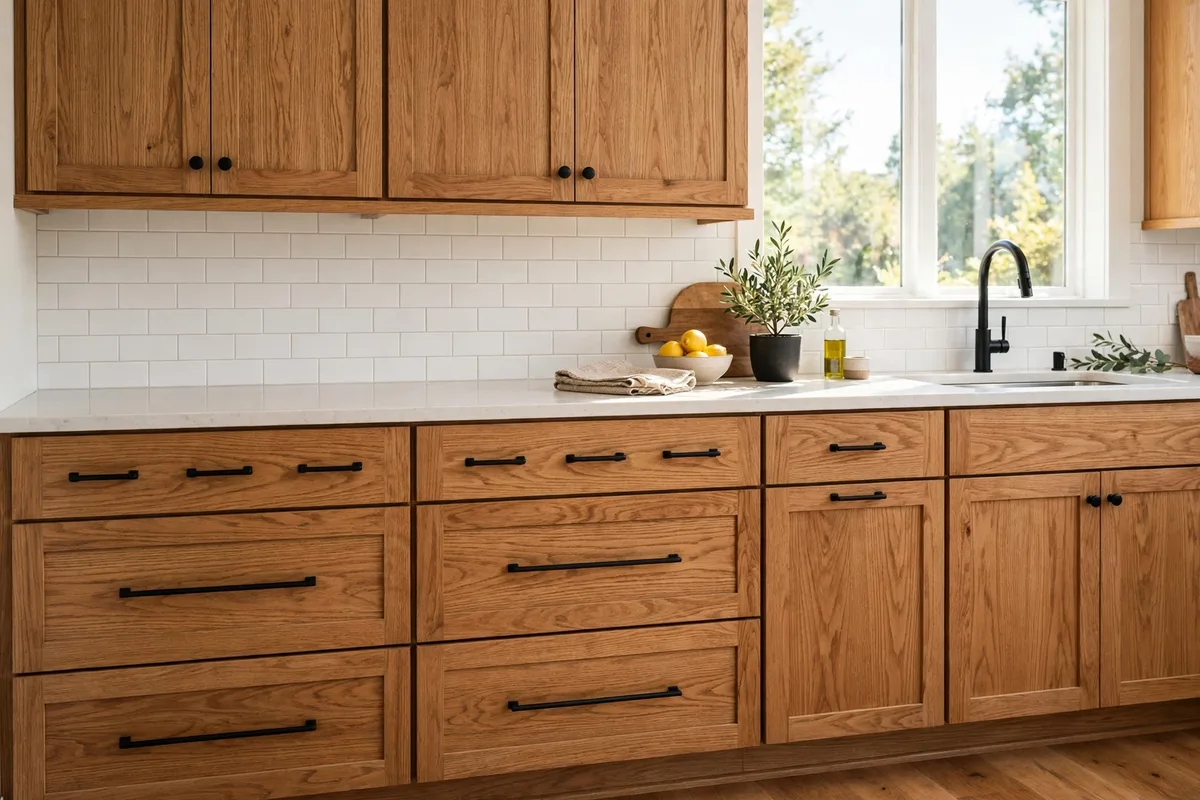
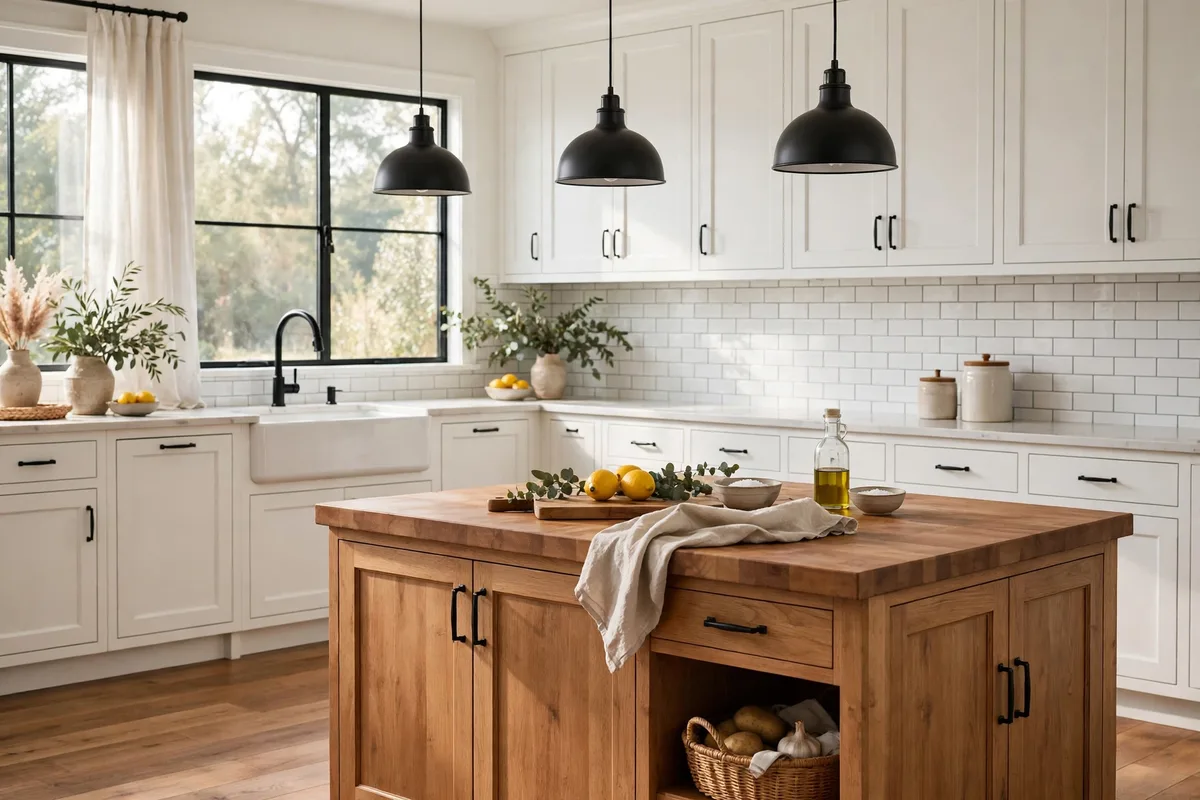
Shaker doors take almost anything — they are the neutral ground of cabinetry — but they are happiest with simple knobs and cup pulls. Flat slab doors want the opposite: a longer bar pull or an edge pull that continues the door’s straight lines. On warm wood cabinets, matte black gives crisp contrast against oak grain, while aged brass sits inside the wood’s own tones; our roundup of warm wood kitchen finishes shows both directions on real doors.
Period styles ask for their own hardware language. A farmhouse kitchen earns its cup pulls and latches — see how they recur through the modern farmhouse kitchen look — while a traditional inset kitchen suits a knob with a backplate, which also protects the paint around the most-touched spot on the door. When in doubt, hold the sample against the actual cabinet in the room’s own light; showroom light lies about warm metals.
9. Count Every Door Before You Spend
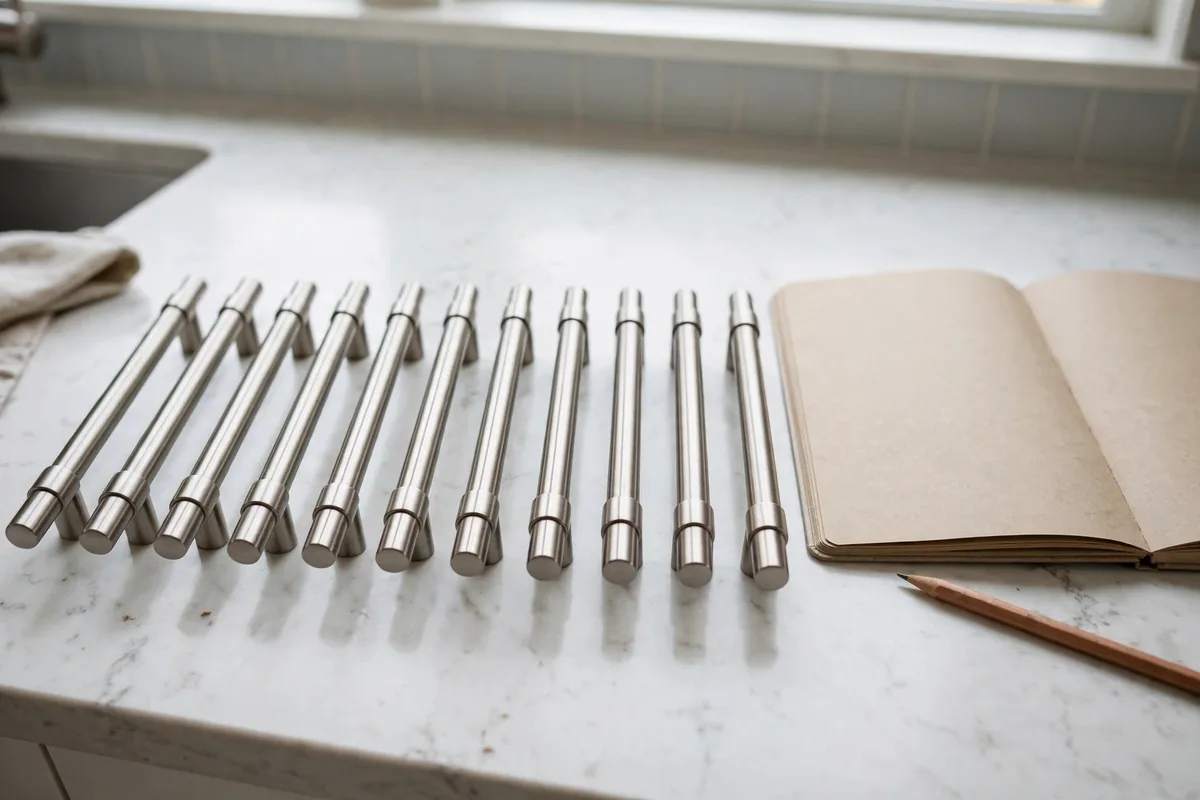
Budget by count, not by feel. Walk the kitchen with a notebook: every door gets one piece, every drawer one or two by the one-third rule, the faux drawer fronts under the sink get none (or matching dummy knobs if you like the look). A typical kitchen lands between 30 and 45 pieces; at hardware prices that range from a few dollars to genuinely startling, the count is the budget. Buy two spares of each type — handles get discontinued, and a dropped pull with a bent screw in year three is a nuisance you can pre-pay for almost nothing.
Spend where the hand goes. The pulls on the three hardest-working drawers and the fridge door deserve the solid, heavier casting; the knobs on the rarely opened uppers in the corner do not. And keep the hole centers consistent across the whole order if you can — one size everywhere means any piece can move to any drawer, which makes the installation, and every future change, simpler.
10. The One-Afternoon Update
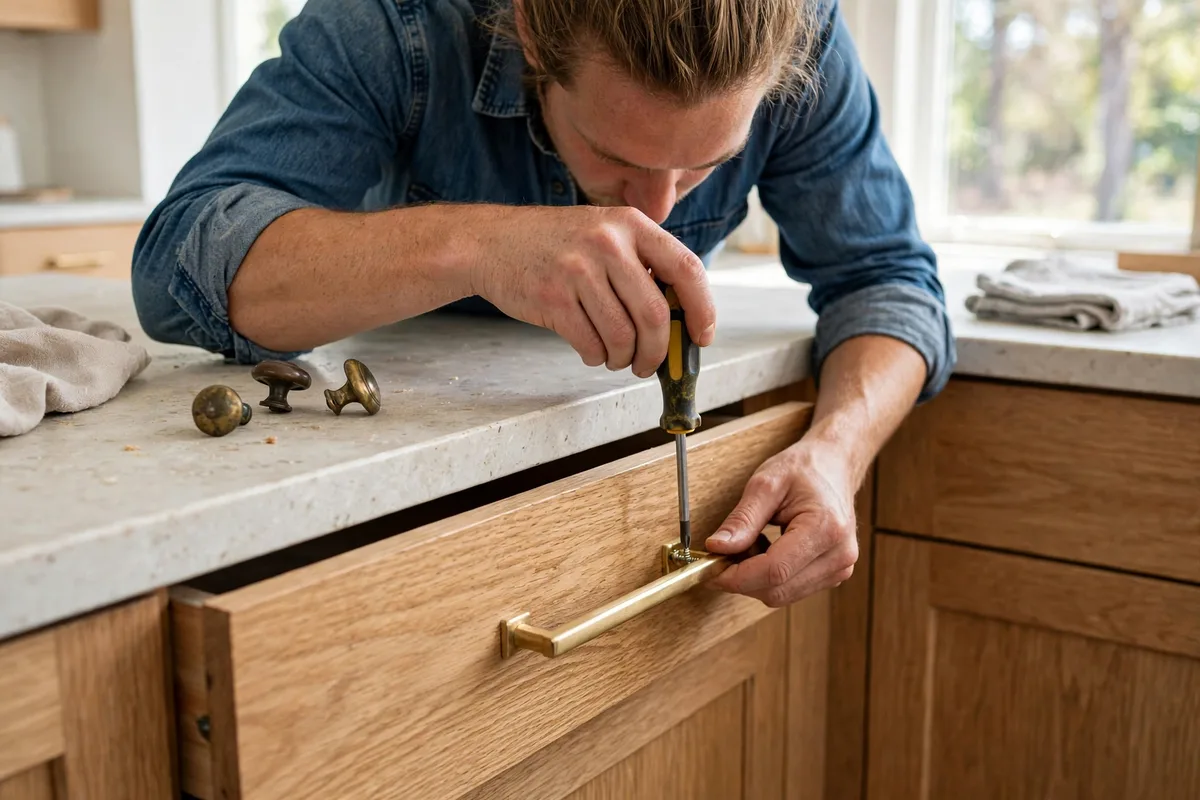
If your cabinets are sound and only the hardware dates them, this is the cheapest transformation in the kitchen: a full swap is an afternoon, a screwdriver and a jig. The trick that keeps it an afternoon is matching the existing center-to-center measurement — new pulls on old holes, no filling, no drilling. Bring one old pull to the store or measure it twice at home; a 96 mm pull and a 5-inch pull look interchangeable on the shelf and are not.
Work in a loop: remove one, fit one, close the door, step back. Do a full bank of drawers before moving on, and photograph the first finished run — by the third run your eye stops checking, and the photograph catches the one pull that sits a hole-width off. Finish by tightening every screw a quarter-turn past snug, no more: over-torquing into MDF or softwood strips the hole, and then the afternoon gets longer.
Frequently Asked Questions
What size pull does a 24-inch drawer need?
By the one-third rule, about 8 inches overall — in practice the 8 13/16 in (224 mm) center-to-center size, or a 6 5/16 in (160 mm) pull if you prefer a lighter look. Never below a third minus a size; undersized is the mistake eyes catch.
Should knobs or pulls go on upper cabinets?
Knobs, mostly. An upper door is light, opens sideways and is reached at arm’s length — a 1¼ in (32 mm) knob at the bottom corner opposite the hinge does the whole job. Long uppers or very tall doors are the exception, where a short pull gives a surer grip.
Can I mix knobs and pulls in one kitchen?
Yes — it is the standard scheme, not a compromise. Knobs on doors, pulls on drawers, one finish across both. What breaks a kitchen is mixing shapes at random within the same job, not dividing shapes by job.
How far from the edge should a cabinet knob be?
About 2½ to 3 inches (64–76 mm) from the corner, measured to the center of the screw, on the stile opposite the hinge. On a framed shaker door, center the knob on the stile itself and the measurement usually lands in that range on its own.
Do the faucet and cabinet hardware have to match?
They do not have to, but the two finishes must be a deliberate pair — brass hardware with a black faucet works, three metals do not. If everything else in the kitchen is one metal, matching the faucet to it is the safer, calmer choice.
What if my new pulls don’t match the old holes?
Three options: buy pulls in the existing center-to-center size (the widest choice is at 3¾ in / 96 mm and 5 in / 128 mm), fit backplates that cover the old holes, or fill with a two-part wood filler, sand, touch up and redrill. In that order of effort.
Are edge pulls a good idea?
For a handleless modern look on light drawers and doors, yes — they keep the fronts completely clean. On heavy drawers they are slower and less comfortable than a bar pull, and they show fingerprints on the drawer edge, so many kitchens use them on uppers only.
How many cabinet handles does an average kitchen need?
Count the fronts: one per door, one or two per drawer. Most kitchens total 30 to 45 pieces. Count before you price — per-piece cost multiplied by an honest count is the only budget number that survives contact with a hardware store.
Does hardware finish affect resale or just looks?
Mostly looks and touch — but a consistent, well-fitted set is one of the details that makes a kitchen photograph as “renovated” rather than “touched up”, and it is the cheapest item on that list by a wide margin.
What is the standard knob size?
1¼ inches (32 mm) in diameter is the cabinet standard, inside a normal range of 1 to 1½ inches (25–38 mm). Go to the top of the range for large doors, slab fronts or bigger hands; drop to 1 inch only on small, light doors.
Conclusion
Kitchen cabinet hardware ideas are easy to collect and hard to fit — the fitting is all numbers. One third of the drawer width, 2½ to 3 inches from the corner, one finish everywhere or two on purpose, a shape matched to the job and a count taken before the money moves. Get those five things right and the set you choose — brass bars, black knobs, cups, latches — will look like it was specified by the kitchen designer, whichever shelf it came off.