
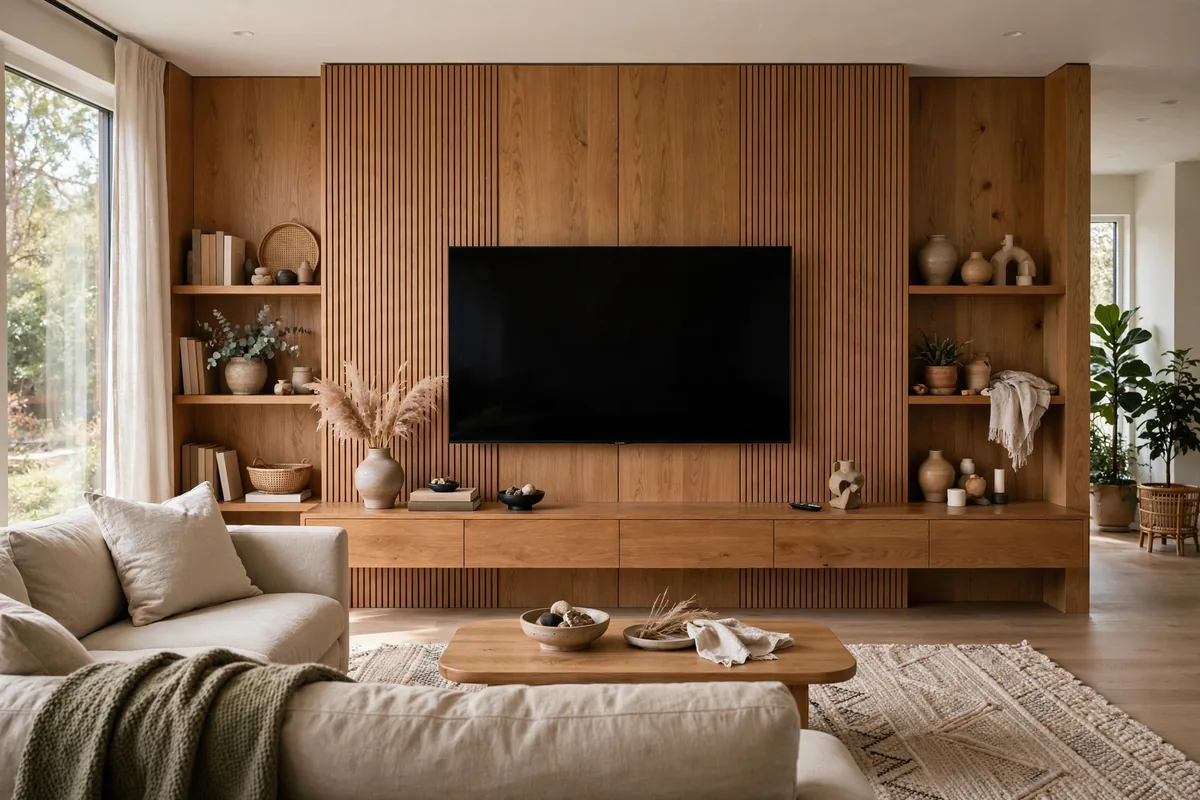
A television on a bare wall rarely looks finished, no matter how good the screen is. The wall around it decides whether the room feels planned or improvised: where cables disappear, where consoles and remotes live, how the screen sits against light from windows, and what your eye lands on when the TV is off. Treating that wall as one complete composition, rather than a mounting job, is the single biggest upgrade most living rooms can make.
This guide walks through ten real design approaches, from a simple floating console to full built-in cabinetry, and explains how to plan each one properly. You will find mounting heights, viewing distances, and cable strategies alongside the styling ideas, plus broader inspiration in our roundup of TV wall design ideas. Work through the approach that fits your room first, then borrow details from the others.
1. The Floating Console Media Wall
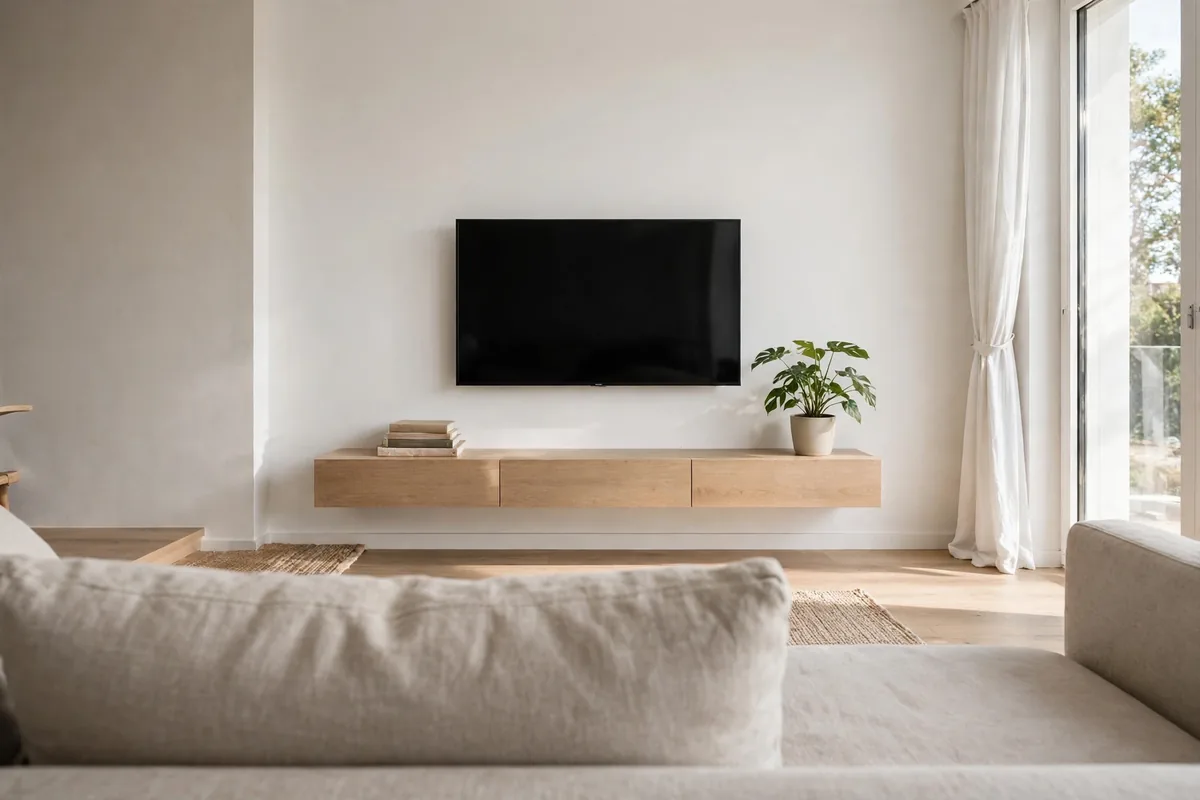
The floating console is the most forgiving place to start. A wall-mounted screen sits above a low, wall-hung cabinet that appears to hover just above the floor. Because nothing touches the ground, the room reads larger, cleaning underneath is effortless, and the console gives devices, routers, and game controllers a closed home instead of a tangle on an open stand.
How to plan it
- Choose a console noticeably wider than the screen, so the TV never overhangs its visual anchor.
- Leave a hand’s width of shadow gap beneath the unit to keep the floating effect convincing.
- Mount the centre of the screen at seated eye level, roughly 42 inches from the floor for most sofas.
- Run cables inside the wall or through a channel hidden behind the console, never draped below it.
Keep styling restrained: a low stack of books, one sculptural object, and a plant at one end are enough. The strength of this approach is calm proportion, so resist filling every inch of the cabinet top. If you need more storage, extend the console run rather than making it taller, which would push the screen uncomfortably high.
2. Full Built-In Shelving and Cabinetry
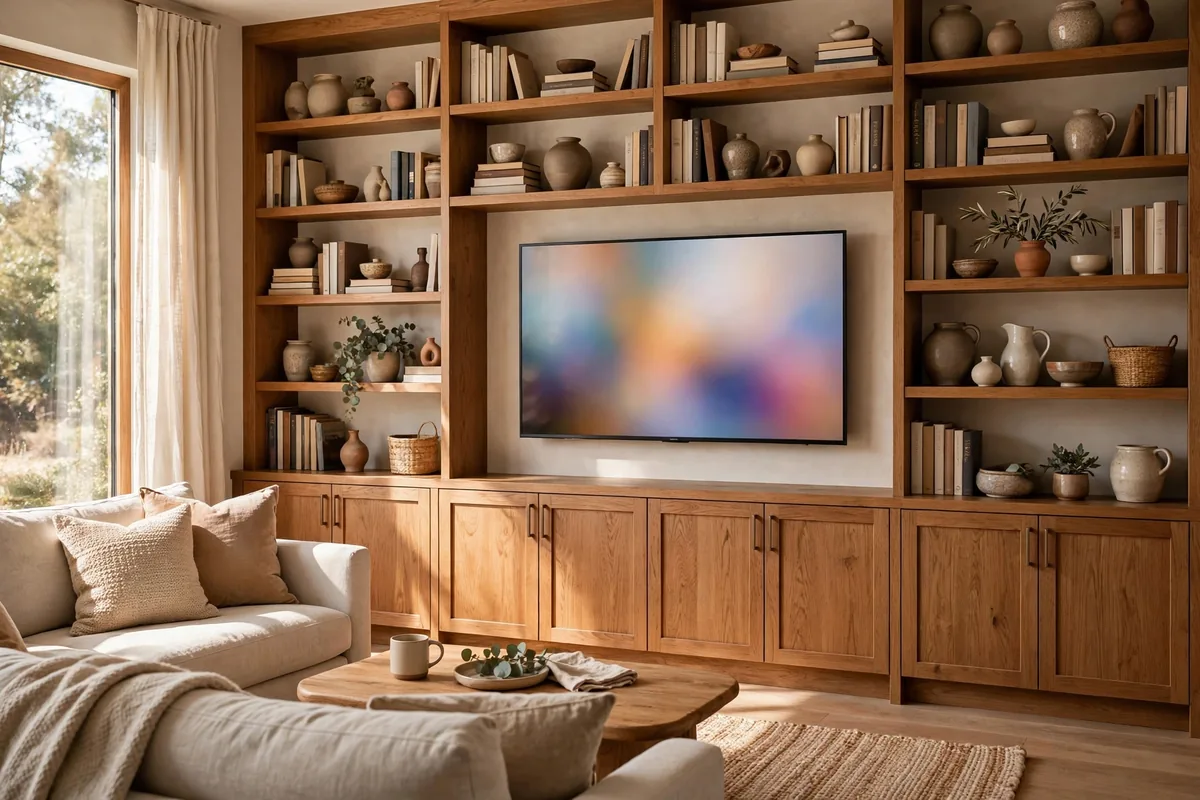
A built-in media wall turns the entire wall into furniture. Floor-to-ceiling cabinetry frames the screen, with closed cupboards below and open shelves beside it for books and objects. It suits larger rooms and long walls where a single console would look lost, and feels like a designer-approved, timeless living room feature rather than a passing trend.
Balancing open and closed storage
- Put closed storage at the bottom, where clutter and chargers actually live.
- Keep open shelves above, styled in loose groups with breathing space.
- Build the TV niche slightly larger than the screen for future upgrades.
- Add ventilation gaps where consoles sit, because enclosed electronics overheat.
Symmetry is classic, with matching towers both sides, but shelving on one side and a tall cabinet on the other feels more relaxed. Paint built-ins to match the walls for a quiet effect, or use a deep tone for a deliberate focal point.
| Approach | Typical effort | Cost feel | Best for |
|---|---|---|---|
| Floating console | Weekend project | Low to mid | Renters, small rooms |
| Paint and panel feature | One to two days | Low | Fast refreshes |
| Slat or slab panel wall | Several days | Mid | Modern schemes |
| Full built-in cabinetry | One to two weeks | High | Large walls, heavy storage needs |
3. Wood Slat and Panelled Feature Walls
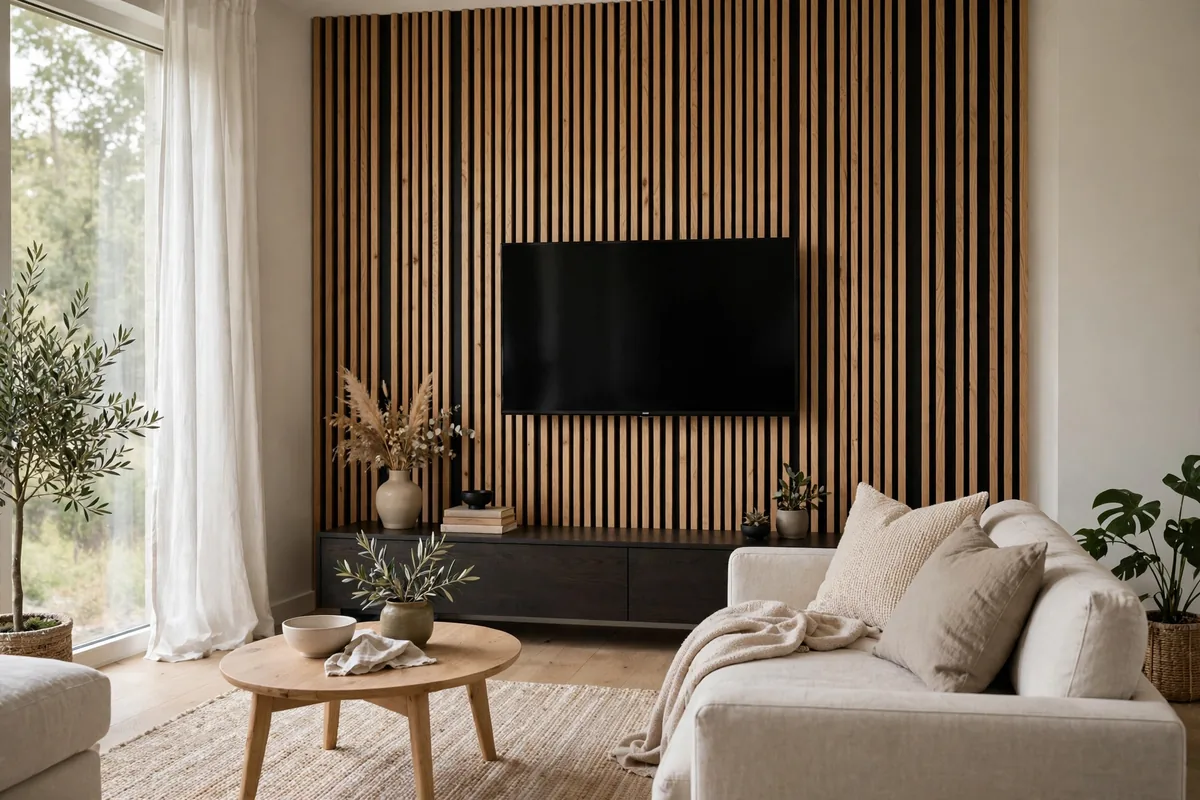
Vertical wood slats and flat panelling give a plain wall rhythm and warmth without adding furniture. Slats create fine shadow lines that make a black screen feel less stark, while large flat panels in oak, walnut, or a painted finish produce a calmer, more tailored backdrop. Both work especially well when the rest of the room is soft and upholstered, because the wall supplies the missing structure.
Choosing between slats and panels
- Slats add texture and can help a room feel taller; keep gaps consistent and paint the backing board dark.
- Flat panels suit traditional rooms and hide wall imperfections and cable channels more easily.
- Limit the treatment to the TV zone on wide walls, ending it cleanly at a natural break.
- Match wood tones to one other element in the room, such as flooring or a coffee table, not to everything.
Plan the panel layout around the screen position first, then work outward, so a slat joint never lands awkwardly at the television’s edge. Leave an accessible section or removable panel behind the TV; panels fixed permanently over cable routes become a problem the first time you change a device.
4. The Dark, Low-Glare Media Wall
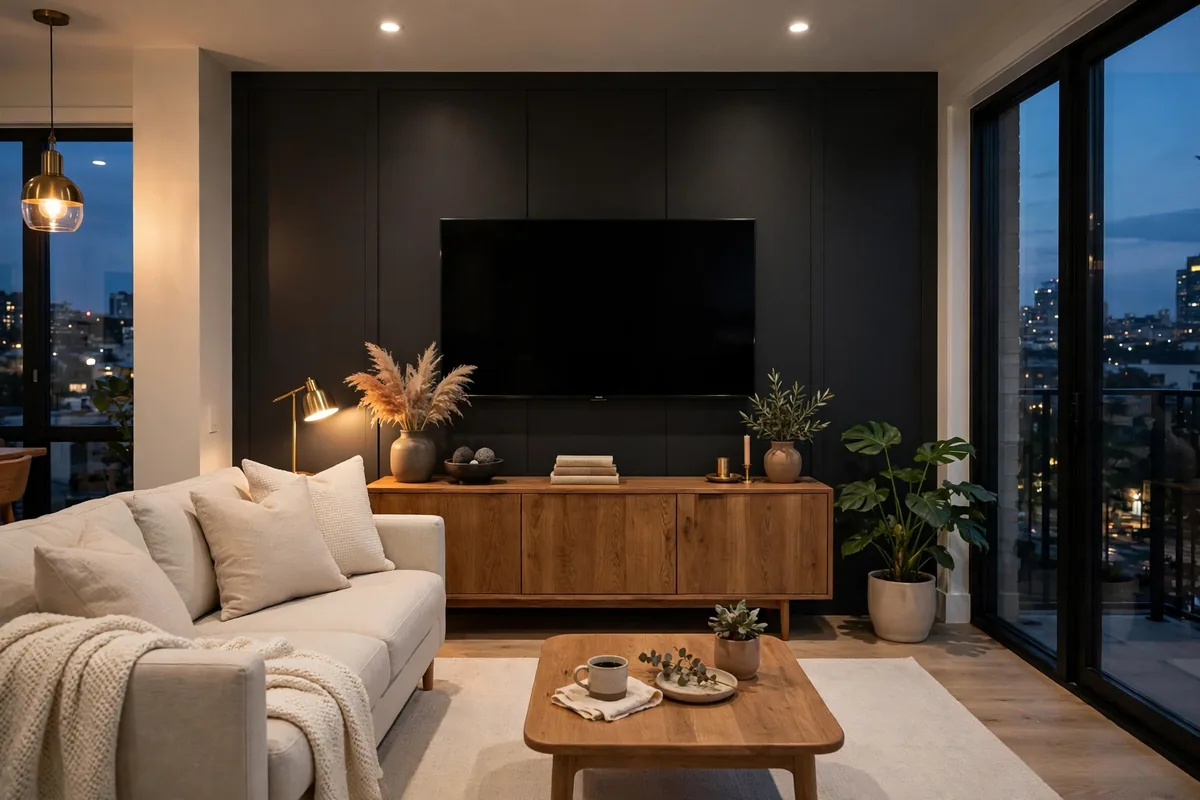
Painting or panelling the TV wall in a deep charcoal, ink navy, forest green, or near-black makes the screen visually disappear when it is off and improves perceived contrast when it is on. This is the cinema-lover’s approach, and it also solves the common problem of a bright white wall making a switched-off television look like a harsh black hole floating in space.
Making dark walls work in daylight
- Choose a matte or eggshell finish, because gloss and satin reflect windows straight back at viewers.
- Carry the colour onto skirting and any built-ins on that wall so the effect reads as one surface.
- Balance the darkness with lighter upholstery, a pale rug, and warm wood within the same sightline.
- Test a large sample area first; deep colours shift dramatically between morning and evening light.
Dark walls forgive imperfect styling, which makes them practical for family rooms. They also hide shadow gaps around the mount and the faint outlines of cable channels far better than pale paint. If the whole wall feels too bold, apply the deep tone only to a wide central panel behind the screen and keep the surrounding wall lighter.
5. Stone and Textured Slab Statements
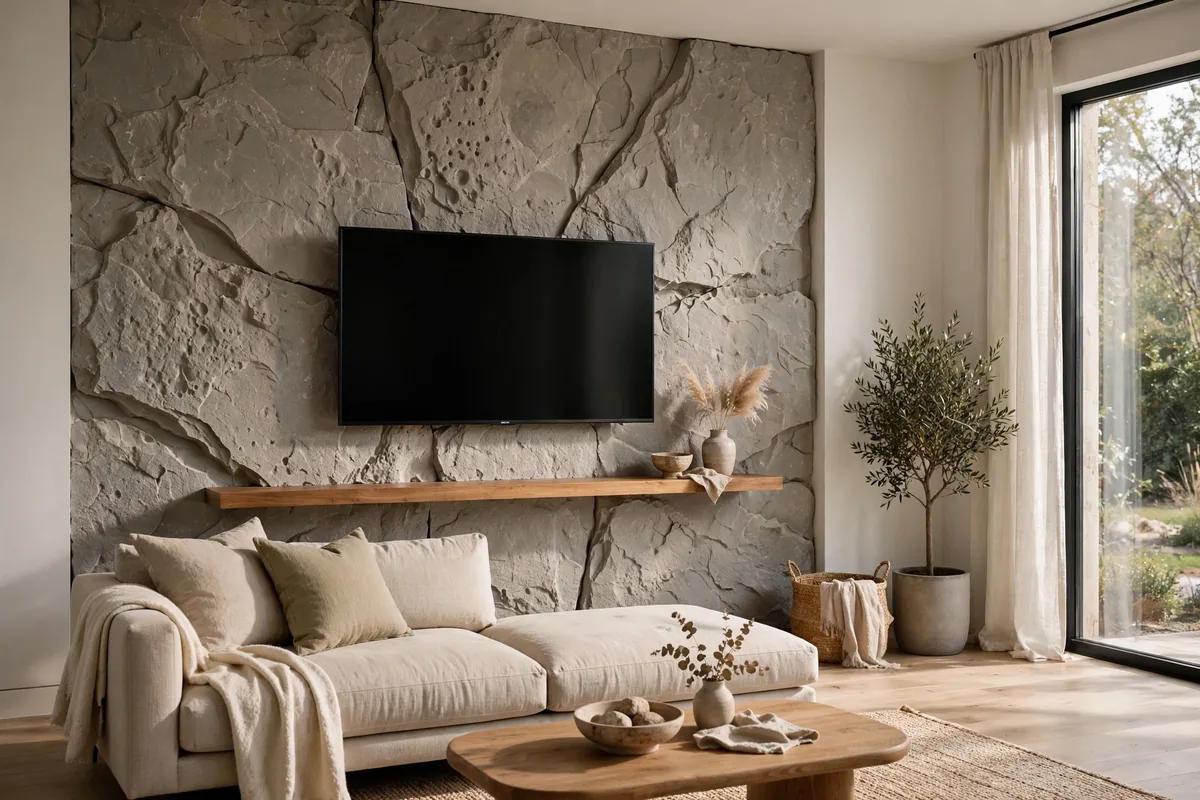
A large-format stone, stone-effect porcelain, limewash, or microcement slab behind the television creates a quiet, luxurious backdrop with very little styling needed. The material itself does the visual work, so consoles can stay simple and shelves minimal. This approach suits contemporary rooms, fireplace walls, and open-plan spaces where the TV wall is visible from the kitchen or dining area as well.
Practical points before you commit
- Large porcelain slabs are lighter and thinner than natural stone, and easier to mount a TV through.
- Always confirm the wall structure can carry both the slab system and a loaded TV bracket.
- Keep grout lines or slab joints symmetrical around the screen position, planned on paper first.
- Choose honed, matte textures; polished stone reflects lamps and windows into the picture.
Because slab walls are a bigger commitment, mock up the screen size with painter’s tape on the finished surface before drilling. Also plan sockets and cable routes before the slabs go on, since cutting finished stone afterwards is difficult and expensive. A simple floating shelf or low bench in warm wood stops the cool, hard surface from making the room feel formal rather than comfortable.
6. Gallery Combinations Around the Screen
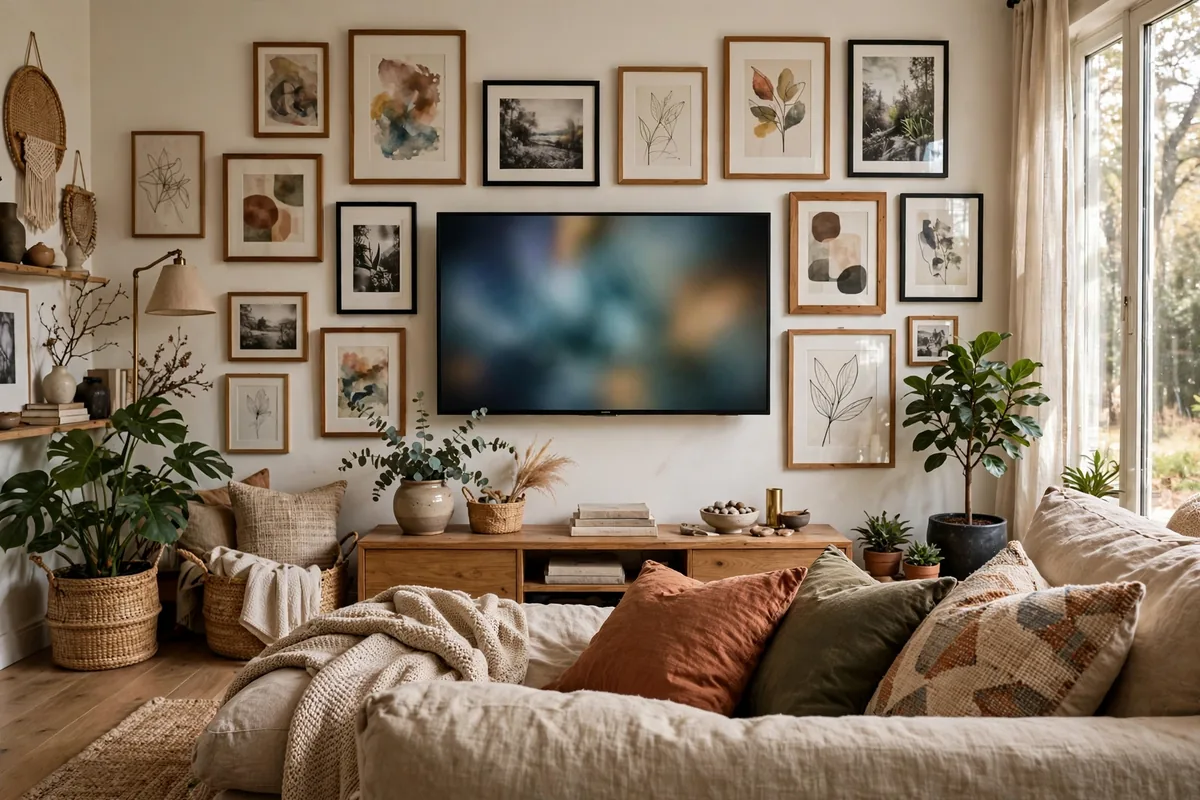
Instead of hiding the television, a gallery combination accepts it as one rectangle among many. Framed prints, photographs, and small artworks surround the screen in a planned arrangement, so the TV reads as part of a collected wall rather than its centrepiece. This works beautifully in eclectic, traditional, and family living rooms where a stark media wall would feel out of character.
Arranging art with a screen
- Lay the whole arrangement on the floor first, with the TV outline taped in the middle.
- Use frames in one or two finishes, and keep spacing between pieces consistent.
- Place the largest artwork beside the screen, not above it, to balance its visual weight.
- Leave a clear margin around the TV so art never crowds the picture or blocks speakers.
An art-mode or framed television strengthens the illusion, displaying a muted image when idle, but it is not essential. What matters is proportion: the combined arrangement should be wider and taller than the screen alone, giving the eye other places to travel. Avoid tiny frames clustered tightly around a huge television; scale the artwork up so the composition feels confident rather than apologetic.
7. Fireplace and TV on One Balanced Wall
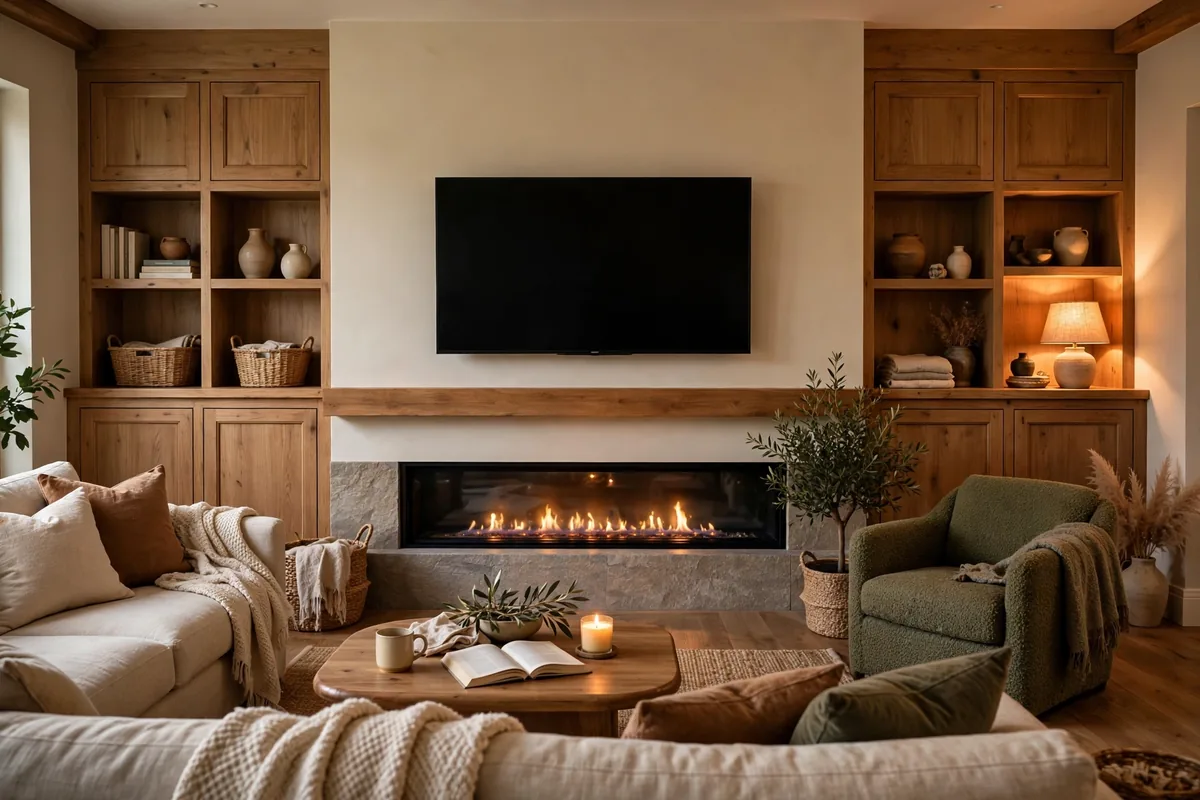
Many living rooms have only one wall that suits both the fireplace and the seating, so the two must share it gracefully. The most successful versions treat them as a stacked composition: a low, wide fireplace below, the screen above it at the lowest comfortable height, and built-ins or panelling tying the whole wall together so neither element looks like an afterthought.
Getting the proportions right
- Keep the fireplace opening and the screen roughly similar in width for a calm, stacked look.
- Use a mantel or a deep shelf as a visual break, and check heat guidance for your fireplace type.
- If the firebox raises the screen too high, consider placing the TV on an adjacent section of the same wall instead.
- Style the mantel ends lightly so decoration never competes with the picture.
Heat and viewing height are the two honest constraints here, and both deserve checking before any building work. Where mounting above the fireplace is genuinely too high, an angled arrangement or a screen set into cabinetry beside the fire often looks better and watches better. Never let the architecture force a viewing position your neck will regret every evening.
8. Small-Room and Apartment TV Walls
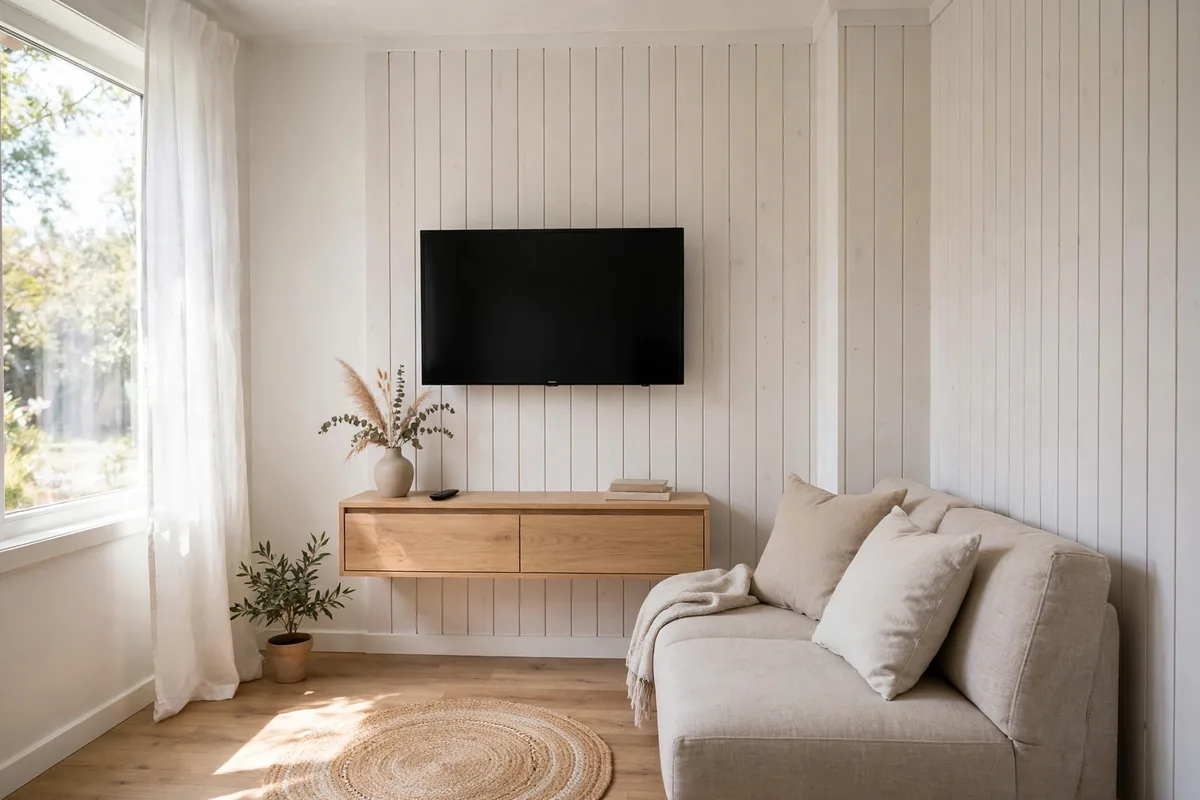
In a compact room the TV wall has to earn its footprint. Wall-mounting the screen, floating every piece of storage, and keeping the palette tight will make the wall feel designed rather than squeezed. This is also where planning your small living room layout and the TV wall together pays off, because seating distance decides the right screen size before you buy anything.
Small-space rules that work
- Choose the screen for your viewing distance using the table in the final section, not the biggest that fits.
- Use one low floating unit rather than several small pieces of furniture along the wall.
- Prefer light or mid-tone panelling and paint, which keep the wall from advancing visually.
- Hide the router, remotes, and chargers in the single unit so surfaces stay completely clear.
Renters can achieve most of this without building work: a paintable cable channel, a wall-mounted shelf under the screen, and a deep painted panel behind the TV create structure that can be reversed later. Mirrors and artwork on the adjoining walls, rather than the TV wall itself, add the sense of space without creating glare near the screen.
9. Backlit Walls and Layered Lighting
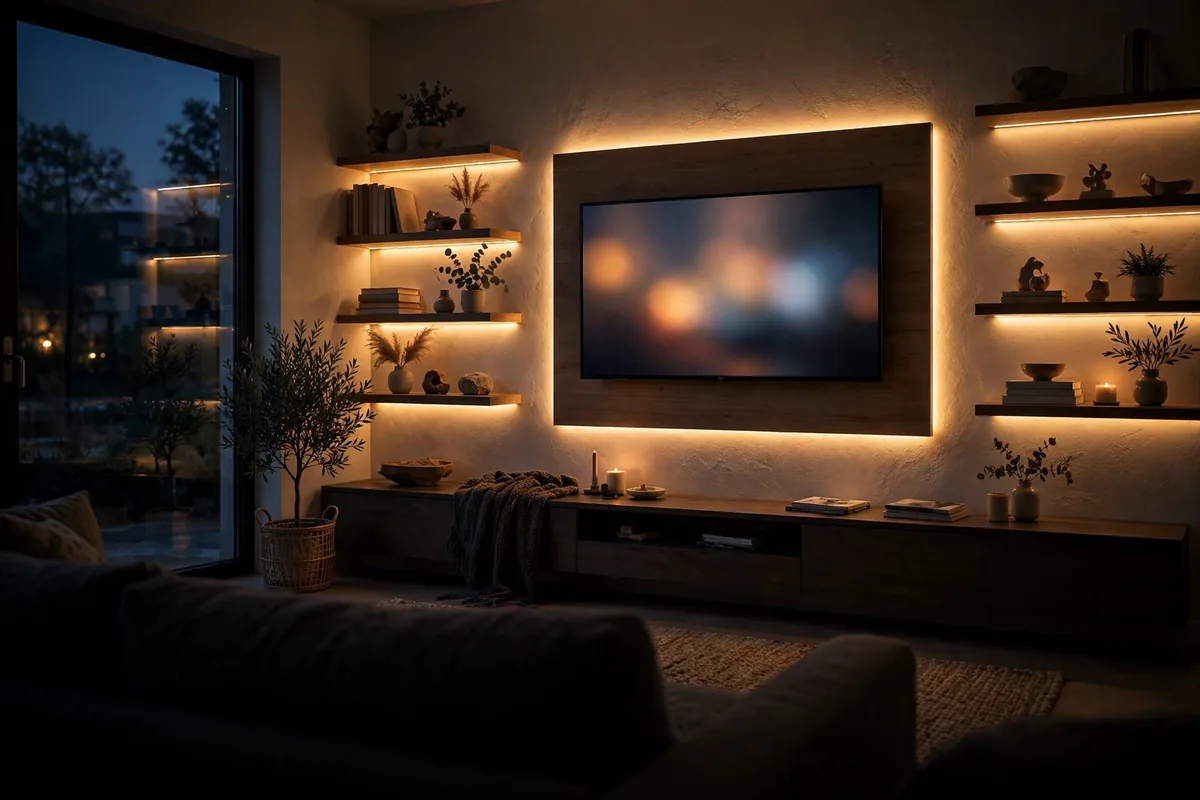
Lighting is what separates a media wall that looks good at noon from one that feels right at nine in the evening. A soft glow behind the screen or behind a floating panel reduces the contrast between a bright picture and a dark room, which many viewers find more comfortable, while shelf lighting and sconces give the wall depth when the television is off.
Layering light around the screen
- Add bias lighting behind the TV or panel, in a neutral warm white, on its own dimmer or switch.
- Light open shelves from above with discreet strips so objects cast soft shadows downward.
- Place sconces or lamps to the sides of the seating, never where they reflect in the screen.
- Avoid downlights directly in front of the TV wall; they wash the picture and glare on the glass.
Plan circuits and sockets at the design stage, because retrofitting strips and switches after panelling is fixed is frustrating. Keep every light source dimmable if you can. The goal is a wall that can shift from bright family use in the afternoon to a low, calm glow for films, without anyone changing a bulb or unplugging a strip.
10. The Planning Checklist Before You Drill
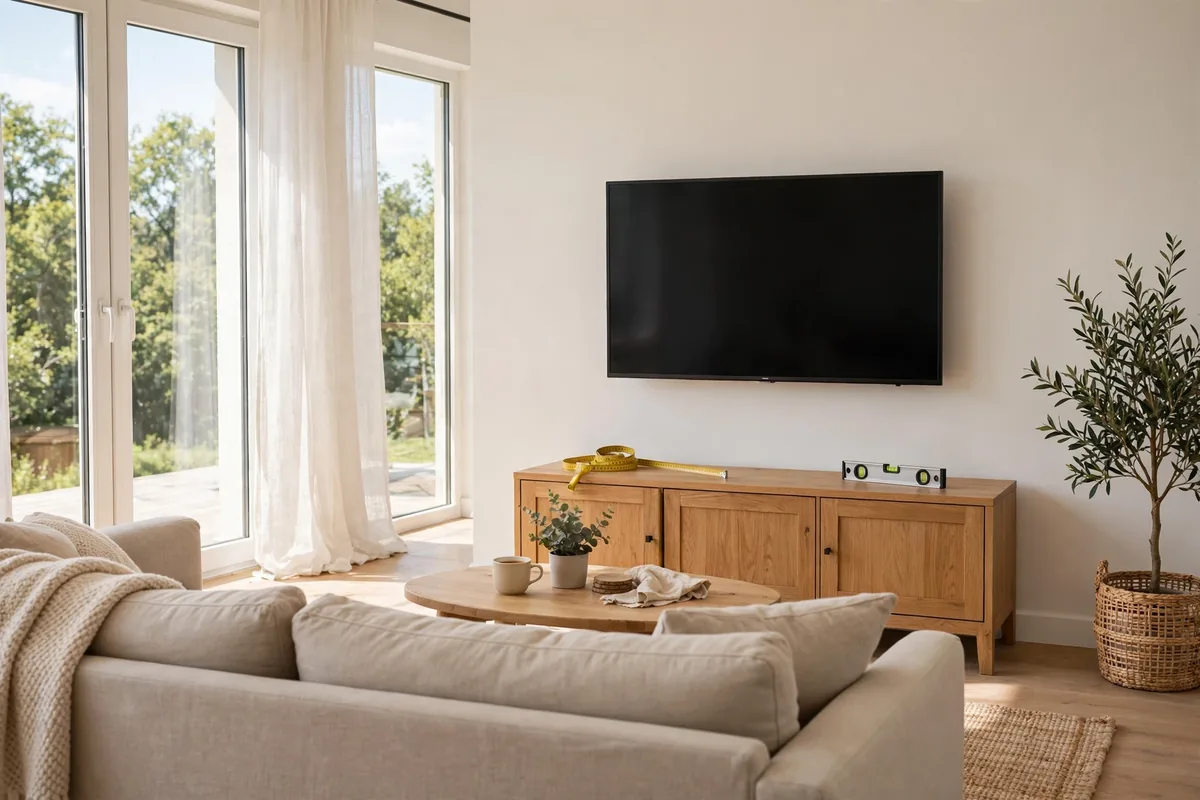
Every successful example here was decided on paper before a hole was drilled. Measurements, screen size, seating, sockets, and cable routes all interact, and changing any of them afterwards is painful. Work through this checklist in order, whatever approach you chose.
Measure, mount, and hide cables
- Mark the screen outline in tape at seated eye level, then live with it for a day.
- Confirm the centre sits around 42 inches from the floor for typical sofas.
- Plan sockets behind the screen and inside the console, plus a cable channel.
| TV size (diagonal) | Comfortable viewing distance | Good room fit |
|---|---|---|
| 43 inches | About 5.5 to 7 feet | Small rooms, apartments |
| 55 inches | About 7 to 9 feet | Average living rooms |
| 65 inches | About 8 to 11 feet | Larger living rooms |
| 75 inches | About 9.5 to 12.5 feet | Open-plan spaces |
Finally, check viewing angles from every seat, not just the middle of the sofa, and leave access to every cable end. A wall that lets you swap a streaming box in two minutes will stay looking designed for years; one that traps its cables will not.
Frequently Asked Questions About TV Wall Design
How high should a TV be mounted on the wall?
For most sofas, the centre of the screen should sit at seated eye level, which usually works out at around 42 inches from the floor to the middle of the television. Sit in your usual spot, find your natural eye line, and mark it before drilling. Mounting higher suits reclined seating, but avoid showroom height.
What is the best colour to paint behind a TV?
Deep matte colours such as charcoal, ink navy, and forest green help a screen blend into the wall and reduce glare, which suits film-focused rooms. Lighter neutrals work better in bright, multi-purpose living rooms. Either way, choose a flat or eggshell finish, because shiny paint reflects windows and lamps directly back at viewers.
How do I hide TV cables without opening the wall?
A paintable cable channel that runs in one straight line from behind the screen down into your console is the simplest reversible option, and it can be painted to match the wall exactly. Group power and signal cables together, keep the route vertical, and avoid draping cords diagonally, which always looks unfinished and draws the eye.
How far should a sofa be from the TV?
As a comfortable guide, sit roughly 5.5 to 7 feet from a 43-inch screen, 7 to 9 feet from a 55-inch screen, and 8 to 11 feet from a 65-inch screen. If you regularly watch films, sitting toward the closer end feels more immersive; for everyday viewing, the middle of each range suits most people.
Do wood slat walls work in small living rooms?
Yes, provided the slats are kept to the zone behind and just around the television rather than covering every wall. Light or mid-tone wood keeps the room feeling open, and a dark backing board gives the screen definition. Stop the slats at a clean edge and avoid combining them with several other textures in a compact space.
Should a TV go above a fireplace?
Only if the resulting screen height stays comfortable and your fireplace type allows it safely. A deep mantel can shield the television from rising heat, but many fireplaces push the screen far above seated eye level. If viewing feels strained during a test with a taped outline, place the TV beside the fireplace or on another wall instead.
What should I put on shelves around a TV?
A relaxed mix of books laid both upright and stacked, a few ceramics, framed photographs, and one plant per section works well. Leave some shelf space deliberately empty so the wall can breathe, group objects in threes, and keep everyday clutter such as remotes and chargers inside closed cabinets rather than styling it on open shelves.
Can renters create a designed TV wall?
Yes. A painted panel behind the screen, a wall-mounted floating shelf or console fixed with minimal screws, an art-mode display, and a paintable cable channel together create a deliberate, finished look. All of it can be removed and made good when you leave, so check your agreement, fill holes carefully, and keep the original paint colour noted.
How much storage does a TV wall really need?
Enough closed space for your devices, remotes, chargers, games, and any media collection, plus a little spare room for future additions. Most households need less open shelving than they expect and more closed cabinet space than they plan. Measure your equipment, add ventilation room around it, and size the cabinets to that list rather than guessing.
Should the TV wall match the rest of the room?
It should belong to the room without necessarily matching it exactly. Repeating one or two elements, such as the wood tone of a floor or the colour of your upholstery, ties the wall in, while a contrasting panel, deeper paint colour, or different texture gives it the definition a focal wall needs to feel intentional.
Conclusion
A great TV wall is never really about the television. It is about proportion, storage, light, and the quiet satisfaction of a room where everything has a place and nothing dangles, glares, or floats without purpose. Whether you choose a simple floating console, a dark painted panel, or full built-in cabinetry, the planning steps stay the same: measure honestly, mount at eye level, hide the cables properly, and style with restraint. Start with the approach that fits your room and budget, live with the taped outline for a day, and build once. The result is a wall that looks deliberate in daylight and feels effortless every evening.


Pingback: Tips for TV Wall Design Inspiration | Fixes That Actually Work
Pingback: TV Wall Design Ideas: 14 Functional & Stylish Looks