
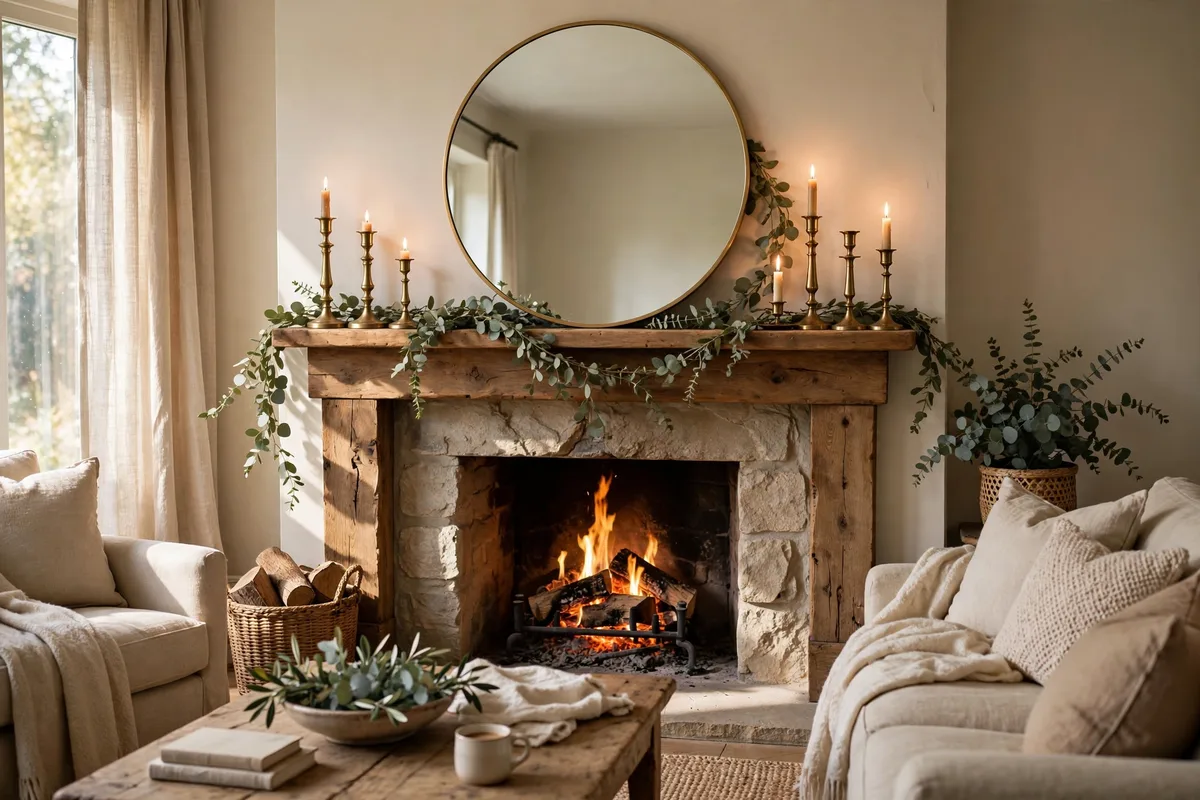
The TV wall is the most-watched wall in your house — literally. It anchors the living room, frames family movie nights, and quietly sets the style tone every guest notices first. Yet most of us treat it as an afterthought: a screen plopped on a stand, cords dangling, nothing else designed.
Great tv wall design ideas change that. The goal is simple — make the television feel like part of the room rather than a black box floating on drywall, while hiding the very real clutter of remotes, routers, game consoles, and cables. You don’t need a renovation budget to do it. What matters is composition: the right proportions, a framing element that gives the screen context, lighting that softens the tech, and a storage plan for the gadgets.
Below you’ll find 10 core design ideas, and four of them include a bonus variation — 14 looks in total, from quick weekend projects to full built-in walls. Each look is then worked as a finished example — with its planning block, the fireplace and small-room builds, and a pre-drill checklist — in our tv wall design examples guide.
Two rulings govern every look below: the TV belongs on the wall that faces the main seating directly, with minimal window glare and width for the screen plus its framing; and its centre belongs at seated eye level, roughly 40 to 48 inches.
The catalogue’s working instruments: an approach table rating the built-in, floating-console and paint-only routes by cost and effort in words, a mounting centre of roughly 40 to 48 inches, gallery spacing of two to three inches, flanking towers of 18 to 24 inches, shelves eight to ten inches deep, and bias light in warm white around 2700–3000K.
In this guide: The Gallery Wall Frame-Up · The Floating Console Look · The Wood Slat Accent Wall · The Full Built-In Media Wall · The Dark Paint Drama Wall · The Stone or Marble Statement Wall · The Symmetrical Shelf Frame · The Backlit LED Glow Wall · The Concealed TV Wall · The Open-Shelf Styling Wall · Frequently Asked Questions About TV Wall Design · Conclusion
1. The Gallery Wall Frame-Up

A gallery wall is one of the smartest ways to make a TV disappear into your decor — not by hiding it, but by turning it into just one “frame” among many. When the screen is off, it reads as part of an intentional art arrangement instead of a blank electronic slab.
Start by laying your frames on the floor and arranging them around a TV-sized cutout. Keep the spacing between frames consistent — two to three inches works well — and align at least one edge of the arrangement for structure. Mixing frame sizes adds energy, but sticking to two or three frame finishes (black, white, oak) keeps it from looking chaotic. For arrangement as a system in its own right — seven patterns, a gap table, alignment lines — see our layout guide for tv wall design styles.
Styling tips that keep it clean
- Hang art with its center at roughly the same sightline as the TV center so nothing fights the screen.
- Anchor the arrangement with a low console beneath it; the gallery and console together read as one composition.
- Set your TV’s ambient or art mode to display photography when idle, and the “TV as art” illusion is complete.
This approach suits renters too, since it needs nothing more than nails and frames.
2. The Floating Console Look

A floating console — a low cabinet mounted to the wall with no legs touching the floor — is the minimalist’s answer to the media unit. The visible floor underneath makes the room feel larger, and the clean line under the TV reads as deliberately designed rather than assembled from leftovers.
Choose a console that’s wider than your TV so the screen doesn’t overpower it. Inside, reserve space with ventilation for routers, streaming boxes, and consoles; closed fronts keep everything invisible. Drill or route cables through the wall behind the unit, or use a paintable cord channel if you can’t open the drywall.
Bonus idea: the light strip tuck. Mount a warm LED strip on the underside of the console so it casts a soft pool of light on the floor. The floating effect doubles, and the glow works as a night light for late-night kitchen trips.
Wall-mount the TV so its bottom edge sits a few inches above the console top. The small gap between screen and cabinet creates a crisp, layered silhouette — one of those details that makes a wall look designed rather than improvised. Those console rules, quantified and put in decision order with the rest of the wall, are our tv wall design ideas tips.
3. The Wood Slat Accent Wall
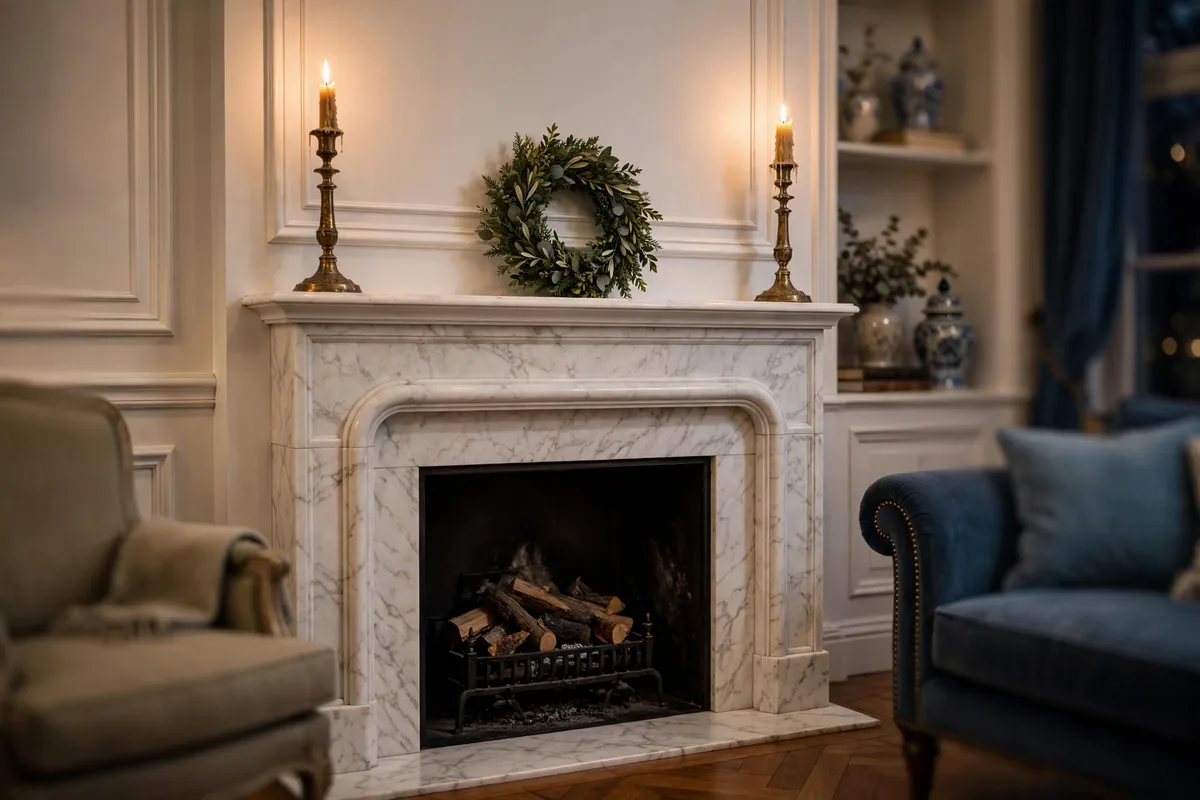
Vertical wood slats are the texture trick that never seems to age. A field of oak or walnut battens behind the TV adds warmth, rhythm, and just enough pattern to give the screen a proper backdrop — without the busyness of wallpaper.
You can run slats floor to ceiling for drama, or stop at a horizontal shelf line to break the wall into zones. Leave a narrow gap between battens so shadows fall into the grooves; that shadow play is what makes the wall look expensive. Keep finishes matte to avoid glare reflecting off the wood, and hide a power outlet behind the panel so no cables cross the slats.
Bonus idea: the painted variation. If natural wood clashes with your palette, paint the slats the same color as the wall in a limewash or eggshell finish. You keep all the texture and shadow depth with a tone-on-tone look that’s quieter and more contemporary.
For more inspiration on panelling styles, Panelling Direct’s media wall guide walks through ribbed, shaker, and tongue-and-groove options worth comparing.
4. The Full Built-In Media Wall
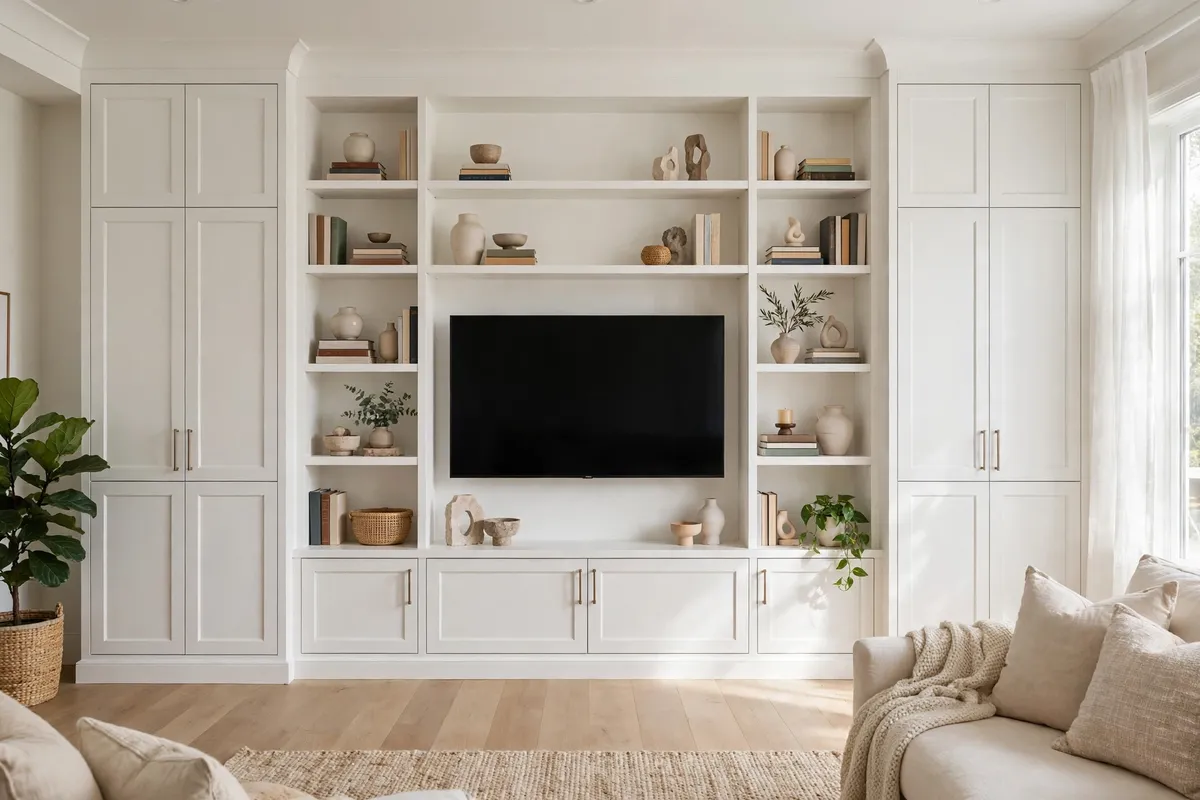
This is the heavyweight option: cabinetry built wall to wall, often floor to ceiling, with the TV recessed into a central bay and storage flanking it on both sides. When it’s done well, the entire wall reads as architecture rather than furniture, and every cable, console, and board game has a place behind closed doors.
Plan the center bay first. It should be a few inches wider than the TV on each side, with conduit behind it for future cable runs — you’ll thank yourself when you upgrade. Flanking towers work best around 18 to 24 inches wide; deeper than that and they start to swallow the room. Include open niches sparingly — two or three display spots are plenty, since a media wall full of knickknacks defeats the calm it promises.
| Approach | Cost & effort | Storage | Best for |
|---|---|---|---|
| Full built-in | High | Maximum | Forever homes, large walls |
| Floating console | Low–medium | Moderate | Renters, small rooms |
| Accent paint only | Minimal | None (pair with furniture) | Quick refreshes |
Because this is a permanent build, mock it up with painter’s tape on the wall first and live with the outline for a week before committing.
5. The Dark Paint Drama Wall
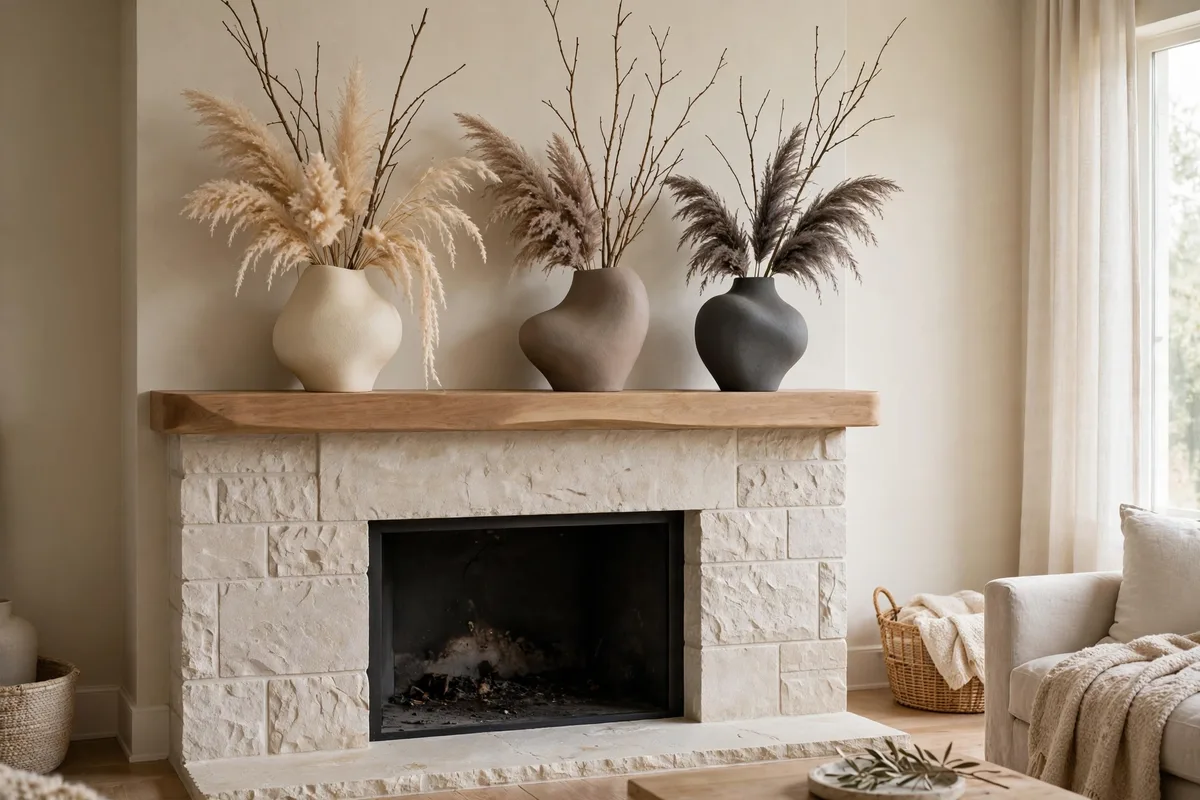
A single coat of paint is the cheapest TV wall idea on this list — and sometimes the most effective. Dark walls (charcoal, deep navy, forest green) shrink the visual gap between the screen and its surroundings, so a turned-off TV fades into the wall instead of glaring like a black hole.
Use a matte or eggshell finish; anything glossier will bounce light onto the screen. Paint the full wall rather than a tight rectangle behind the TV — a half-painted patch almost always looks unfinished. Then balance the darkness: light-colored seating, a pale rug, or brass lighting keeps the room from feeling like a cave.
Bonus idea: the two-tone wall. Paint the lower two-thirds of the wall dark and the upper third a lighter tone, split by a slim picture ledge. You get the drama at screen level and breathing room above it.
Test your color with a large swatch board propped against the wall for a few days — dark paint looks dramatically different under daylight versus evening lamplight.
6. The Stone or Marble Statement Wall
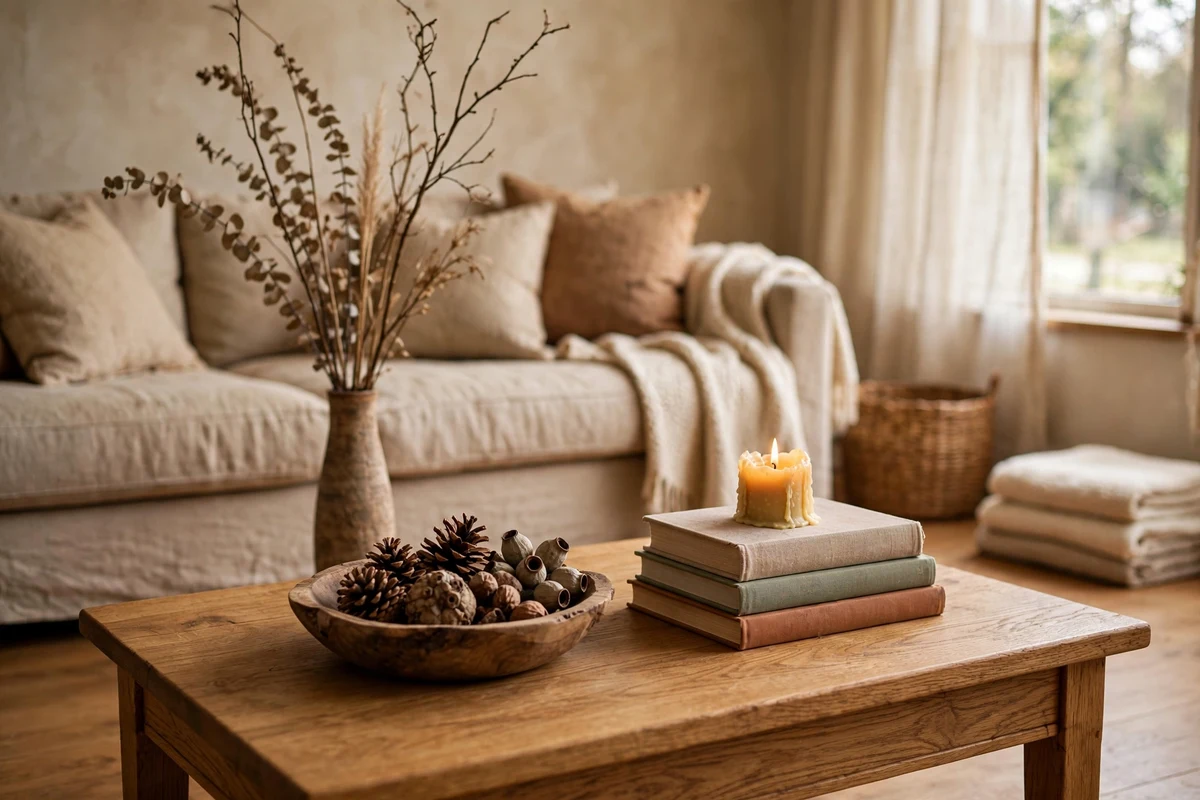
Nothing says “feature wall” like real (or convincingly faux) stone behind the TV. A full-height slab of marble-look porcelain, fluted travertine, or book-matched panels turns the media zone into the room’s architectural centerpiece — and because the material itself is the decor, you need almost nothing else on the wall.
Porcelain slabs are the practical choice: they mimic marble veining at a fraction of the weight and cost, and they’re easy to wipe clean. For texture lovers, fluted or split-face stone catches light beautifully when a picture light or recessed spot grazes across it. Whatever you choose, plan cable routing before the stone goes up — chiseling channels through installed panels is nobody’s idea of fun.
Natural stone and wood tones are among the materials designers return to again and again; pairing them with classic proportions is one reason these walls age gracefully, as designer-approved timeless living room features show.
Keep the TV mount low-profile so the screen hugs the slab, and resist the urge to add decor — on a statement wall, restraint is the styling.
7. The Symmetrical Shelf Frame

Symmetry is a shortcut to a wall that looks designed. Flank the TV with matching shelves — floating ledges, ladder bookcases, or identical cabinets — and the screen sits naturally as the center of a balanced composition.
The trick is matching, not mirroring. Use identical shelving units, but style them differently: books on one side, a sculptural vase and framed print on the other. Keep the shelf fronts roughly flush with or slightly behind the TV’s face so the screen stays the visual leader. A pair of small picture lights or sconces above the outer shelves adds evening polish and draws the eye across the whole width of the wall.
Bonus idea: the alcove frame. If your room has chimney-breast alcoves, build the shelves into them. The TV hangs on the central breast, shelving fills the recesses, and the architecture does half the design work for you.
Symmetry works especially well in formal living rooms, but don’t force it on an awkward wall — an asymmetrical arrangement that’s honest about the room’s shape always beats symmetry that fights it.
8. The Backlit LED Glow Wall

Bias lighting — a soft glow cast behind the TV — is the rare upgrade that’s both decorative and genuinely functional. A warm halo around the screen reduces the contrast between the bright picture and a dark room, which many viewers find easier on the eyes during evening watching.
The cleanest execution is an LED channel recessed into the panel or wall behind the TV, washing light evenly outward. Stick with warm white (around 2700–3000K) rather than color-changing party modes for everyday use; it flatters skin tones and wood finishes instead of turning your living room into a nightclub. Dimmable strips tied to a smart plug let you drop the brightness for movie nights without adding another remote.
Mount the strip an inch or two inside the TV’s edges so the glow spills evenly on all four sides, and keep the surrounding wall matte — glossy paint will show every hotspot. Behind a slatted or paneled wall, the same technique turns the grooves into lines of light, doubling the drama.
One practical note: bias lighting complements good viewing distance, so pair it with seating placed at a comfortable remove from the screen.
9. The Concealed TV Wall
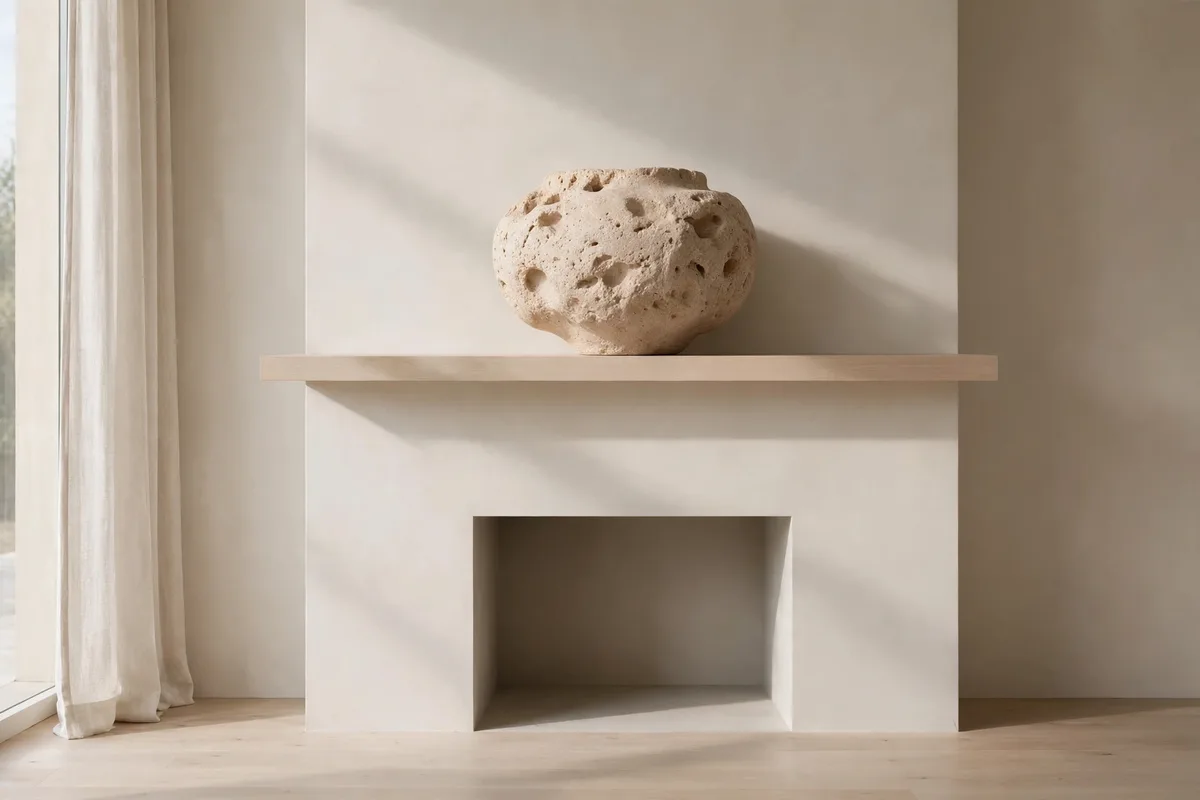
Some rooms — formal living rooms, design-led spaces — simply look better without a visible screen. The concealed TV wall hides the television behind something beautiful until showtime: sliding wood panels, a large piece of art on a lift, or even a mirror that turns transparent when the TV powers on.
Sliding panels are the most achievable version. Mount barn-door-style hardware above a recessed bay, and two panels glide apart to reveal the screen. Use the same material as the wall (painted MDF, slatted wood) so the closed wall reads as pure architecture.
A framed canvas on a motorized mount can also rise to reveal the TV behind it — dramatic, and it gives you rotating artwork for free.
Whatever mechanism you choose, plan for three things: power and HDMI access behind the hiding layer, ventilation so the TV doesn’t cook in its enclosure, and a remote or wall switch that doesn’t require opening the panels to use. Concealment that needs a wrestling match to operate won’t survive a week of real life.
10. The Open-Shelf Styling Wall
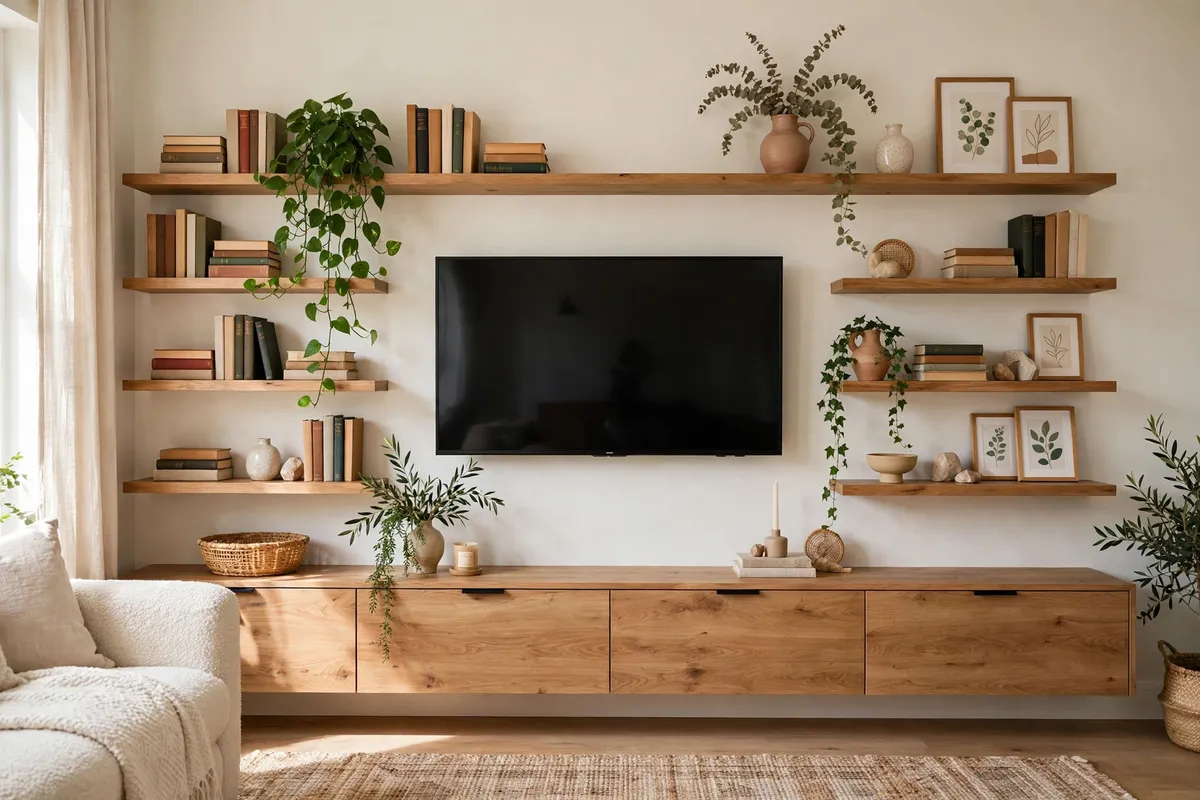
Floating shelves around the TV let you have it both ways: a functional media zone and a display wall for the objects that make the room feel like yours. The shelves hold books, plants, and art; the closed console below swallows the tech.
Style in odd numbers and vary heights — a tall vase, a stack of books, a small framed photo — and leave some shelf space empty. Crowded shelves read as storage; breathing room reads as styling. Keep the shelves’ depth shallow (eight to ten inches) so they don’t jut past the TV and create an awkward canyon around the screen.
The styling formula
- Top shelves: art and tall objects that draw the eye up.
- Mid shelves: books and medium pieces at screen-adjacent height.
- Near the TV: low, simple items so nothing competes with the picture.
Run cables inside a slim raceway painted to match the wall, dropping from each shelf’s end down behind the console. Styled shelves with visible wire spaghetti undo all your good work — and visible cords are one of the tacky small living room decor mistakes that cheapen an otherwise polished wall.
Frequently Asked Questions About TV Wall Design
What is the best wall for a TV in the living room?
The best wall is the one that faces your main seating directly, with minimal window glare and enough width for the screen plus some framing. Avoid walls with heavy foot traffic passing in front of the screen. If you’re rethinking the whole layout, these seating ideas for small living rooms pair well with a well-placed TV wall.
How high should I mount my TV?
Center the screen at your seated eye level — for most sofas that’s roughly 40 to 48 inches from the floor to the middle of the screen. Mounting too high is the most common mistake and causes neck strain. Mount manufacturers like Vogel’s publish detailed height guides by screen size if you want exact numbers.
How wide should the console under the TV be?
Choose a console that’s wider than the TV — extending several inches beyond each side looks balanced, while a unit narrower than the screen looks top-heavy. Leave a small gap between the console top and the TV’s bottom edge for a layered, intentional silhouette.
Should a TV wall be darker or lighter than the rest of the room?
Slightly darker usually works better, since dark tones reduce the contrast between the screen and the wall when the TV is off. Charcoal, navy, or deep green in a matte finish are safe choices. Light walls can work too if you add texture, like wood slats or paneling, for visual interest.
How do I hide the cables behind my TV?
Run cables through the wall with an in-wall rated kit for the cleanest look, or use a paintable cord cover as a renter-friendly alternative. Choose a console with cable cutouts and keep a power strip inside it so only one cord needs routing.
Can a TV be part of a gallery wall?
Yes — treat the screen as one large “frame” in the arrangement and keep spacing between frames consistent. Matching frame finishes and a console underneath tie it together. When the TV is off, switch it to an art or ambient mode so it blends with the real artwork.
Are floating TV consoles practical for everyday use?
Yes, as long as they’re mounted into wall studs (or proper anchors) and rated for the weight. They free up floor space, simplify cleaning, and hide cables well. Make sure there’s ventilation for game consoles and streaming boxes stored inside.
How can I reduce glare on my TV wall?
Choose a wall that doesn’t face large windows directly, and use matte finishes on paint and panels so they don’t reflect light. Position lamps and sconces so they don’t shine onto the screen, and consider blackout or sheer curtains for the brightest hours.
Do LED lights behind the TV actually help?
Bias lighting — a soft glow behind the screen — reduces the harsh contrast between a bright picture and a dark room, which many people find more comfortable for evening viewing. Warm white, dimmable strips work best; skip rainbow effects for daily use.
What’s the easiest TV wall upgrade for a weekend project?
Paint. One dark, matte accent color behind the TV transforms the wall in a day with no carpentry. A floating console with a cord cover is the next step up, and peel-and-stick wood-look panels give you slat texture without power tools.
Conclusion
Your TV wall doesn’t need to be the room’s compromise — it can be its best feature. Whether you go bold with a stone slab, quiet with dark paint, or practical with built-in storage, the principles stay the same: frame the screen, hide the cables, light the wall thoughtfully, and give your gadgets a home behind closed doors.
Start with the idea that fits your budget and your lease. A weekend paint job or a floating console can look just as intentional as a full renovation when the proportions are right. And if you’re tackling a bigger build, mock it up with tape, live with it for a week, and measure twice before you drill. The execution layer beneath the measuring — studs and load, the labelled service loop, the in-wall power safety rule — lives in our tv wall design inspiration.
Fourteen ideas, one goal: a living room where the TV feels like it belongs. Pick your favorite, and your next movie night will look as good as it feels.


Pingback: TV Wall Design Tips: Fixes That Actually Work
Pingback: TV Wall Layout: 7 Patterns, Spacing and Alignment Rules