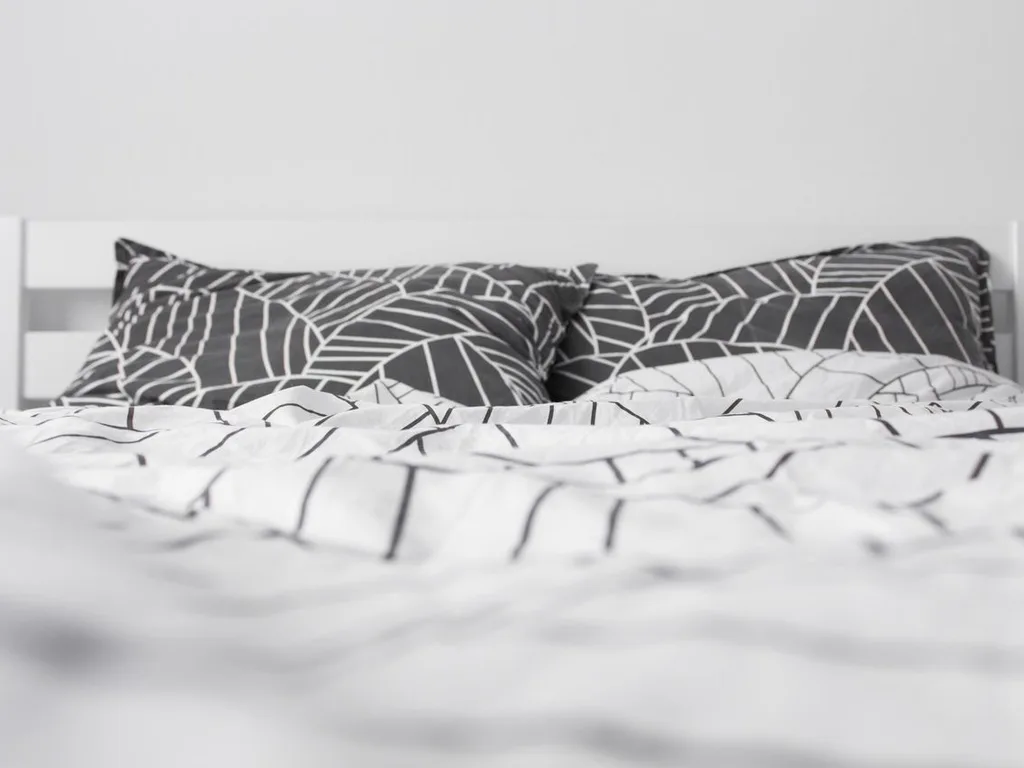
Disclosure: As an Amazon Associate I earn from qualifying purchases. This article contains affiliate links. If you purchase through these links, we may earn a commission at no additional cost to you.
The search for the best duvet cover set microfiber soft wrinkle free bedding usually starts with laundry fatigue: you want a bed that looks smooth five minutes after the wash, not after twenty minutes with an iron you do not own. A microfiber duvet cover set — typically a queen or king cover plus two pillow shams — is made from finely woven polyester microfiber, often described as brushed microfiber for its soft, slightly peachy surface. Its selling points are consistency: it resists wrinkles straight from the dryer, holds colour wash after wash, and costs less than most natural-fibre equivalents.
But microfiber has a real rival in cotton percale, and the honest answer to “which is better” depends on how you sleep and how you launder. This comparison lays the two fabrics side by side, then walks through the construction details — closures, corner ties, fabric weight — that decide whether any duvet cover, in either fabric, stays put and stays smooth.
Quick Verdict
Choose microfiber if your priorities are a smooth, wrinkle free finish with almost no effort, softness from the first night, and easy care at a friendly price — it is the practical winner for guest rooms, kids’ beds, rentals and anyone who irons nothing, ever. Choose cotton percale if you sleep hot and want a crisper, more breathable, cooler-to-the-touch fabric, and you accept some creasing as part of its character. Within microfiber, the best duvet cover set adds three construction details: eight internal ties or loops rather than four, a hidden zipper or well-made button closure, and a stated fabric weight (GSM) heavy enough to feel substantial rather than papery.
Important: “Microfiber” on a listing tells you the fibre, not the quality. Check the set’s fabric weight (GSM) and whether the cover has corner ties — a thin, tieless microfiber cover will bunch and shift no matter how soft it feels, and that, not the fabric, is what most unhappy buyers are actually describing.
What to Look For Before You Buy
Fabric weight (GSM). Microfiber bedding is graded in grams per square metre. Very light microfiber (around 80–90 GSM) can feel thin and clingy; mid-weight fabric around 100–120 GSM is where most well-reviewed sets sit — soft, opaque and durable without feeling heavy. If a listing gives no weight at all, that omission is information in itself.
Closure type. Three options dominate. A hidden zipper is fastest and gives the cleanest edge. Buttons look classic but take longer and can pop open if the duvet shifts. Envelope closures (a fabric flap, no hardware) are the budget route and the most likely to gap. For a wrinkle free look, a zipper plus a tucked flap is the combination that keeps the end of the bed smooth.
Corner ties or loops. The cover must anchor to the duvet insert at the corners, ideally at the sides too — eight attachment points beat four, and four beat none. Without ties, the insert migrates into one corner within two nights regardless of fabric. Check the listing photos for ties inside the cover; if you cannot see them, assume they are not there.
Sizing and oversize dimensions. A queen duvet cover is typically around 88 by 92 inches or 90 by 90 inches, meant for a queen insert with a little drape. If your insert is sold as “oversized queen,” match the cover to the insert’s real measurements, not the label — a cover two inches too small makes even microfiber look strained and wrinkled at the seams.
What’s in the set. A standard set is the cover plus two pillow shams (one for twin). Confirm shams are included and whether they are envelope or zip closure. Also check whether the set is sold as a comforter cover only — it does not include the duvet insert itself, a misunderstanding behind a surprising number of returns across all bedding brands.
Care instructions. Microfiber’s easy-care claim should be backed by plain instructions: machine wash cold or warm, tumble dry low. Fabric softener is generally discouraged for microfiber because it coats the fibres and dulls the softness over time; if easy care matters to you, a fabric that wants no special products is the point of choosing it.
Microfiber vs Cotton Percale: Which Suits Your Bed?

| Factor | Brushed microfiber | Cotton percale |
|---|---|---|
| Feel out of the pack | Soft and smooth immediately, slight peach-skin surface | Crisp and cool, softens gradually with washing |
| Wrinkle behaviour | Comes out of the dryer nearly crease-free | Creases visibly; needs a quick iron or acceptance |
| Breathability / hot sleepers | Warmer; can feel less airy in summer | Breathes better; cooler hand-feel |
| Colour and print | Holds dye strongly, colours stay vivid | Can fade gently over years of washing |
| Care | Machine wash, tumble low, no ironing, skip softener | Machine wash, may need ironing for a crisp look |
| Static and pet hair | Can build static; hair brushes off easily | Less static; hair tends to weave in more |
| Typical price position | Budget to mid range | Mid range and up for long-staple cotton |
Choose microfiber if you want the bed to make itself
Microfiber’s tightly woven polyester fibres simply do not hold a crease the way cotton does, so the bed looks finished straight from the dryer — this is the entire “soft wrinkle free” appeal, and it is real. It is also forgiving bedding for busy households: colours stay put, the fabric dries fast (useful in shared laundry rooms), and it stands up to frequent washing in kids’ rooms and guest beds. If your bedding priority list starts with “looks neat, feels soft, costs little, asks nothing,” microfiber is the honest answer.
Choose cotton percale if you sleep hot and like crispness
Percale is a plain weave with a matte, hotel-crisp feel that many sleepers simply prefer against the skin, and cotton breathes better than polyester on warm nights. Pair it with cooling sheets for night sweats and you have the coolest mainstream bedding combination short of linen. The cost is upkeep: percale creases, and if a rumpled bed bothers you, you will be smoothing or ironing it in a way microfiber never asks of you.
The middle path many households land on
A common real-world split is microfiber on the beds that get photographed, gifted or guest-used, and cotton on the main bed of a hot sleeper. There is no rule that every bed in the house must match. Seasonal swapping works too — microfiber’s warmth is an asset in winter and its breathability limit matters less, while percale earns its place from late spring onward.
Pros and Cons
Pros
- Genuinely wrinkle resistant — smooth straight from the dryer, no ironing routine.
- Soft from the first wash, with no break-in period.
- Holds colour well and dries quickly, suiting frequent washing.
- Usually the lowest price route to a coordinated cover-and-shams set.
- Pet hair and lint brush off the smooth surface easily.
Cons
- Less breathable than cotton — warm sleepers can find it stuffy in summer.
- Can develop static cling, especially in dry winter air.
- Very light, cheap microfiber feels thin and can pill; fabric weight matters.
- Polyester is a synthetic fibre, which some buyers avoid on principle.
- Absorbs oils over time if washed carelessly with softener-heavy routines.
Who Should Buy It — and Who Should Skip It
Buy a microfiber duvet cover set if: you want a smooth, made bed with the least possible effort; you are furnishing a guest room, rental, dorm or kids’ room; you wash bedding often; or you want to change colours seasonally without spending much per set. Add a silk pillowcase for frizzy hair on top and the bed feels a tier above its price.
Skip microfiber if: you are a committed hot sleeper in a warm climate — percale, linen or a breathable summer layer like our guide to a weighted blanket for hot sleepers will serve you better; you strongly prefer natural fibres; or the listing hides its fabric weight and tie details, because in this category those two specs do most of the work. Everyone else can buy microfiber with confidence, provided the construction checks pass.
Helpful Tips for Daily Use
Put the cover on the easy way. Turn the cover inside out, reach in and grab the top corners of the duvet insert through the fabric, then shake the cover down over it — the burrito or inside-out method takes two minutes once learned. Tie every corner tie before the first shake; untied corners are why inserts end up bunched at the foot of the bed by Wednesday.
Wash it like a synthetic, because it is one. Cool or warm water, tumble dry low, and take it out promptly — “wrinkle free” still rewards the five minutes of smoothing you do while it is warm from the dryer. Skip fabric softener and dryer sheets if you can; they coat microfiber’s fine fibres and are the main reason sets lose their soft hand-feel after a few months.
Rotate two sets instead of over-washing one. A second set costs little in this category and doubles the life of both: one on the bed, one in the wash, no emergency laundry before guests arrive. It also lets you run a warmer colour in winter and a lighter one in summer — the cheapest seasonal bedroom refresh there is, as our bedroom guides on Ideas Home Accessories keep coming back to.
Frequently Asked Questions
Is microfiber really wrinkle free?
Effectively, yes. Polyester microfiber’s tightly woven fibres resist holding a crease, so a set taken promptly from a low-heat tumble dry comes out smooth enough to go straight on the bed. It is more accurate to say “wrinkle resistant” — crushing any fabric in a laundry basket for two days will mark it — but compared with cotton, the difference is dramatic and it is microfiber’s main advantage.
Does a microfiber duvet cover sleep hot?
It sleeps warmer than cotton percale or linen because polyester breathes less, and warm sleepers may notice it in summer. In winter or in air-conditioned rooms most people find it comfortable. If you run hot year-round, choose cotton or pair a microfiber cover with cooling sheets and a lighter insert to balance it.
What GSM is good for a microfiber duvet cover?
Look for a stated weight around 100 to 120 GSM. Below roughly 90 GSM microfiber can feel thin, translucent in light colours and prone to a papery hand-feel. Above that range it gets heavier without much benefit for a cover. A listing that states its GSM at all is usually a better sign than one that only says “premium microfiber.”
How do I stop the duvet moving inside the cover?
Use the internal ties: every corner of the insert should be tied to the cover’s corner loops, and sets with eight ties (corners plus mid-sides) hold best. Also match sizes — an insert noticeably smaller than the cover will always drift and bunch. If your current cover has no ties, clip-on duvet clips are a cheap retrofit.
Can you iron a microfiber duvet cover?
You should not need to, and you mostly should not try: polyester can scorch or develop a shine under a hot iron. If a stubborn crease appears, use the coolest steam setting briefly or hang the cover in a steamy bathroom. The fabric’s whole point is avoiding the iron — if yours needs one regularly, the fabric weight is probably too low.
Is a duvet cover set the same as a comforter set?
No. A duvet cover set is an empty cover plus pillow shams; you supply the duvet insert that goes inside it, and the cover protects it and provides the look. A comforter set includes a filled comforter that needs no insert. Buying a cover set expecting a filled blanket is the most common bedding mix-up — the cover alone will feel like two flat sheets.
Final Thought
The best duvet cover set microfiber soft wrinkle free shoppers want is easy to recognise once you know the tells: mid-weight fabric with the GSM stated, a zipper or tidy button closure, corner ties you can actually see in the photos, and dimensions matched to your insert. Microfiber wins on effort — a smooth bed with no ironing and no break-in — while cotton percale remains the pick for hot sleepers who love crispness. Run the listing in front of you against those checks, starting with the option linked here, and you will end up with the right set for your bed the first time.
Disclosure: As an Amazon Associate I earn from qualifying purchases.