Your coffee table is the most looked-at surface in your living room — and the most lived-on. It holds mugs, remotes, books, feet, and the occasional spilled snack, all while sitting front and center where every guest sees it. That is exactly why styling one feels harder than it should: a arrangement that looks perfect in a photo often fails the moment real life happens.
The good news is that great coffee table styling is not about buying expensive objects. It is about technique. Designers rely on a handful of repeatable rules — for sizing, grouping, height, spacing, and maintenance — that work on any table, in any style, at any budget. Below are twelve practical coffee table decor tips that cover the decisions most people get wrong: how big things should be, how to group them, how to protect the surface, and how to keep the whole thing working on an ordinary Tuesday, not just in a styled photo. When you are ready to build one complete arrangement in order, our step-by-step coffee table decor guide walks through a full setup from an empty table to the final edit.
1. Size Your Decor to Your Table First

Most coffee table decor fails before it starts, not because the objects are wrong but because the proportions are. A tray that swallows the whole tabletop, a vase that towers over the sofa, or a book stack the size of a doorstop will never look right no matter how pretty the pieces are. Start with measurements instead of guesswork — a tape measure is the most underrated styling tool you own.
Use these widely used rules of thumb as your starting point:
| What | The rule of thumb |
|---|---|
| Table length vs sofa | About one-half to two-thirds the length of your sofa |
| Gap between table and sofa | 16 to 18 inches, so you can sit and reach comfortably |
| Tray width | Roughly one-third the width of the tabletop |
| Tallest decor object | About the same height as the seat cushion, or lower |
| Groupings | Three to five groupings on a large rectangular table; one to two on a small one |
Measure once, then choose objects that fit the zones. On a small table, that means one low book stack or a single tray — never a tall vase. On a long table, split the surface into two or three lightly styled zones so one end does not look abandoned. And remember that decor should never block the view across the sofa: if you cannot see the person sitting opposite you, the tallest piece has to come down.
Why proportions beat price
- A modest vase at the right height looks more expensive than a designer object at the wrong scale.
- Objects sized to the table photograph better and feel calmer in the room.
- Measuring first stops the common loop of buying, hating, and returning decor.
2. Start Every Restyle From an Empty Table

The single most useful coffee table decor tip is also the least glamorous: take everything off before you start. Styling over an existing arrangement almost always produces a rearranged version of the same clutter, because you evaluate each piece in context instead of asking whether it earns its place. An empty tabletop gives you a neutral canvas and lets you see the table’s real shape, size, and color.
Once the surface is clear, wipe it down. Dust, ring marks, and sticky spots hide under decor for months, and styling on top of them just seals the grime in. Then sort what came off into three piles: keep and restyle, relocate to another room, and discard or donate. Be honest about the third pile — the dried-up candle, the book you never open, the promotional coaster from a hotel — because clutter you are tired of will not look better rearranged.
The blank-canvas routine
- Remove everything, including trays, books, and the remote caddy.
- Clean the tabletop before placing a single object.
- Shop the keep pile first; add new items only for gaps.
- Live with the new arrangement for a day before judging it — fresh eyes see better.
Starting empty also makes seasonal refreshes dramatically easier. A seasonal switch-up takes ten minutes when the surface is already clean and edited, and an hour when you are negotiating with last season’s clutter.
3. Style in Groups of Three
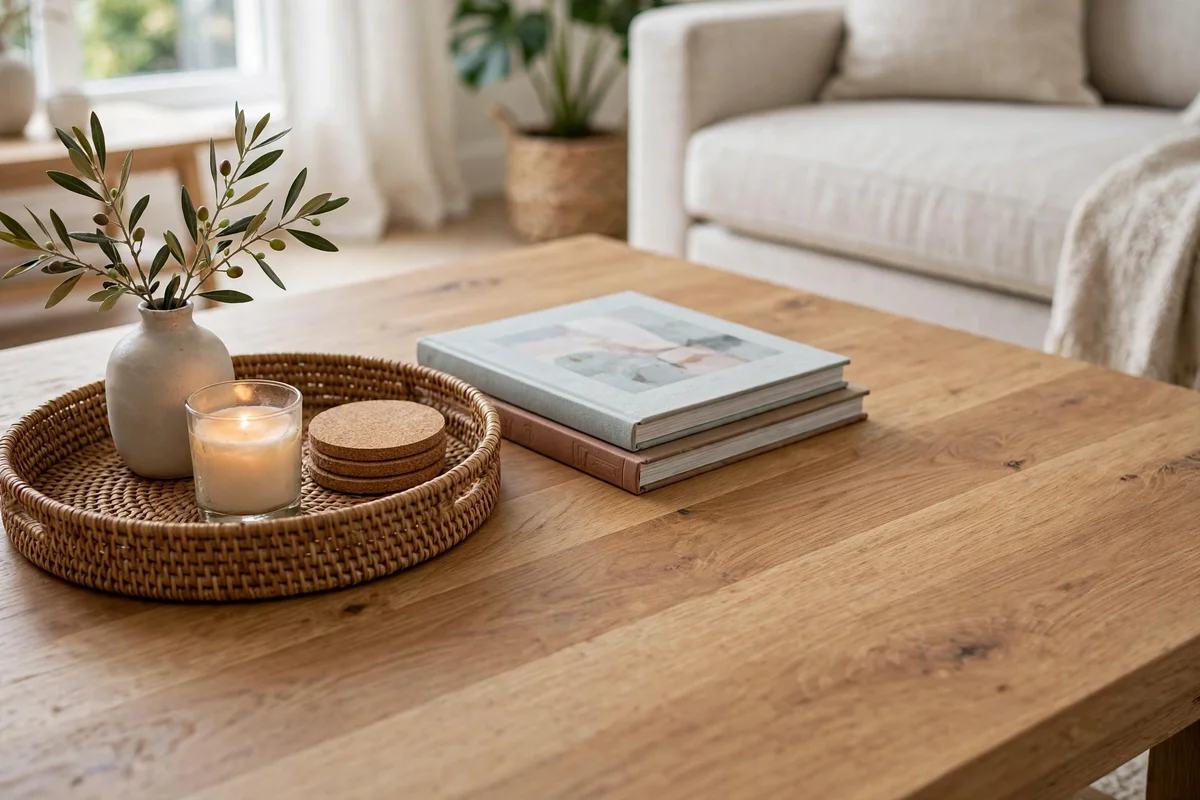
If you learn one composition rule, make it this: odd-numbered groupings look more natural and interesting than even ones. Two objects tend to read as a pair — formal and a little stiff — while three creates a triangle the eye moves around. Designers call this the rule of three, and it is the backbone of nearly every coffee table you have admired in a magazine.
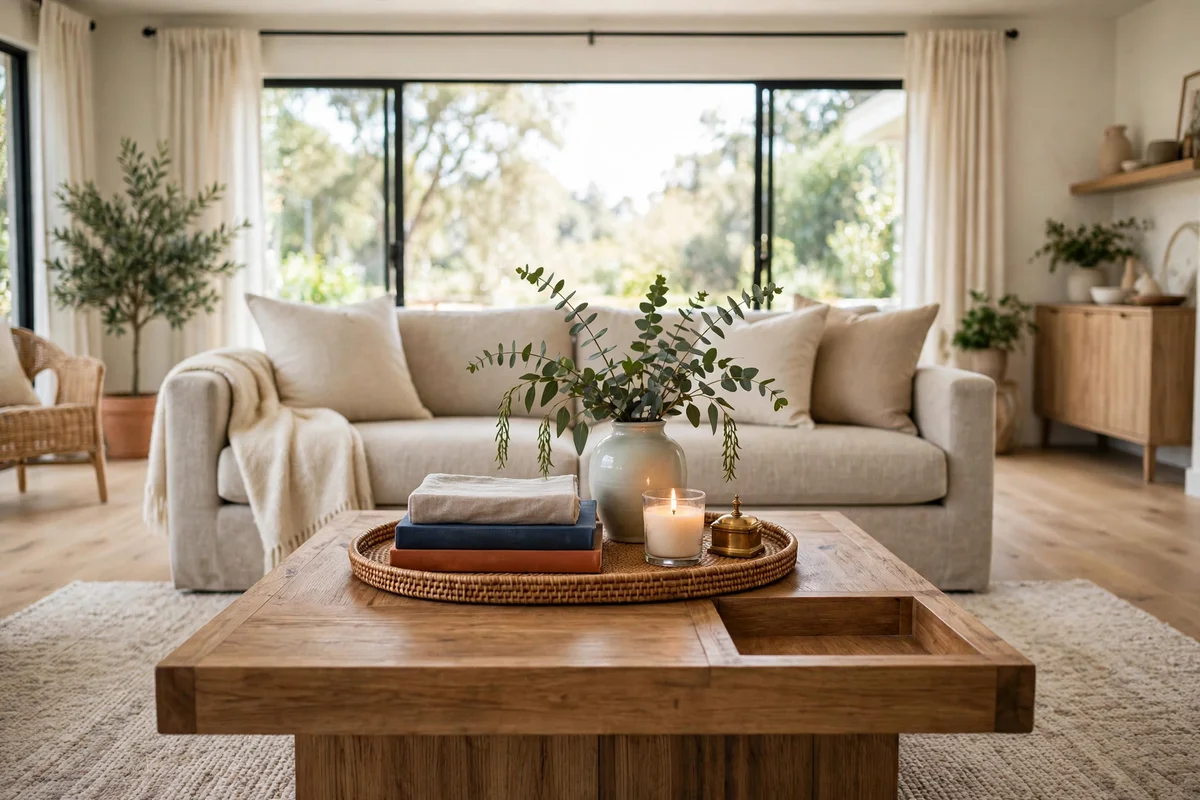
A classic trio mixes one tall piece, one medium piece, and one low piece: a vase with stems, a candle in a holder, and a small stack of books, for example. But the rule works with any combination — three candles of different heights, three small objects corralled on a tray, three books topped with one object. The point is the count, not the specific formula. Avoid lining the three up in a straight row like soldiers; a loose triangle or cluster reads as collected rather than staged.
Making the rule work for you
- Inside a tray, limit the contents to three small pieces to avoid a crowded look.
- For very small tables, one strong group of three is the entire arrangement.
- Five works on large tables too, but skip four — even numbers flatten the composition.
- Vary shape as well as height: round, rectangular, and organic forms together feel richer.
4. Build the Tall-Medium-Low Height Rhythm
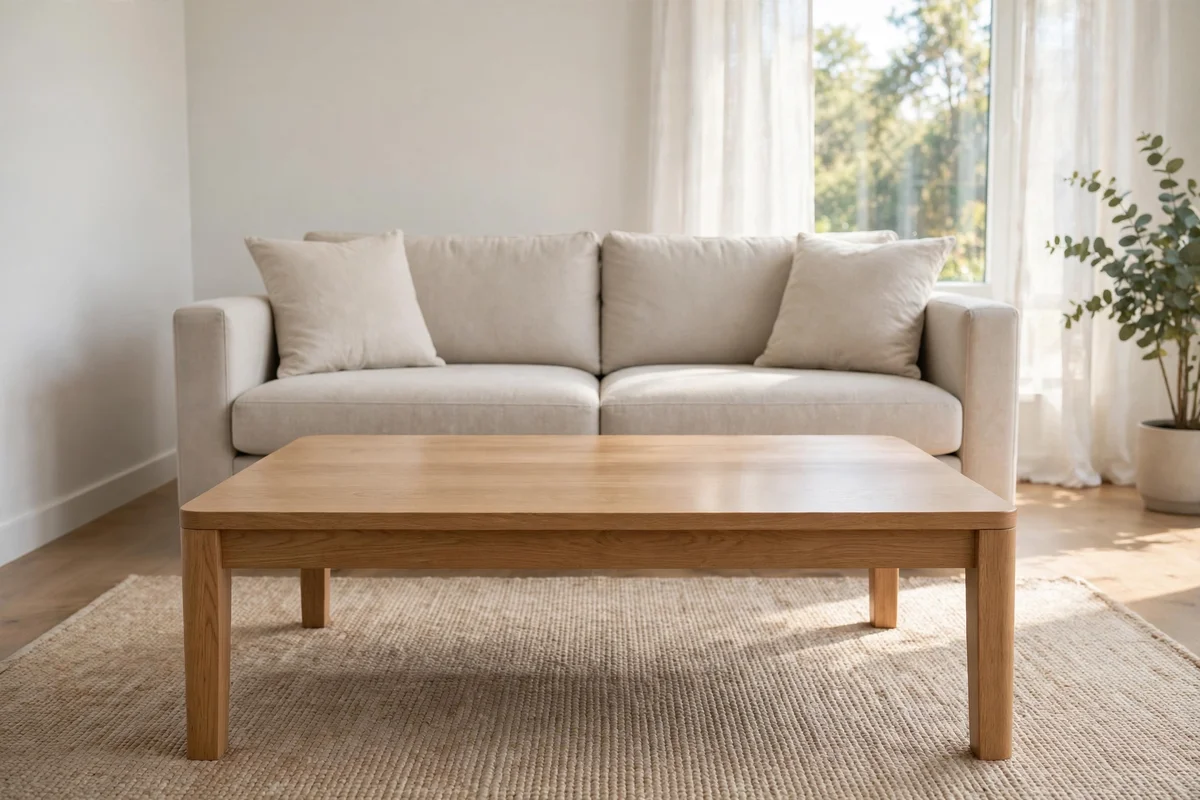
A coffee table where everything sits at the same height looks flat, no matter how nice the individual pieces are. The fix is a simple rhythm: one tall element, one medium element, and one low element, stepping the eye down across the surface. This movement is what makes styled tables feel designed instead of decorated.
Practical ways to build the rhythm: stack two or three books and place a candle or small object on top for the medium-to-high step; add a vase with branches for height; anchor it all with a low bowl or tray. The tallest piece should sit toward the back or center of the arrangement, never at the very front where it blocks views. Candlesticks and bud vases are the easiest height-builders because they add inches without adding visual weight.
Height mistakes to avoid
- Everything on the table at one level — the classic flat look.
- A single skyscraper vase surrounded by tiny trinkets with nothing in between.
- Stacks so tall they wobble; keep book stacks to three books on small tables.
- Height at the front edge, which blocks the view across the table (see the sightline rule in Tip 6).
For more on how this rhythm adapts to round, square, and ottoman tables, our companion post on designer-approved features for a timeless living room covers the long-view thinking behind balanced rooms.
5. Shop Your Own Home Before You Buy Anything

The fastest way to a coffee table that looks personal instead of purchased is to source the decor from rooms you already live in. Almost every home has styling candidates gathering dust: a ceramic bowl on a kitchen shelf, a candle from a gift set, a stack of art books in a bedroom, a small plant that would love more light. Shopping your home costs nothing and produces arrangements no store can copy.
Walk through each room with fresh eyes and pull anything with interesting shape, texture, or meaning. Souvenirs, inherited pieces, and handmade objects are especially good because they carry stories — guests notice and ask about them, which is exactly what decor should do. Try the pieces on the table for a day before committing; an object you love on a shelf can look wrong at coffee-table scale, and vice versa.
What to hunt for
- Books with beautiful covers or spines you actually enjoy.
- Vases, bowls, and vessels in materials that contrast with your tabletop.
- One personal object — a travel find, a framed photo, a handmade piece.
- Candles, trays, and boxes from other rooms that are currently unused.
Set a simple rule before you ever open a shopping app: the table gets styled from the house first, and you only buy to fill a specific gap — a tray in the right size, for instance. For a deeper look at avoiding decor regret, our guide to tacky small living room decor mistakes covers the buying traps that make rooms look cheap.
6. Keep Sightlines Open Across the Sofa

Here is the test most styled coffee tables fail: sit on the sofa and look at the person across from you. If a tall vase, a stacked tower of books, or an oversized branch blocks your view, the styling has become a wall. A coffee table is a social piece of furniture first — conversation should never have to compete with decor.
The sightline rule is simple: no decorative object should rise meaningfully above the seated eye line between two sofas, or above the back of the sofa in a single-sofa layout. In practice, that means keeping the tallest piece at about seat-cushion height or lower, and placing anything taller toward the side rather than the center. Dramatic branches and tall vases can still work — they just belong at one end of a long table, not in the middle of the conversation zone.
How to check your sightlines
- Sit in your usual spot and look across the table; anything blocking faces comes down or moves aside.
- Photograph the table from sofa height — the camera is less forgiving than your eyes.
- On long tables, keep the tall element in one zone and leave the center low.
- Remember that guests notice blocked views immediately, even if you have stopped seeing them.
7. Leave a Third of the Surface Empty
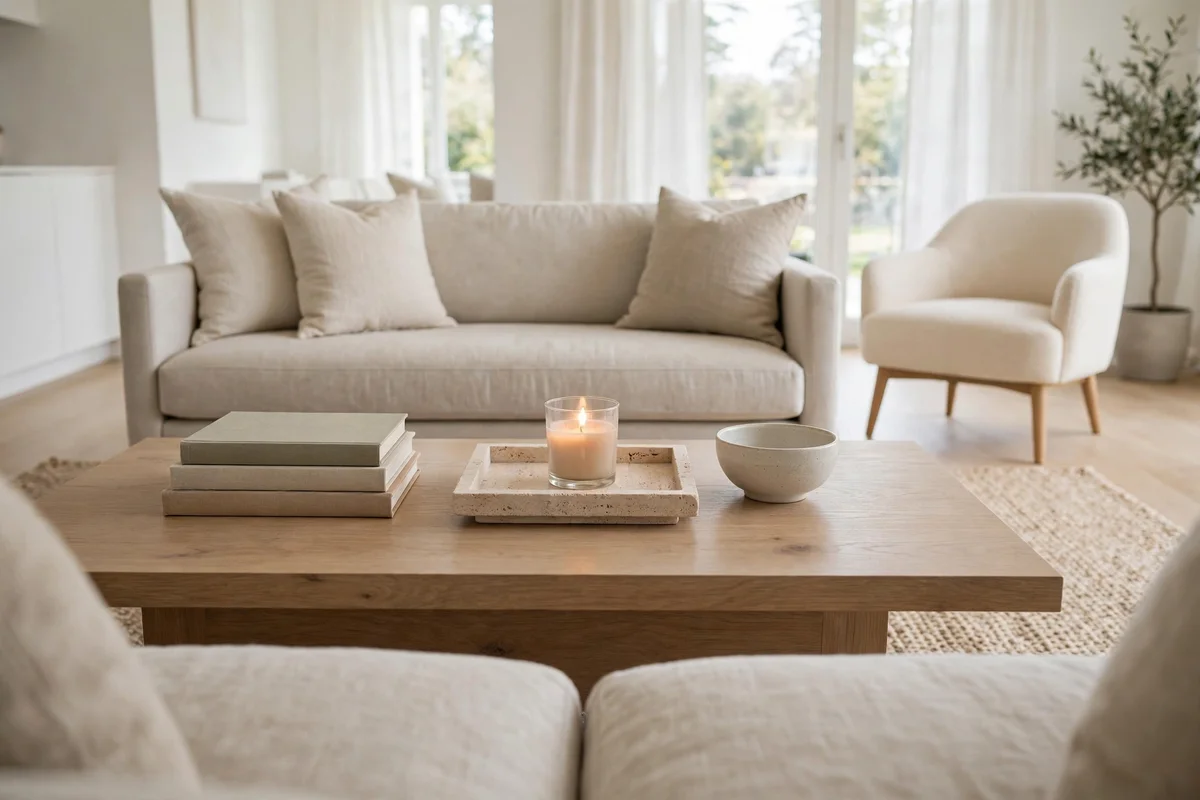
The difference between a styled table and a crowded one is empty space. Designers aim to leave at least a third of the tabletop clear — room for a coffee mug, a book in progress, a plate of snacks, or simply visual calm. Empty space is not wasted space; it is what lets the decorated parts breathe and be noticed.
This is really a discipline of editing, not adding. After you finish styling, remove one thing — the least essential object — and see if the table improves. It almost always does. Resist the urge to fill every corner; a corner left deliberately bare reads as confidence, not neglect. If the table must hold remotes, chargers, or mail, corral them into one tray or box so they occupy a single zone instead of colonizing the whole surface.
The step-back edit
- Finish styling, leave the room for five minutes, and return with fresh eyes.
- Take a phone photo: flat images reveal crowding your in-person view forgives.
- If your gaze bounces with nowhere to rest, remove the smallest item and repeat.
- Keep the landing zone — space for at least two mugs — sacred, always.
8. Protect the Surface Underneath It All
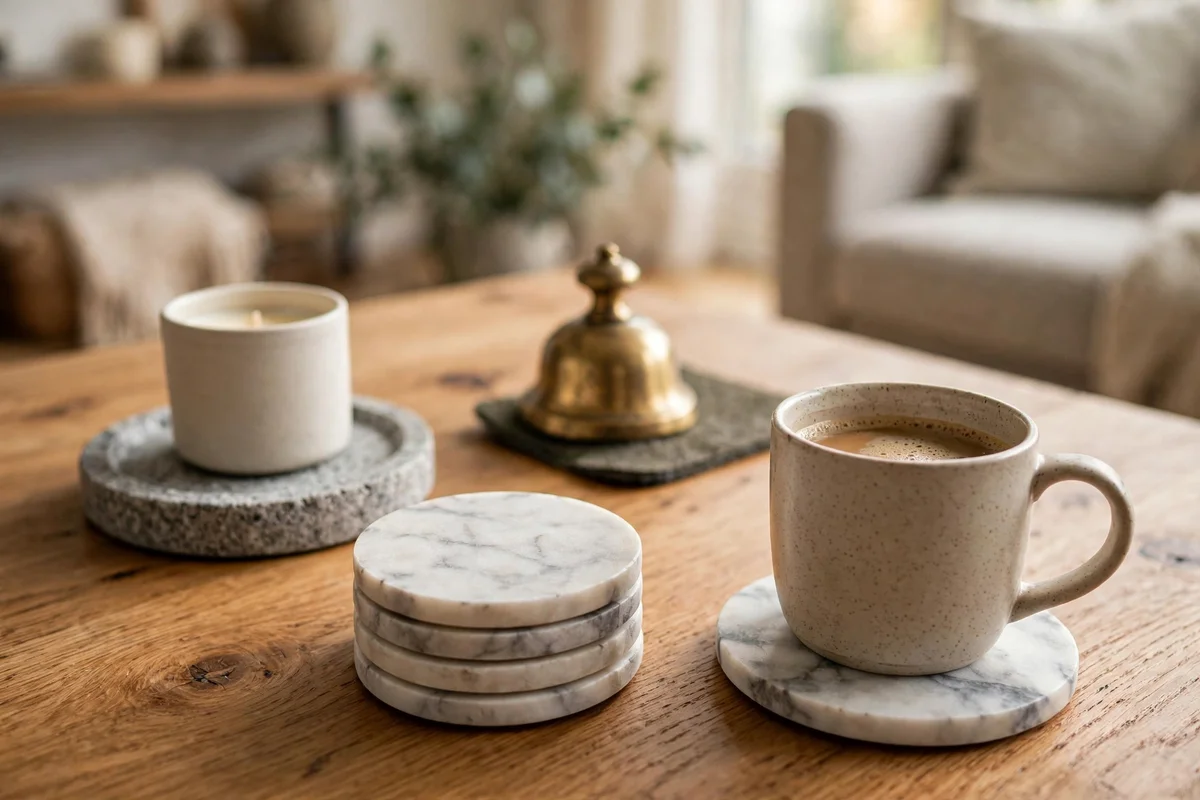
Beautiful styling means nothing if it ruins the table it sits on. Condensation rings, heat marks, and scratches from sliding ceramic are the most common and most expensive coffee table problems, and all of them are preventable. Protection is not exciting, but it is the tip that saves you from refinishing a wood top or replacing a marble one.
Make these non-negotiable: coasters under every drink, always, even for guests — keep a stack within arm’s reach of every seat so there is no excuse. Stick felt pads under anything ceramic, stone, or metal, because dragging even a small object scratches finishes over time. Give candles a heat-proof base like a stone dish or marble coaster, and never place a hot dish directly on the surface. Finally, lift objects to move them; the habit of sliding is what dulls a finish.
Surface protection checklist
- Coasters at every seat, styled as part of the decor (a pretty stack doubles as an accent).
- Felt or cork pads under all hard-bottomed objects.
- Heat-proof bases under every candle.
- Wipe spills immediately — water and wood are not friends.
- Lift, don’t drag, when rearranging.
This kind of everyday maintenance is what keeps a living room looking timeless rather than trendy — cared-for surfaces always read as intentional.
9. Style for Two Modes: Everyday and Hosting

Most coffee table advice assumes a permanently styled photo shoot, but real tables have two jobs: looking good on an ordinary day and clearing fast when guests arrive with drinks, snacks, or a board game. The trick is to design for both modes from the start instead of choosing between a pretty table and a usable one.
The secret is the lift-off tray. Corral your everyday styling — candles, small objects, the remote caddy — onto one or two trays, and you can clear the entire table in a single move when you need the surface. House Digest’s coffee table guide makes the same point: a tray is easily removable when the table needs to become functional (housedigest.com). Keep a designated landing spot for the tray — a nearby ottoman, bench, or shelf — so “clearing the table” does not mean dumping decor on the floor.
The two-mode setup
- Everyday mode: styled trays + one low book stack, a third of the surface clear.
- Hosting mode: trays lifted to their landing spot, coasters distributed, full surface available.
- Game-night mode: everything off except coasters — the table becomes the playing field.
- Reset takes under two minutes if every object has a tray or a home.
10. Kid- and Pet-Proof Your Arrangement
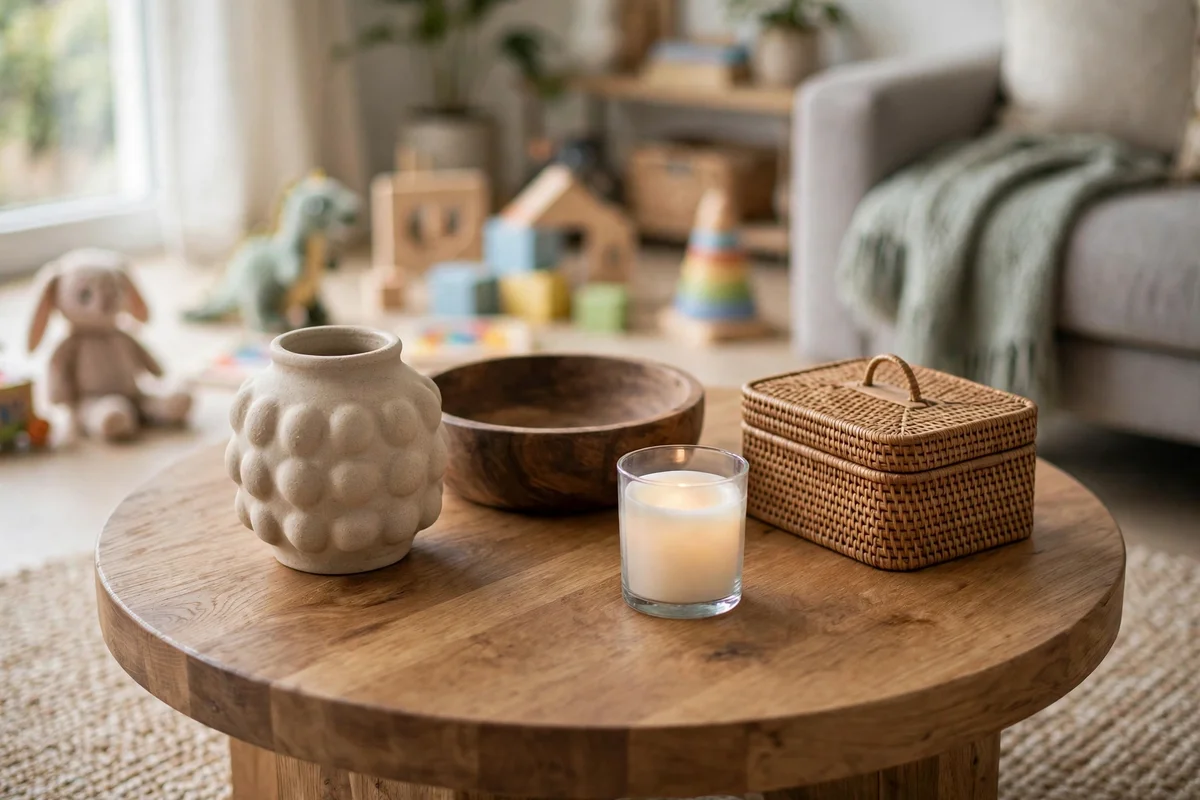
A coffee table in a house with kids or pets is not a display shelf — it is a collision zone. Styling one successfully means choosing pieces that survive the reality of small hands, wagging tails, and toy cars. The goal is a table that looks intentional without anything you will cry over if it hits the floor.
Swap fragile for sturdy: chunky ceramics instead of thin glass, a low wooden bowl instead of a tall crystal vase, battery-operated candles instead of open flames within reach. Weight matters — heavier pieces resist curious toddlers and enthusiastic dogs better than light ones. Keep anything breakable, sharp, or valuable toward the center of the table rather than the edges where elbows and tails strike. And skip tablecloth-style runners or dangling elements that invite pulling.
The durable styling kit
- Weighted, low-profile objects that are hard to topple.
- Washable or wipeable surfaces — sealed wood, ceramic, metal.
- Flameless candles or candles kept high and out of reach.
- One lidded box for small items that must not scatter.
- Nothing sentimental or irreplaceable on a table that gets rough daily use.
In small living rooms where the coffee table doubles as play space, consider styling only one end of the table and leaving the rest genuinely clear — a half-styled table beats a fully styled one that is constantly being destroyed.
11. Refresh Seasonally With a Swap Box
Four times a year, your coffee table deserves a ten-minute refresh — not a full restyle. The system that makes this painless is the swap box: one small box or basket holding your seasonal accents, stored in a closet when not in use. When the season turns, you swap one or two pieces and leave the permanent base — tray, books, core objects — exactly where it is.
The base stays neutral so seasonal pieces pop against it: pinecones and dried orange slices for fall, evergreen sprigs and a metallic candle for winter, fresh tulips and a pastel bowl for spring, a shallow dish of shells or citrus for summer. One seasonal element is usually enough; a whole table of themed decor reads as a holiday display. Because the base never changes, the refresh stays fast and the color story stays coherent year-round.
Running the swap system
- Keep one labeled box per season — or one box you rotate — with 5 to 8 small pieces.
- Swap day is ten minutes: remove the old accents, place the new ones, done.
- Photograph each seasonal version so you can recreate it next year without thinking.
- Retire anything you skipped two seasons in a row — it is not earning its storage space.
12. Match Your Decor to the Table’s Material
The tabletop itself is the biggest design element in the arrangement, and styling that fights it never quite works. A glass table needs decor with visual weight so the arrangement does not look like it is floating; a heavy wood table needs lighter, airier pieces so it does not feel like a lumber yard. Match the styling energy to the material.
| Table material | Styling approach |
|---|---|
| Glass or acrylic | Anchor with a tray or books for visual weight; avoid all-clear objects that disappear; fingerprints show, so keep a cloth handy |
| Wood (light or mid-tone) | Contrast with metal, stone, or ceramic; warm materials like rattan and linen feel natural here |
| Dark wood or walnut | Lighten with pale ceramics, glass, and greenery; avoid piling on more dark objects |
| Marble or stone | Keep it minimal — the surface is the star; a single sculptural object and one low book stack is plenty; always use coasters |
| Upholstered ottoman | Always use a sturdy flat tray as the base; it creates the firm surface the soft top lacks |
This also applies to finishes: if your table is rustic and textured, a few polished pieces add welcome contrast; if it is sleek and modern, one rough organic element — driftwood, a stone bowl — keeps it from feeling cold. The material sets the rules; your objects just play within them.
Frequently Asked Questions About Coffee Table Decor
What is the rule of thumb for decorating a coffee table?
The most reliable formula is a tray to anchor the arrangement, a stack of two or three books for height, one sculptural object, a candle for warmth, and something living like stems or a small plant. Group pieces in odd numbers, vary heights and textures, and leave about a third of the surface clear.
How many items should I put on a coffee table?
Think in groupings, not individual items — three to five groupings on a large rectangular table, one or two on a small one. A tray holding three pieces counts as one grouping. The practical test: if you cannot set down a coffee mug without moving something, you have too much.
How big should a tray be on a coffee table?
Choose a tray roughly one-third the width of the tabletop — about 18 inches on a 48-inch table. Match the tray shape to the table for a calm look, or contrast it (round tray on a square table) for interest. It should hold three to five small objects comfortably without crowding.
How do I style a small coffee table without cluttering it?
Limit yourself to one strong grouping: a small tray with a bud vase and a candle, or a slim stack of two books topped with one object. Keep everything low so sightlines stay open, and treat empty space as your most valuable styling tool — on a small table, restraint does the heavy lifting.
What is the difference between everyday and hosting styling?
Everyday styling is your default arrangement; hosting styling is the 60-second version with trays lifted off and coasters out. Design for both by corralling decor onto lift-off trays with a designated landing spot nearby, so clearing the table for guests, games, or dinner takes one move instead of five.
How do I keep my coffee table from looking cluttered?
Edit ruthlessly: remove one item after you finish styling, keep remotes and chargers in a single box, and use trays to turn loose objects into one deliberate grouping. The phone-photo test helps — snap a picture and look for crowding, lopsidedness, or color clashes your eyes have been forgiving.
Can I put candles on a coffee table safely?
Yes, with basic precautions. Set every candle on a heat-proof base like a stone dish, keep flames away from books, dried stems, and sofa edges, and never leave them lit unattended. Cluster candles on a tray so you can move them off the table quickly; flameless candles are a smart alternative in homes with kids or pets.
How do I protect a wood coffee table from decor damage?
Use coasters for every drink, stick felt pads under ceramic, stone, and metal objects, and wipe up spills immediately. Lift objects instead of sliding them, and give candles heat-proof bases. Most wood damage comes from condensation rings and dragged objects — both entirely preventable with these habits.
Should my coffee table decor match the rest of the room?
It should coordinate, not match. Pull colors already present in your rug, cushions, or curtains into the tabletop objects, and repeat one or two materials found elsewhere in the room. Exact matching looks like a furniture showroom; coordinated variety looks like a home someone actually lives in.
How often should I refresh my coffee table decor?
Do a light seasonal refresh four times a year — swap one or two accents in ten minutes using a swap box — and a deeper edit once or twice a year where you start from an empty table and reconsider every piece. Also refresh whenever the room changes: new rug, new sofa, or new paint means the table deserves a second look.
Conclusion
Styling a coffee table well is less about taste and more about process. Measure first so your proportions are right. Start from an empty table so every piece earns its place. Group in threes, build height in a rhythm, and keep the sightlines open so the table stays social. Protect the surface, leave a third of it empty, and design for both everyday life and the nights when guests fill the room. Shop your own home before you shop the stores, kid- and pet-proof the arrangement if you need to, and let the seasons refresh the table in ten-minute swaps instead of full restyles.
None of these twelve tips requires a big budget or a design degree — just a tape measure, a tray, and the willingness to edit. The reward is a coffee table that looks intentional in photos and works effortlessly in real life, which is the entire point of the piece of furniture your living room revolves around. Start with the blank canvas this weekend, apply the tips one by one, and you will be surprised how quickly the center of your room comes together.