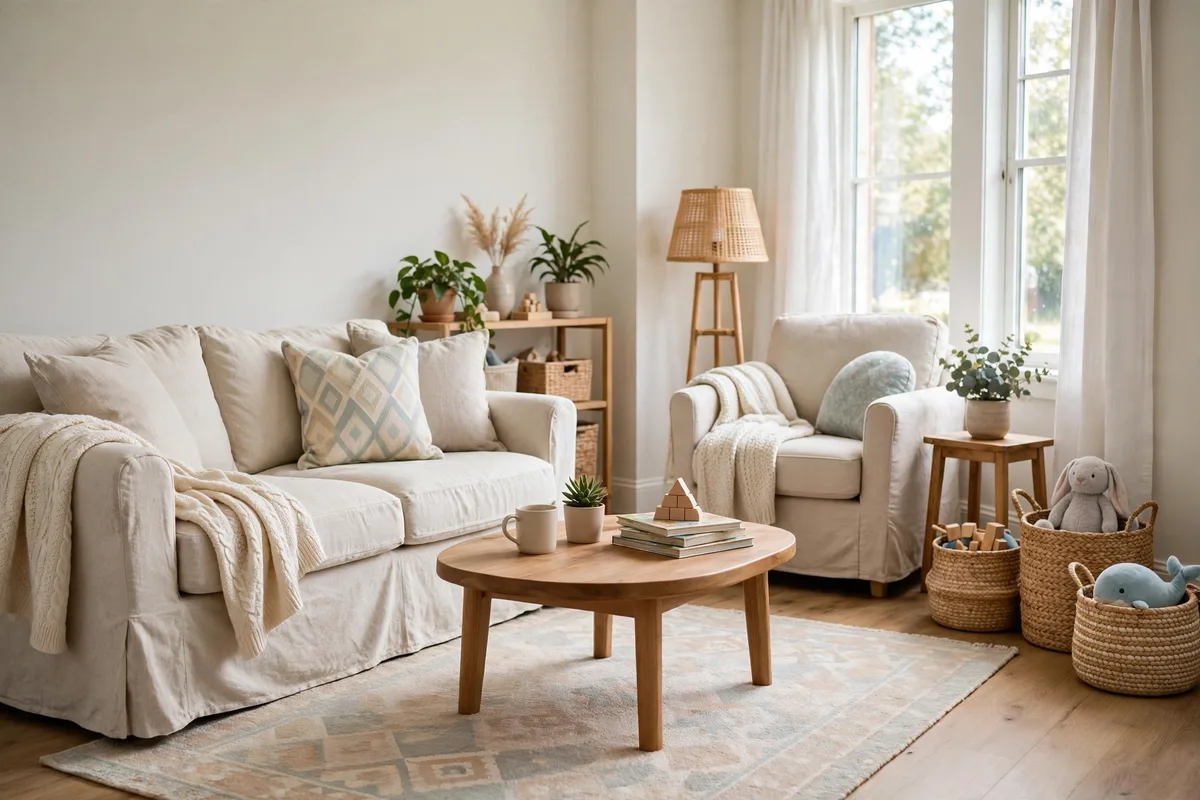
A living room that works for real family life does not have to look like a daycare center. The best family-friendly living rooms are the ones where juice boxes, homework, and movie nights happen on furniture that still looks intentional and inviting. The trick is choosing materials and layouts that forgive daily chaos instead of fighting it — washable fabrics, rounded edges, hidden storage, and zones that let kids be kids while adults keep their sense of style.
This guide walks through ten practical family-friendly living room inspiration ideas, from performance-fabric sofas and toy storage that doubles as decor to kid-safe layouts and walls that survive crayons. Each idea is designed to make your space safer, more organized, and easier to clean, without sacrificing the polished look you want when friends come over.
The catalogue’s working instruments: a four-row fabric comparison table, a five-row storage table, a five-minute whole-room reset the storage is designed around, and a toddler eye-level scan for the safety pass.>
with washable covers” width=”1024″ height=”683″ /><
In this guide: Start With Performance-Fabric Seating · Swap Sharp Corners for Soft, Rounded Pieces · Create Clear Zones for Play, Rest, and Togetherness · Hide Toy Clutter in Storage That Looks Like Decor · Layer Washable, Kid-Proof Rugs · Choose Kid-Friendly Walls and Display Art · Childproof Smartly Without Wrecking the Style · Pick Multi-Functional Furniture That Earns Its Footprint · Build a Cozy Reading and Family Nook · Add a Family Gallery and Display Wall That Grows With You · Frequently Asked Questions About Family-Friendly Living Rooms · Conclusion/p>
1. Start With Performance-Fabric Seating
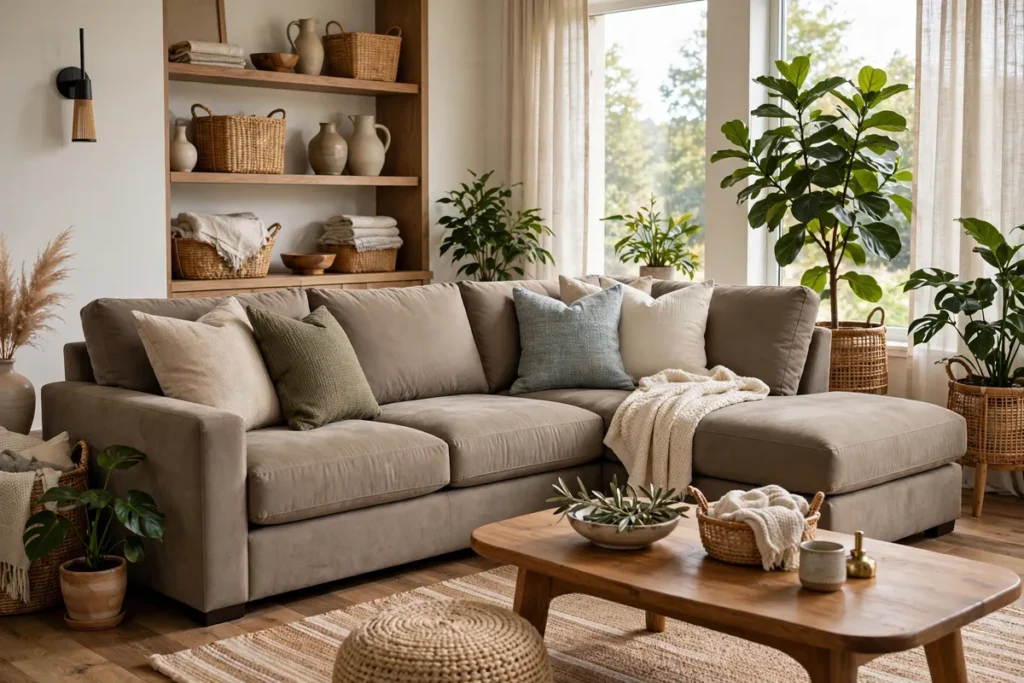
Your sofa is the hardest-working piece of furniture in a family home, so it deserves fabric engineered for real life. Performance fabrics — tightly woven, stain-resistant textiles designed to resist spills, fading, and pet claws — have come a long way from the stiff, plasticky options of the past. Today they feel soft, come in beautiful textures, and are available in colors that hide everyday wear.
Choose Forgiving Colors and Weaves
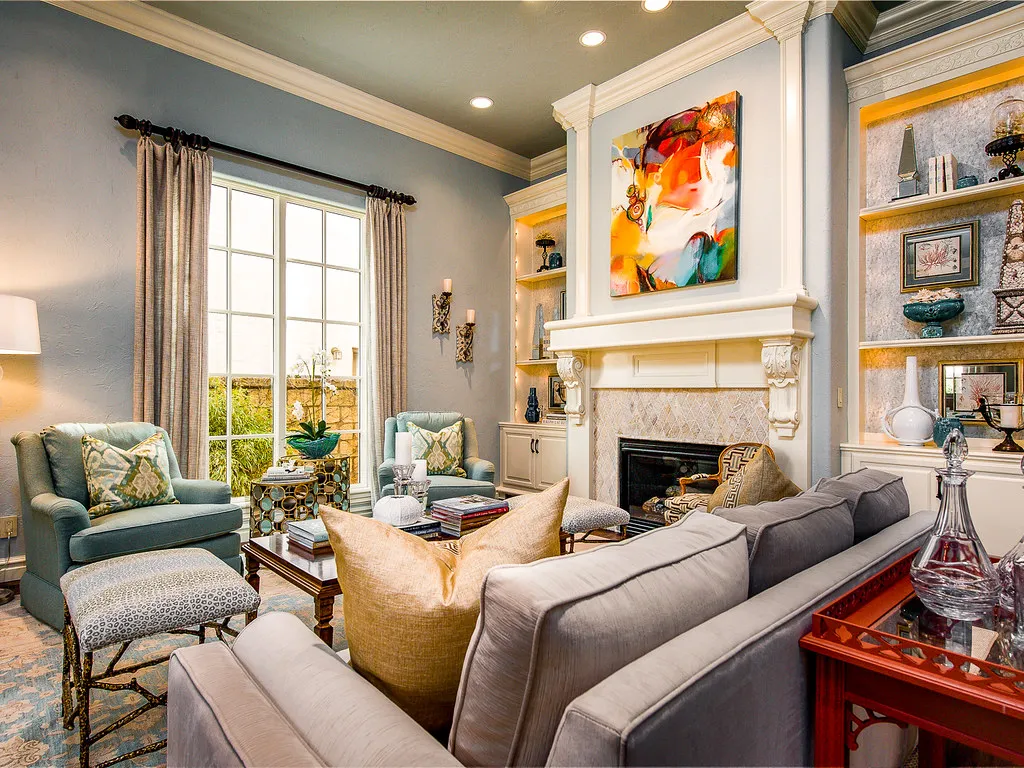
Mid-tones like charcoal, warm taupe, slate blue, and deep olive camouflage minor stains between deep cleans far better than white or cream. Tighter weaves resist snags and pulls, which matters when toys get launched across the room.
Choosing the look those colours belong to comes first in our family-friendly living room styles guide, which compares eight named styles with a verdict for each family stage.
Why Slipcovers Are a Parent’s Secret Weapon
A washable slipcover is one of the smartest investments for a family living room. Slipcovers are fitted protective covers that can be removed and tossed in the wash, giving you a fresh start after messy playdates. Keep a spare set in a neutral tone so you can rotate covers while one set is in the laundry — instant room refresh without buying new furniture.
Quick Fabric Comparison
| Fabric Option | Stain Resistance | Washability | Best For |
|---|---|---|---|
| Performance fabric | High | Spot-clean or machine-wash covers | Busy households with young kids |
| Leather / faux leather | High | Wipes clean easily | Toddlers and snack-time messes |
| Slipcovered cotton/linen blend | Medium | Removable, machine washable | Casual, relaxed styles |
| Velvet (performance) | High | Spot-clean | Families wanting a luxe look |
2. Swap Sharp Corners for Soft, Rounded Pieces
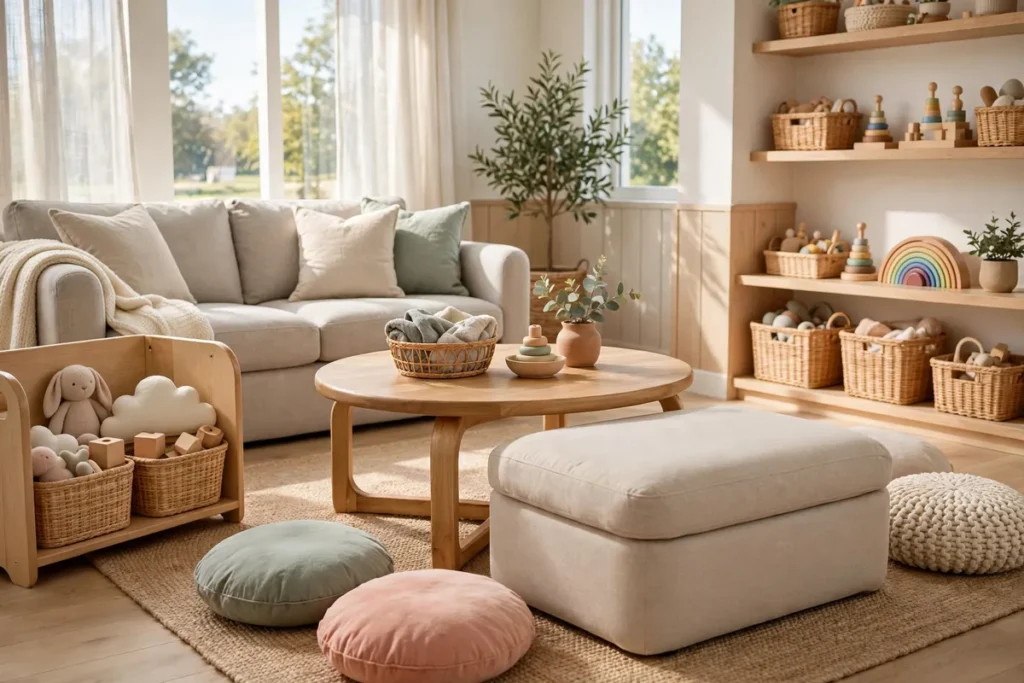
Coffee tables with sharp corners are a rite of passage in most family homes — the bumps, the corner guards, the constant worrying. A simpler approach is choosing furniture with rounded edges from the start. Round or oval coffee tables, poufs, and ottomans eliminate the worst collision points while keeping the room looking soft and inviting.
Safer Seating and Surface Choices
- Round coffee tables replace rectangular ones and remove all four corners in one move. A round table also improves traffic flow in tight rooms.
- Storage ottomans pull triple duty: footrest, extra seat, and hidden toy storage, all with zero sharp edges.
- Nesting side tables tuck away when kids need floor space and pull out when you host guests.
Style It Without Losing the Look
Round shapes read as modern and intentional, not childish. A stone or wood-grain round coffee table with a woven tray on top looks straight out of a designer portfolio. When your layout gets tight, seating ideas made for small living rooms show how round and low-profile pieces make compact family spaces feel larger and safer at the same time.
3. Create Clear Zones for Play, Rest, and Togetherness
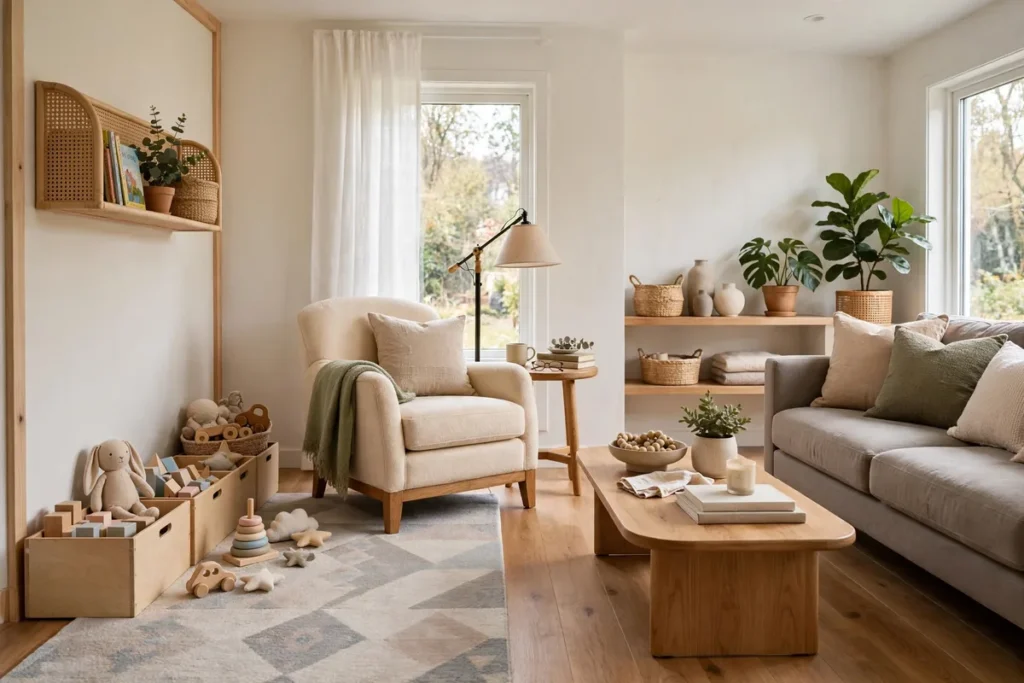
One of the most effective family-friendly living room ideas is zoning: giving every activity its own defined area so the whole room does not dissolve into one big toy field. A rug, a low shelf, or a floor lamp can mark a boundary without any walls.
The Play Zone
Anchor a corner with a large, soft, washable rug and add low storage for toys and books. Keep the pieces kid-height so little ones can reach — and return — their own things. Floor cushions or a small child-sized chair make the zone feel like theirs.
The Grown-Up Zone
Carve out one comfortable corner for adults: a favorite armchair, a side table, and a good reading lamp. When every seat in the room is kid-optimized, parents end up perched on the sofa arm. Reserve one spot for yourself.
The Together Zone
Center the main seating around the coffee table and media unit for movie nights, board games, and homework. Position the play zone close enough to supervise from the sofa — supervision without hovering is the dream layout.
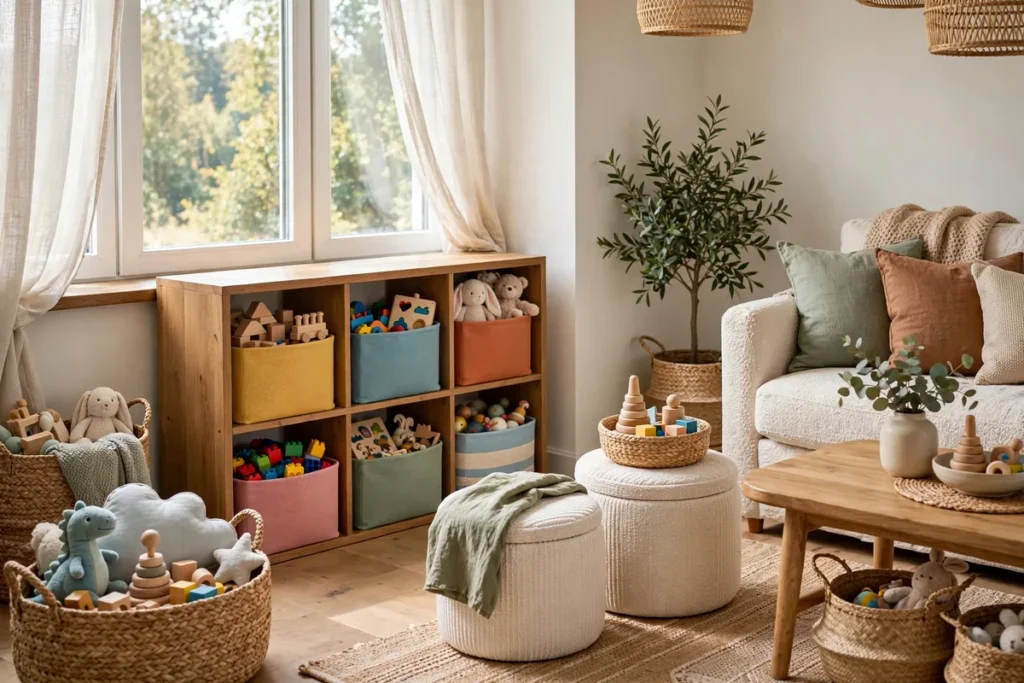
4. Hide Toy Clutter in Storage That Looks Like Decor
Open baskets of toys scattered across the room are the number-one style killer in family homes. The fix is not fewer toys — it is storage so attractive you would buy it even without kids. Built-in cabinets, lidded baskets, and furniture with hidden compartments keep the room tidy in the two minutes before guests arrive.
Storage Styles That Do the Heavy Lifting
| Storage Type | What It Hides | Style Payoff |
|---|---|---|
| Storage ottomans | Blocks, action figures, blankets | Adds seating and texture |
| Woven seagrass baskets | Loose toys, art supplies | Warm, natural, bohemian feel |
| Low cube shelving with bins | Sorted toys and books | Modular, modern, kid-accessible |
| Coffee table with drawers | Games, remotes, chargers | Clean lines, clutter-free surface |
| Decorative trunks | Bulky toys, dress-up clothes | Vintage or coastal statement piece |
The “Reset in Five Minutes” Rule
Design your storage so one person can tidy the whole room in five minutes. That same reset, performed as a nightly drill minute by minute, is our family-friendly living room design ideas tips. Label bins with pictures for pre-readers, keep everyday toys on the bottom two shelves of a low unit, and give every category a home. For a deeper look at layout tricks that prevent the perpetual mess, our guide on common small living room decor mistakes covers what to avoid when storage is an afterthought.
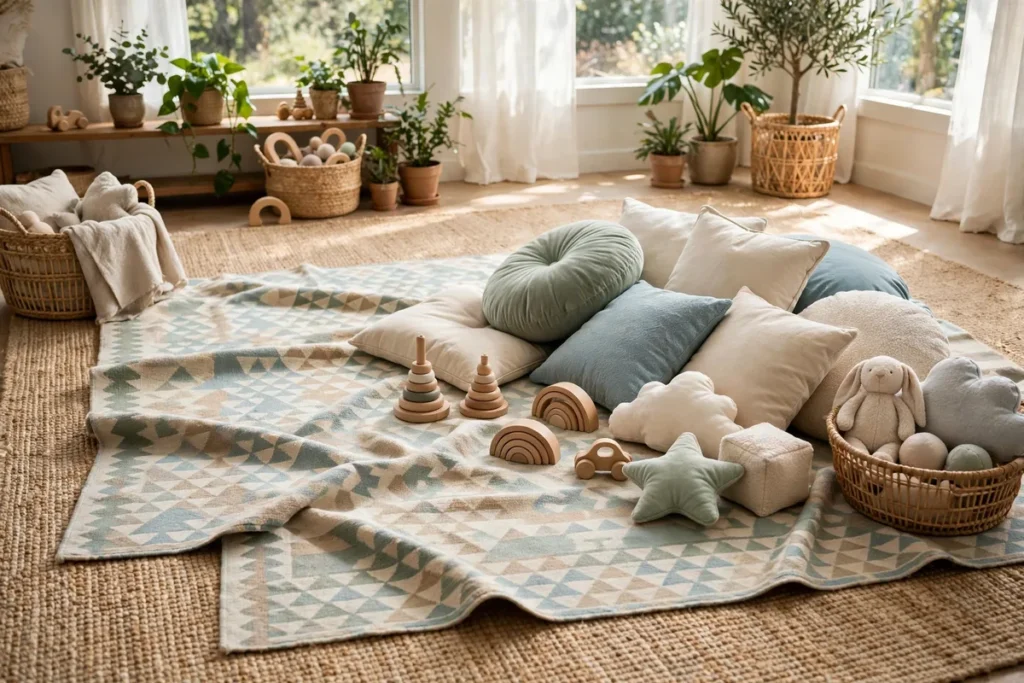
5. Layer Washable, Kid-Proof Rugs
Rugs define the room, soften hard floors for crawling babies and wrestling toddlers, and absorb noise — but in a family home, every rug will eventually meet juice, mud, and marker. Choose rugs you can clean, not rugs you have to protect.
What Makes a Rug Family-Proof
- Low pile: Short fibers trap less dirt and are easier to vacuum and spot-clean than shaggy rugs.
- Machine-washable rugs: Thin, washable rugs have become a staple of family homes — pull it up, wash it, lay it back down.
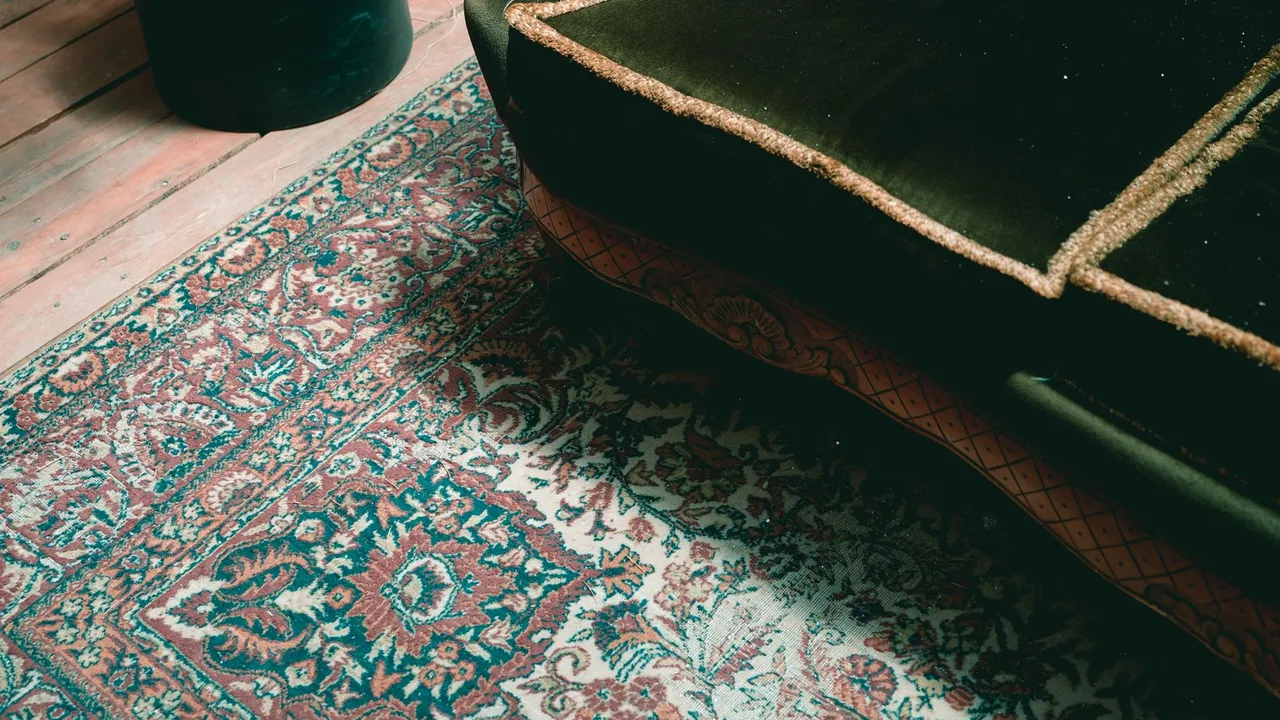
- Pattern power: Busy patterns and multi-tone designs disguise stains between cleanings far better than solid light colors.
- Rug pads: A quality pad underneath prevents slipping and adds cushioning for play.
Layering for Style and Practicality
Layer a large, neutral, budget-friendly base rug with a smaller washable patterned rug on top where the kids play. If the top layer gets destroyed, you replace only that piece. When guests arrive, pull back the play rug and the base still looks pulled together.
The graded sizes behind that choice — rug width and depth by room and household — are tabled in our family-friendly living room measurements guide.
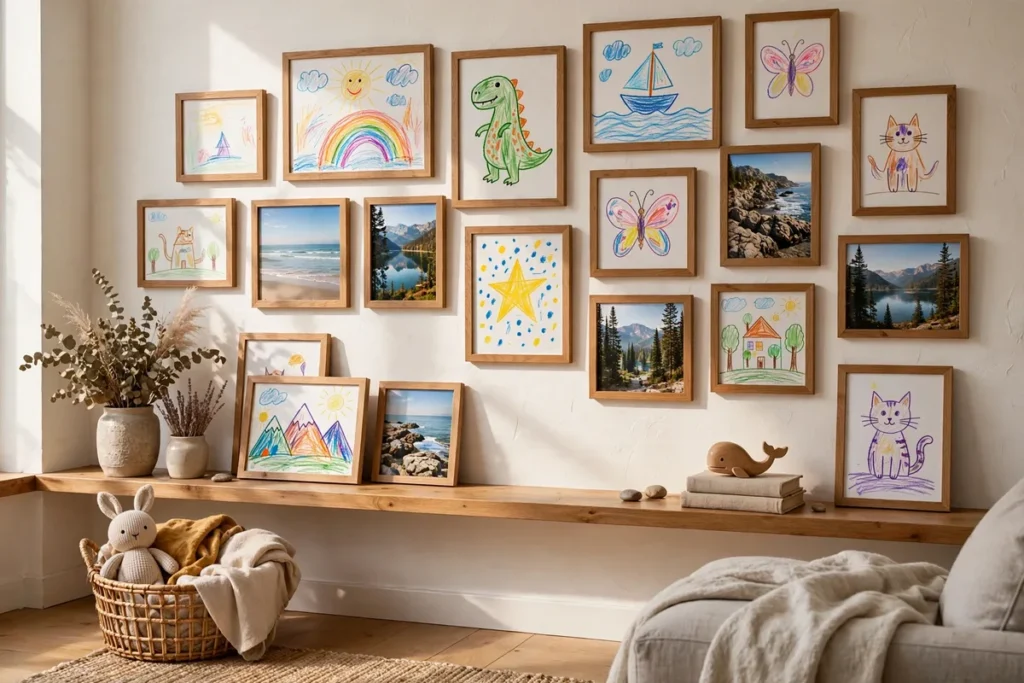
6. Choose Kid-Friendly Walls and Display Art
Walls take a beating in family homes — handprints, scuffs, and the occasional crayon masterpiece. Planning for it beats repainting every year, and the wall can actually become one of the most charming parts of a family living room.
Washable Paint Finishes
Paint the living room in a satin or eggshell finish rather than flat. These sheens wipe clean with a damp cloth, so handprints and scuffs come off instead of soaking in. Save deep, dramatic colors for wipeable wainscoting or a single washable accent wall.
Turn Kid Art Into Gallery Decor
A dedicated gallery wall of your children’s framed artwork is one of the most personal decor ideas in any home. Use matching frames for cohesion, or run a picture ledge shelf where kids can rotate their own latest creations. Chalkboard paint or a magnetic board on one wall doubles as a creative outlet and a family command center for calendars and notes.
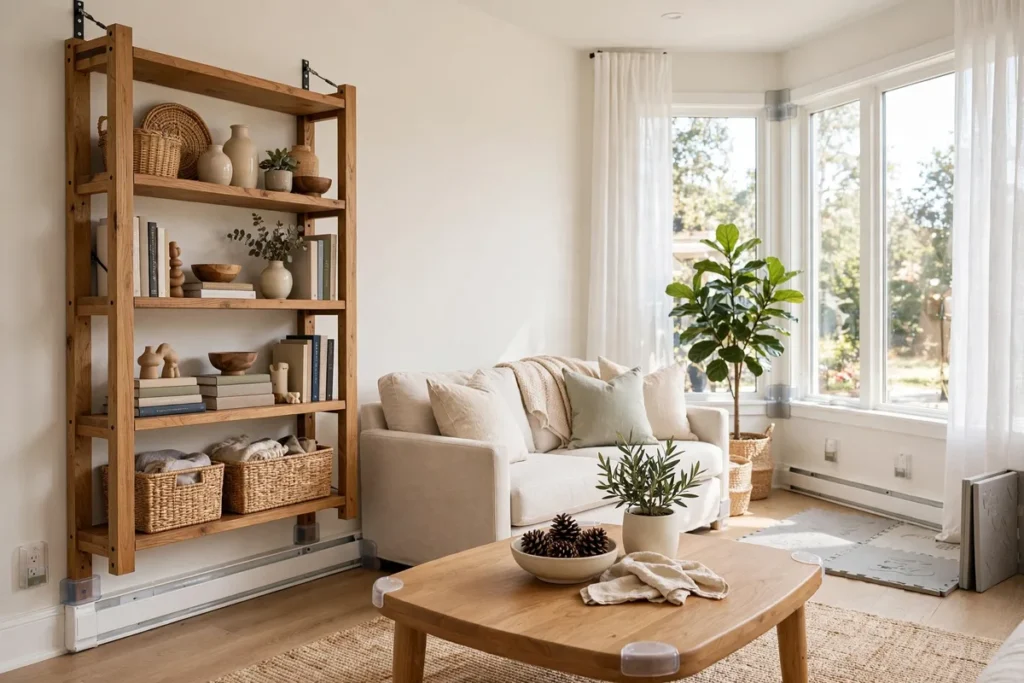
7. Childproof Smartly Without Wrecking the Style
Safety upgrades do not have to turn your living room into a fortress of plastic. The goal of childproofing is to make the environment safe for children — and most of the effective fixes are nearly invisible once installed.
The Essential, Low-Profile Fixes
- Anchor tall furniture: Bookcases, media units, and dressers must be anchored to wall studs. Tip-over accidents are preventable with simple anti-tip straps.
- Cover outlets and cords: Use sliding outlet covers instead of plug-in caps (which toddlers can remove and choke on). Bundle lamp and charger cords with cord covers.
- Soften and secure: Add silicone corner guards to any remaining sharp edges, install cabinet locks on media consoles holding electronics, and keep heavy items and breakables on high shelves.
- Get on their level: Sit on the floor and scan the room from a toddler’s eye view. You will spot reachable hazards — dangling cords, unstable planters, tippy side tables — that you never notice from standing height.
Blend Safety Into the Design
Choose cord covers that match your wall color, pick outlet covers in the same finish as your plates, and anchor furniture behind closed console doors. Most safety gear disappears visually once it is installed.
8. Pick Multi-Functional Furniture That Earns Its Footprint
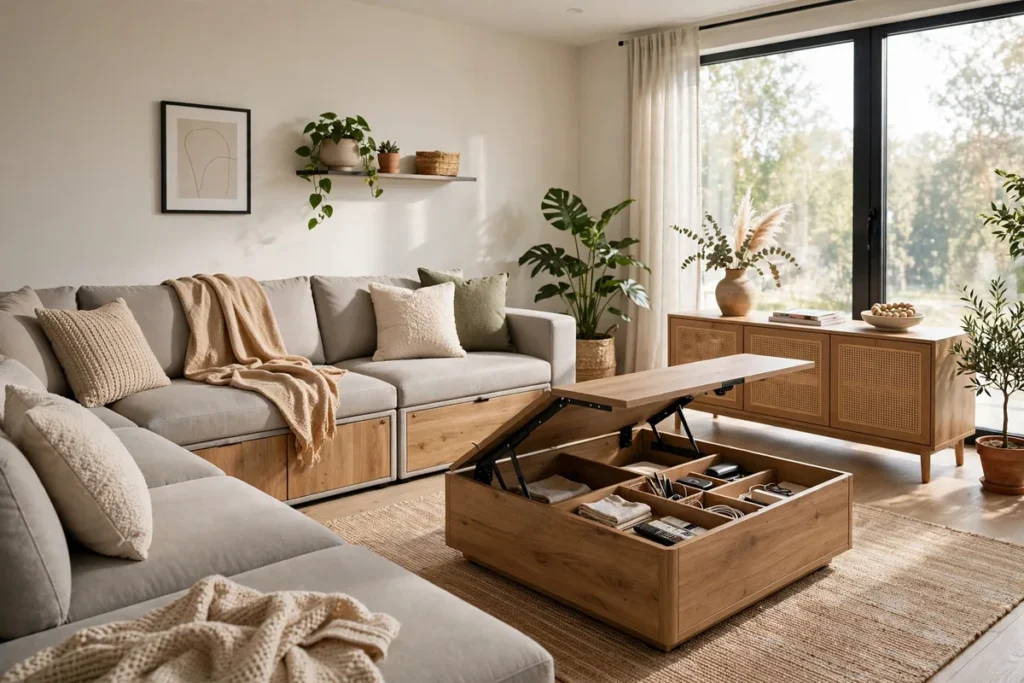
In a family living room, every piece should work at least twice as hard as it looks. Multi-functional furniture maximizes seating, storage, and play space without crowding the room — especially important in apartments and smaller homes.
The Hardest-Working Pieces
- Storage ottomans and poufs: Footrest by day, toy vault by night, extra seat when friends drop by.
- Sleeper sofas and daybeds: Turn the living room into a guest room or sleepover headquarters without a dedicated spare bedroom. For apartments, our ideas on decorating a studio apartment show how one room can serve double duty gracefully.
- Lift-top coffee tables: Raise the surface for homework and crafts, store supplies inside, lower it for movie night.
- Modular sectionals: Rearrange chaise and corner pieces for movie night, push them aside for floor play, or reconfigure when the kids grow and needs change.
Buy for the Next Five Years
Choose pieces in classic silhouettes rather than trends. A well-made storage ottoman in a neutral fabric works for toddlers, teens, and the adults they become — you only cry once if you buy quality the first time.
9. Build a Cozy Reading and Family Nook
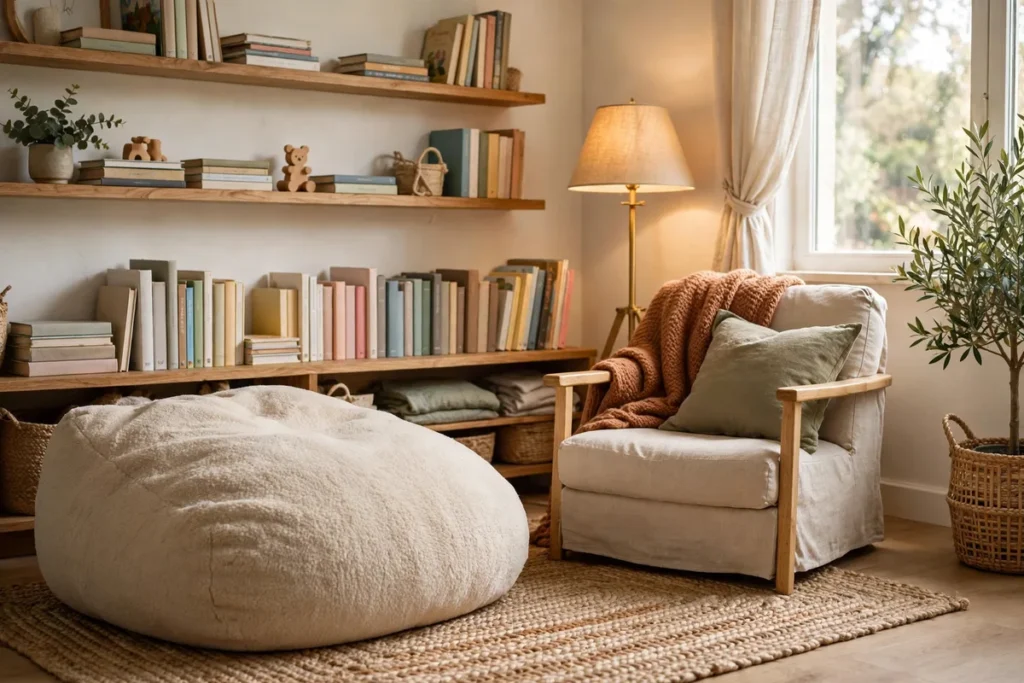
Every family living room needs at least one soft landing spot — a corner designed for slowing down. A reading nook gives kids a calm alternative to screens, gives parents a retreat, and adds a layer of warmth that makes the whole room feel homier.
What the Nook Needs
- Comfortable, low seating: A bean bag, oversized floor cushion, or small armchair with a soft throw.
- Good light: Place the nook near a window for daytime reading and add a floor lamp with a warm bulb for evenings.
- Reachable books: A low, anchored bookshelf or floating ledges at kid height turn book selection into an independent activity.
- Texture: Layer a small rug, a knit throw, and a cushion or two so the corner feels distinct from the rest of the room.
Make It Grow With Them
A reading nook scales beautifully. Toddlers get picture books on low ledges; older kids add a small desk lamp and a homework spot. Keep the bones — the light, the seat, the shelves — and let the contents evolve.
10. Add a Family Gallery and Display Wall That Grows With You
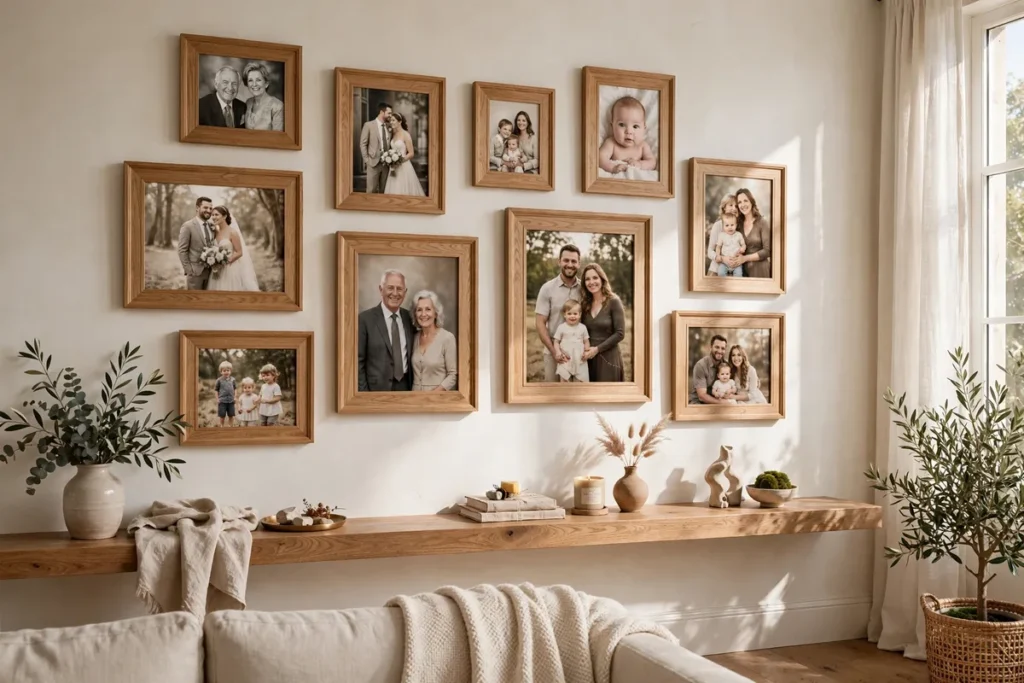
A family living room should feel like your family lives there. A gallery wall of photos, art, and mementos is the fastest way to make a styled room feel personal — and it is one decor element kids genuinely love contributing to.
Design a Gallery That Stays Fresh
- Use one frame color: Matching frames (or one cohesive finish like natural oak) make a mix of family photos, kids’ art, and prints look intentional rather than chaotic.
- Plan the layout first: Trace your frames on paper, tape the templates to the wall, and live with the arrangement for a day before committing to nails.
- Leave room to grow: A salon-style gallery works best when it is not finished — leave space to add a school photo or a new piece of kid art each season.
- Mix high and low: Hang a favorite landscape print next to a child’s crayon drawing. The contrast is charming, and kids light up when their work sits beside “real” art.
Keep It Current With Minimal Effort
Use a mix of clip frames and floating ledges so you can swap pieces without tools. Updating two or three frames each season keeps the wall feeling alive and gives the room an easy refresh. For ideas on making the whole room feel timeless as your family changes, see our guide to designer-approved features for a timeless living room.
Frequently Asked Questions About Family-Friendly Living Rooms
How do I keep a white sofa clean with kids?
You mostly do not — with young kids, white is a high-maintenance choice. If you already own one, invest in a washable slipcover in a forgiving color and keep a second set ready to rotate. For new purchases, choose a mid-tone performance fabric that hides everyday wear between deep cleans.
What is the best fabric for a family sofa?
Performance fabrics are the top pick: they resist stains, fading, and wear while feeling like normal upholstery. Leather and faux leather are also excellent because spills wipe off easily. Whichever you choose, zippered cushion covers you can wash make a huge difference.
How can I make my living room kid-safe without it looking ugly?
Anchor tall furniture to studs, use cord covers that match your walls, choose sliding outlet covers, and swap sharp-cornered tables for round pieces. Nearly every safety fix comes in a low-profile version that disappears once installed, so the room keeps its style.
Where should I store toys in the living room?
Use storage that doubles as decor: lidded baskets, storage ottomans, cube shelving with bins, and coffee tables with drawers. Keep everyday toys on low shelves kids can reach, label bins with pictures for pre-readers, and design the system so one person can reset the room in five minutes.
What kind of rug is best with kids and pets?
A low-pile rug with a busy pattern is the safest bet — it hides stains and vacuums easily. Machine-washable rugs are ideal for play zones because you can simply wash away spills. Always use a quality rug pad underneath to prevent slipping and add cushioning.
How do I create zones in an open living room?
Define areas with rugs, lighting, and low furniture rather than walls. Anchor a play zone with a washable rug and low storage, keep a comfortable adult corner with a lamp and side table, and center the main seating for together time. Position the play zone near the sofa so you can supervise easily.
Is a coffee table safe with toddlers?
A traditional rectangular coffee table with sharp corners is risky for toddlers. Swap it for a round coffee table, a large upholstered ottoman, or nesting tables you can move aside during play time. If you keep your table, add soft corner guards and make sure it is sturdy enough not to tip if a child pulls up on it.
How do I display kids’ artwork without it looking messy?
Use matching frames to unify different pieces, or run a picture ledge where kids can rotate their own art. A dedicated gallery wall with one consistent frame color turns random crayon drawings into intentional decor. Clip frames make swapping pieces quick and tool-free.
What colors work best in a family living room?
Mid-tones and patterns forgive the most: charcoal, warm taupe, slate blue, deep olive, and busy patterns all hide wear between cleanings. If you love light colors, reserve them for washable items like slipcovers and throw pillows rather than fixed upholstery.
How often should I update the room as my kids grow?
Do a light refresh twice a year: rotate the gallery wall art, reassess toy storage as play patterns change, and move the play zone as kids outgrow it. The bones — washable fabrics, rounded furniture, anchored storage — stay relevant from toddler years through the teens.
Conclusion
A family-friendly living room is not about choosing between beautiful and practical — it is about choosing pieces that do both. Washable performance fabrics, rounded furniture, hidden storage, and clearly defined zones let your living room absorb the chaos of family life while still looking like a room you love walking into. Childproof the real hazards, keep the storage system simple enough for kids to use themselves, and give the walls permission to show your family’s personality.
Start with the highest-impact change — usually the sofa fabric or the toy storage system — and build from there. Your living room does not need to be perfect to be wonderful; it needs to welcome movie nights, homework sessions, and Saturday-morning cartoons without falling apart. With these ten ideas, yours can do all of that and still photograph beautifully when company comes over.